

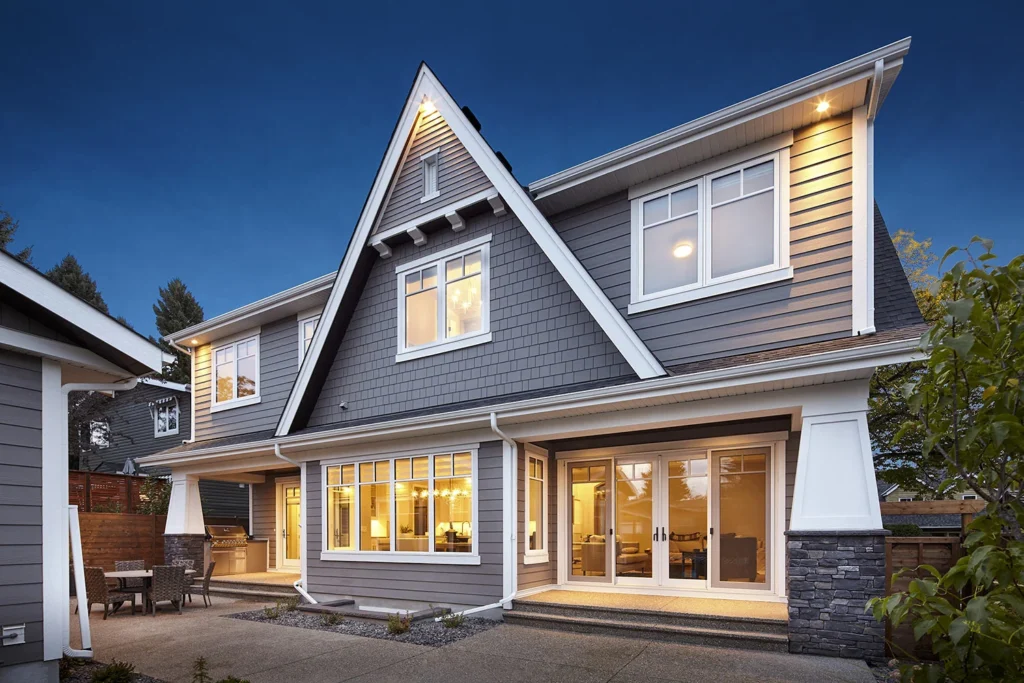
If you read enough Calgary luxury custom-home builder websites, you notice a pattern. The “About” pages talk about design language, European stone, white-oak floors, walk-in wine cellars, BILD nominations, architectural integrity, the founder’s vision. What they almost never talk about is foundation work.
So when we — Omega 2000 Cribbing, a Calgary residential foundation contractor born in 1988 — read the founder biography on the Lupi Luxury Homes website and saw the word cribbing sitting right there in the second paragraph, listed as one of the essential skills Antonio Lupi learned coming up in the trade, we paused. Then we read it again.
In 2026, in a market where Upper Mount Royal’s median has climbed to $3.6 million and Britannia averages run close to $2.4 million, a Calgary luxury custom-home builder volunteering on his own corporate website that he started in cribbing is, in our trade, a signal. It is the building equivalent of a celebrated chef telling you about the year he spent breaking down whole chickens. It tells you which tradition the person is rooted in.
This piece is a peer industry-veteran profile of Antonio Lupi told from the perspective of a Calgary cribbing contractor that came up in the same craft tradition. Everything cited about Antonio and his family is from public record. We have not interviewed him. We would like to. We will close with that invitation.
Who Antonio Lupi is — the public-record story
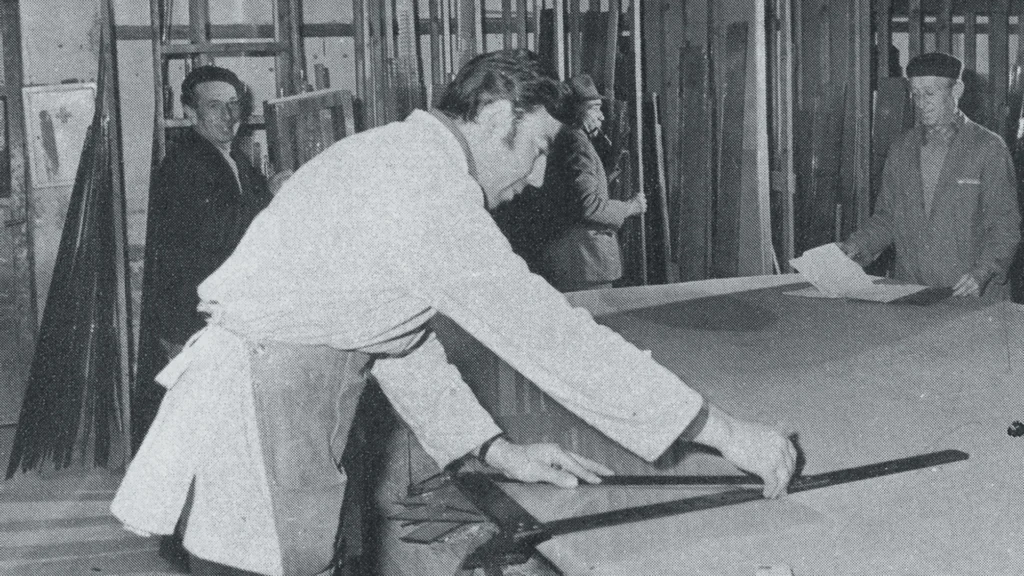
In 1963, Antonio Lupi and his wife Antonia left Fossacesia, on the Adriatic coast of Italy, and immigrated to Calgary. He took a job at a local bakery in the mornings and worked construction in the evenings. He learned the trades the way most Calgary residential trades got learned in the 1960s — on a job site, working for someone who had done it for thirty years.
In those evening shifts, per the public Lupi Homes biography, he picked up the foundational skills of residential construction: cribbing and framing. He then enrolled at the Southern Alberta Institute of Technology and earned his Journeyman Carpentry Certificate. In 1970, he started Lupi Luxury Homes.
The November 2021 Business in Calgary feature “The 50 Year Legacy of Lupi Luxury Homes” marked the firm’s half-century. Antonio had stepped back by then. His sons — Nick Lupi as President, Emilio Lupi as General Manager — were running the business. The CHBA member directory confirms the family-business structure. The retrospective quotes Antonio saying very few family businesses survive this long, and crediting his sons with bringing the company to the next level. He was, by then, spending his time with Antonia and their seven granddaughters.
That is the surface story, and by Calgary luxury-builder standards it is conventional — Italian-immigrant founder, three-generation family business, custom design-build practice rooted in old-world craftsmanship. What makes Antonio’s story unusual is not the immigrant arc. It is the word. The public biography of a Calgary luxury custom-home builder whose homes sell into the multi-million-dollar bracket names cribbing first. Before framing. Before carpentry. Before design. Before the company itself. Cribbing is the entry point of the story. And that, in our trade, says something.
What “cribbing” actually means — and why naming it is a signal
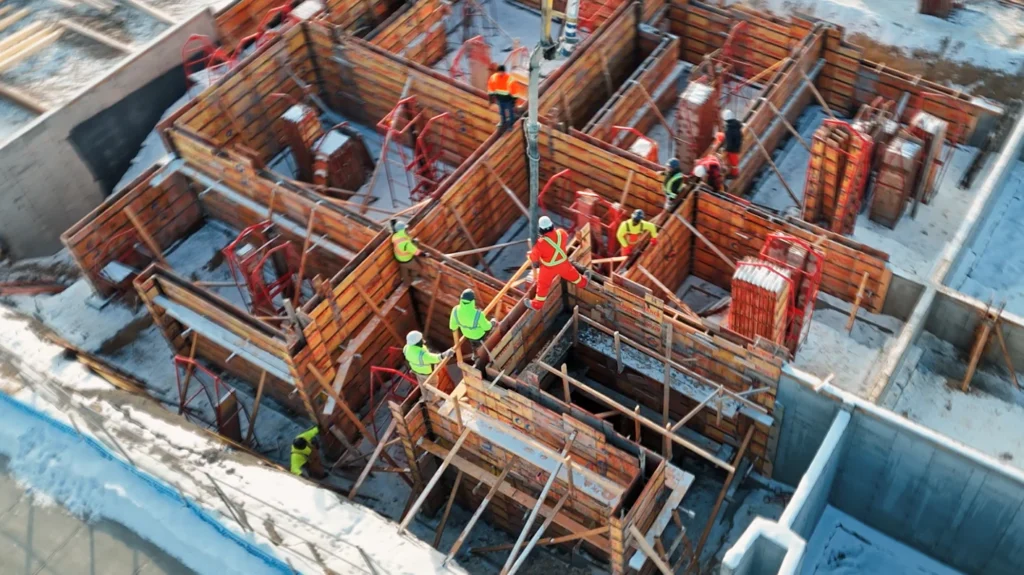
A brief definition. Cribbing, in the Calgary residential-foundation context, is the trade of forming, pouring, and stripping the concrete foundation of a home. A cribbing crew lays out the footing, sets formwork, ties rebar, places embeds, pours, strips, and walks off the site leaving a level, square, plumb, waterproof concrete box for the framers.
It is one of the oldest trades on a residential site, and one of the hardest to do well. A foundation a quarter-inch out of level over a 60-foot run haunts the framers for two weeks. A foundation that telegraphs cracking through finished drywall in year five gets a builder a phone call that does not end well.
On Calgary luxury work, the cribbing layer is doing far more than on a 1,800-square-foot spec home. On a $2M+ Mount Royal build or a $4M Aspen Woods walk-out, the cribber is handling stepped footings, walk-out basement geometry, multi-storey retaining, integral drains at the slab, in-floor radiant heat prep coordination, and high-end waterproofing — spray-applied membranes, dimple-board protection, perimeter weeping tile tied to the storm system.
Antonio’s bio naming cribbing matters because the foundation is the layer every other trade inherits. The framer cannot un-fix a non-square foundation. The mechanical trade cannot un-fix a missed drain. A builder who knows cribbing in his hands reads foundation drawings differently, hires foundation crews differently, walks the site differently. He is not a builder who says “I got my MBA and then started a homebuilding company.” He is a builder who says “I started by pouring foundations.” Two very different builders.
Why Calgary luxury work demands foundation-trade fluency
Luxury custom-home work is mostly photographed above the slab — the kitchen, the appliance package, the millwork, the European tile. That is where the dollar value photographs. But the foundation is where the dollar value endures.
Calgary’s luxury neighbourhoods are not flat. Upper Mount Royal is heritage lots cut into the escarpment. Aspen Woods and Aspen Estates climb the west-side ridgelines. Britannia drops toward the Elbow River. Springbank Hills, Watermark, and Bearspaw acreages frequently step two storeys from front to back. On those lots, the foundation is the architecture. Stepped footings determine where the staircases land. The walk-out elevation determines the entire rear facade. The waterproofing detail determines whether the lower-level gym, theatre, or wine cellar — the rooms the homeowner is paying $2M+ to have — stays dry for thirty years.
A builder who has personally poured foundations understands what diagrams do not teach: what happens when a stepped footing transition is rushed, what a cold joint looks like when it weeps through five years later, why the spray-applied membrane needs to lap correctly at the inside corners of a walk-out.
Lupi’s public website notes the firm specifies engineered, steel-reinforced 32 MPa Type 50 concrete with a spray-applied elastomeric waterproofing membrane. That is a serious spec. 32 MPa is on the strong end of residential foundation concrete. Spray-applied elastomeric is the upgrade tier above dimple board alone. The fact that this spec appears on a luxury builder’s public website rather than being hidden in a build contract is itself a tell. The builder wants the homeowner to know what is in the wall before the wall is buried.
That is what foundation-trade fluency does to a builder. It moves the foundation from an invisible cost line into a visible quality line.
The 1988-era Calgary residential trade ecosystem
Omega 2000 Cribbing was founded in 1988. By then, Antonio Lupi had been running Lupi Luxury Homes for eighteen years. The Calgary we both came up in was a specific kind of Calgary.
The mid-1980s had been brutal — the post-NEP oil downturn hollowed out residential construction. The builders who survived paid their trades on time when nobody else was. The cribbing crews, framing crews, masons, and millworkers who remained were tight communities. A bad job on Tuesday was a phone call from another builder on Wednesday.
It was a craft-protective ecosystem. Standards were transmitted person to person. The senior cribber taught the apprentice how to read footing drawings and set forms square in a high wind. The carpentry journeyman who came off a cribbing crew and went to SAIT — the way Antonio did — walked into the classroom already knowing what the textbook diagrams meant in the rain.
That trade culture produced builders like Antonio Lupi. It also produced the cribbing firms — Omega 2000 among them — that the next generation of Calgary luxury builders would eventually hire. We knew the same crews, the same suppliers, the same building inspectors. We poured to the same CSA A23.1 specifications, read the same CSA A23.3 design code, and worked under the same Alberta Building Code.
The Calgary Antonio started a luxury custom-home company in and the Calgary Omega 2000 started a foundation contracting company in were the same trade community, separated by a generation, sharing the same craft assumptions. That generational thread is why the word “cribbing” sits in the founder biography of a luxury builder’s website. The generation that came up in that culture does not see foundation work as beneath the brand. They see it as where the brand starts.
Calgary luxury builders — the peer context
The Calgary luxury custom-home segment in 2026 — homes in the $1.5M-to-$10M+ bracket, primarily in inner-city heritage neighbourhoods and west-side ridgelines — is served by a relatively small group of established firms. The ones that come up most often in BILD Calgary Region awards, real-estate referral lists, and Houzz / Business in Calgary features include:
- Lupi Luxury Homes — founded 1970 by Antonio Lupi; led by Nick and Emilio Lupi today.
- Veranda Estate Homes — long Mount Royal and inner-city portfolio.
- Maillot Homes — high-end inner-city and Britannia / Elbow Park work.
- Spindler Custom Homes — multi-decade portfolio in luxury infill.
- McKinley Masters Custom Homes — high-end estate-home segment.
- Capstone Custom Homes — Calgary’s BONE Structure certified builder, steel-frame Net Zero ready systems.
- Ashton Luxury Living — recognized at the 2024 BILD Calgary Region Awards.
- Trickle Creek Homes, NuHaus, and others in luxury infill.
This is not a ranking — it is a peer set. Every firm here operates at a level where the foundation is treated as a structural and waterproofing-grade element of the home, not an afterthought. Every firm relies on a cribbing contractor — one of a small number of established Calgary residential-foundation firms — to get the foundation right.
What is interesting about Lupi specifically is the public articulation of the craft origin. Other luxury builders on this list have founder stories that are equally craft-rooted; most do not surface those origins on the corporate “About” page in the same way. In a luxury market where the median Mount Royal home is now $3.6M and Britannia averages $2.4M (per Justin Havre & Associates and Luxury Homes Calgary 2025 data), the buyer is increasingly sophisticated — asking harder questions about construction quality, warranty exposure, and long-term-asset behaviour. A founder biography that volunteers “I started in cribbing” is, to that buyer, the kind of detail that builds trust in a way that another rendering of a kitchen does not.
What the cribbing-in-the-bio thread tells us about how Calgary’s best builds get made
If you spend time around the Calgary residential trade, you notice the best builds tend to share a small set of traits. They are not always the most expensive or the most awarded. But they share these:
1. The site supervisor came up through the trades. He has personally framed, cribbed, done finish carpentry, or run mechanical. He reads the drawings and the actual construction at the same time and spots problems three days early.
2. The foundation is treated as a quality line, not a cost line. The spec is over-designed for the load and over-designed for the waterproofing. The builder does not value-engineer the membrane. The cribber is not the cheapest in the city — he is the right one.
3. The trade relationships are old. The cribber, the framer, the mechanical contractor, the finish carpenter have worked with this builder for a decade or more. Mistakes get caught early because everyone trusts each other enough to flag them.
4. The build accommodates the lot, not the other way around. The walk-outs are designed in. The stepped footings are part of the architecture. The retaining is integrated with the landscape, not bolted on afterward.
5. The founder, somewhere in the lineage, did the work themselves. Whether one generation back or three, somebody in the family tree poured a foundation, framed a wall, or hung a door. That craft memory persists through the brand. It shows up in the spec book.
Antonio Lupi’s biography is the textbook case of trait five. And per the firm’s public materials, the second generation — Emilio Lupi — is described as having spent time on job sites as a boy “sweeping, cribbing and framing with his brothers.” The craft memory is being transmitted inside the family. That is the thread that produces durable luxury builds in this city — the ones whose basements stay dry in year twenty-five, whose foundations do not show through the gyprock, whose walk-out walls do not yellow at the seams. The cribbing-in-the-bio detail is one of the cleanest public indicators of that thread we have seen in Calgary.
The respectful invitation — what a longer conversation could surface
This piece is written from publicly available material: the Lupi Homes website, the November 2021 Business in Calgary feature, the CHBA member directory, BILD Calgary Region awards records, and Calgary residential market data from Justin Havre & Associates, Luxury Homes Calgary, and Calgary Home Finder. We have not interviewed Antonio, Nick, or Emilio Lupi. Everything paraphrased above is from public record.
We would value the chance to do a longer, on-the-record conversation. Omega 2000 Cribbing and our content partner Storimatic Studio would value the opportunity to sit down with the family and capture the version of the story the public biography only sketches — what the 1960s Calgary residential cribbing trade was actually like, how Antonio’s cribbing experience changed the way he supervised foundations once he became the builder, how that inheritance is being carried by the next generation, and what the family thinks the next generation of Calgary cribbing crews needs to know.
If Antonio, Nick, or Emilio reads this and would like to have that conversation, we will come to them on whatever terms they prefer. There is no pitch attached. We are not selling foundation services into Lupi Luxury Homes through this article. We are honouring a craft-trade through-line that runs from Antonio’s evening shifts in the mid-1960s to the multi-million-dollar walk-outs Lupi Luxury Homes is building today — a through-line the public bio names plainly, and that we think deserves a fuller telling.
The honest take
Most Calgary luxury custom-home builder websites tell you about the homes. A small number tell you about the architecture. Almost none tell you what the founder learned with his hands before he started the company.
The Lupi Luxury Homes website does. It names cribbing. It names framing. It names the Journeyman Carpentry Certificate. It names the bakery in the morning, the construction site in the evening, the small Italian town in Abruzzo where the family started. It treats the trades as a credential, not as a thing the brand has outgrown.
Calgary should pay more attention to that. The city’s luxury homebuilding conversation in 2026 would be richer if more builders surfaced their craft origins as plainly. Buyers deserve to know which brands are sourced from a hammer and which are sourced from a marketing department. The cribbing trade — including the Calgary firms doing this work on luxury builds every day — would benefit from that visibility too.
Antonio Lupi started by learning cribbing on Calgary residential job sites in the mid-1960s. He passed it forward. The company he founded in 1970 is now in its third family generation, with a public spec book that still treats the foundation as a structural and waterproofing-grade element of the home. That is a Calgary story worth telling well. From our side of the trade, we are grateful it is being told at all.
FAQ
What is cribbing in residential construction? Cribbing is the trade of forming, pouring, and stripping the concrete foundation of a home — footings, walls, embeds, drains, waterproofing tie-in. The cribbing crew hands a square, level, plumb, waterproof concrete box to the framers.
Why does it matter that Antonio Lupi’s biography lists cribbing as a skill he learned? Virtually no Calgary luxury custom-home builder biographies surface foundation-trade work that directly. Naming cribbing on a luxury “About” page is a signal the builder is rooted in craft — which tends to correlate with how the foundation gets treated on the actual build.
Who runs Lupi Luxury Homes today? Per the public Lupi Homes materials and the CHBA member directory, Antonio’s sons Nick Lupi (President) and Emilio Lupi (General Manager) run the firm. Antonio is retired.
Is Omega 2000 Cribbing affiliated with Lupi Luxury Homes? No. This is a peer industry profile from public material only.
Why does foundation work matter so much on a Calgary luxury build? Calgary’s luxury neighbourhoods — Mount Royal, Britannia, Bel-Aire, Elbow Park, Aspen Woods, Aspen Estates, Springbank Hills, Watermark, Bearspaw — are heavily sloped, with walk-outs, stepped footings, multi-storey retaining, and complex waterproofing. The foundation determines the rear facade, the lower-level program, and the long-term moisture behaviour of the home.
What concrete and waterproofing specs do high-end Calgary builds typically use? Specs vary. Lupi Homes public materials note 32 MPa Type 50 concrete with spray-applied elastomeric membrane. The segment generally runs 30–35 MPa, generous rebar, spray-applied or sheet membrane, dimple-board protection, perimeter drainage tied to storm. CSA A23.1 governs concrete production; CSA A23.3 governs structural concrete design.
What is BILD Calgary Region? BILDCR is the Building Industry and Land Development association for the Calgary region. Its annual awards recognize new home designs, renovations, marketing, and community development. Most Calgary luxury custom-home builders are members.
Can I get a Calgary luxury foundation done to this kind of spec? Yes — Calgary has an established set of residential-foundation cribbing contractors and CPCQA-certified ready-mix suppliers that do this calibre of work. The builder, cribber, and ready-mix supplier need to be specified together at the design stage, not bid out at the last minute.
Talk to us — Omega 2000 Cribbing
If you are a Calgary luxury custom-home builder, an architect, a designer, or a homeowner planning a $2M+ build and want a foundation contractor that understands walk-outs, stepped footings, in-floor radiant prep, and waterproofing details that protect long-term value — we would value the conversation.
Contact Omega 2000 Cribbing today!
- Email: info@omega2000.ca
- Phone: 403-217-4888
- Office: Calgary, Alberta
If you are Antonio, Nick, or Emilio Lupi and read this piece, the same details apply. We would value the longer conversation any time, on your terms.
Sources and citations
- Lupi Luxury Homes
- Business in Calgary, “The 50 Year Legacy of Lupi Luxury Homes,” November 2021
- CHBA Member Directory: Lupi Luxury Homes Inc.
- BILD Calgary Region 2024 Awards and 2025 Awards Finalists — bildcr.com
- Justin Havre & Associates, “Calgary’s Richest Neighbourhoods, 2025”
- Luxury Homes Calgary, “Calgary Real Estate Market for Luxury Buyers, October 2025”
- Calgary Home Finder, “Most Expensive Neighbourhoods in Calgary”
- CSA A23.1 — Concrete materials and methods of concrete construction
- CSA A23.3 — Design of concrete structures
- ACI 332 — Residential concrete construction (cross-referenced in Canadian residential work)
- CPCQA — Concrete Plant Certification, Canada (ready-mix plant certification)