
Noticed those stubborn white stains creeping across your Marda Loop driveway every spring? Planning a patio for your Altadore backyard but worried it won’t last a single Calgary winter? You’re right to be concerned.
Choosing the wrong concrete sealer here is a costly mistake. This guide cuts through the confusion and ranks the best concrete sealers for Calgary climate, zeroing in on the crucial battle between penetrating and film-forming options.
We’ll show you which products stand up to our freeze-thaw extremes and give you the clarity to make a confident choice for your home or project.
As a Calgary-based expert, Omega2000 sees the results of this decision every day.

Why Concrete Sealing Matters in Calgary’s Climate
Calgary’s weather isn’t just cold; it’s a relentless, destructive cycle. Our climate puts unprotected concrete through a unique brand of punishment that demands a specific defence strategy.
Sealing isn’t a cosmetic luxury here—it’s a mandatory investment in your property’s longevity and value.
Challenges of Freeze-Thaw Cycles, Salt Damage, and Weather Extremes
Picture a warm Chinook day melting ice and snow into your concrete driveway. That water seeps deep into the tiny pores. Overnight, the temperature plummets to -20°C, and that trapped water freezes, expanding by up to 9%.
This expansion creates immense internal pressure, leading to micro-cracks, spalling, and surface scaling. We get dozens of these freeze-thaw cycles every year, each one doing a little more damage.
Adding salt to melt ice on Calgary roads and pathways like Deerfoot Trail only worsens the problem. Salt lowers water’s freezing point, allowing it to penetrate deeper before freezing, and it’s also chemically corrosive.
It accelerates the breakdown of the concrete paste, leading to that all-too-common pitted, crumbly surface.
Benefits of Sealing for Longevity and Maintenance
A high-quality sealer acts as a shield against these forces. The right product dramatically reduces water absorption, preventing the freeze-thaw cycle from starting in the first place.
It also blocks salt, oils, and other staining contaminants from penetrating the surface, making maintenance a simple sweep or rinse.
For Calgary homeowners, this means your driveway or patio lasts decades, not just years. It prevents costly repairs and premature replacement.
Simply put, in Calgary, sealing your concrete isn’t optional—it’s essential preservation.

Types of Concrete Sealers
Not all sealers are created equal, especially for our local conditions. Understanding the two main families—penetrating and film-forming—is the first step to picking a winner.
Think of it like choosing a raincoat: one soaks in and changes the fabric (penetrating), while the other lays on top as a separate layer (film-forming).
Penetrating Sealers (Silane/Siloxane)
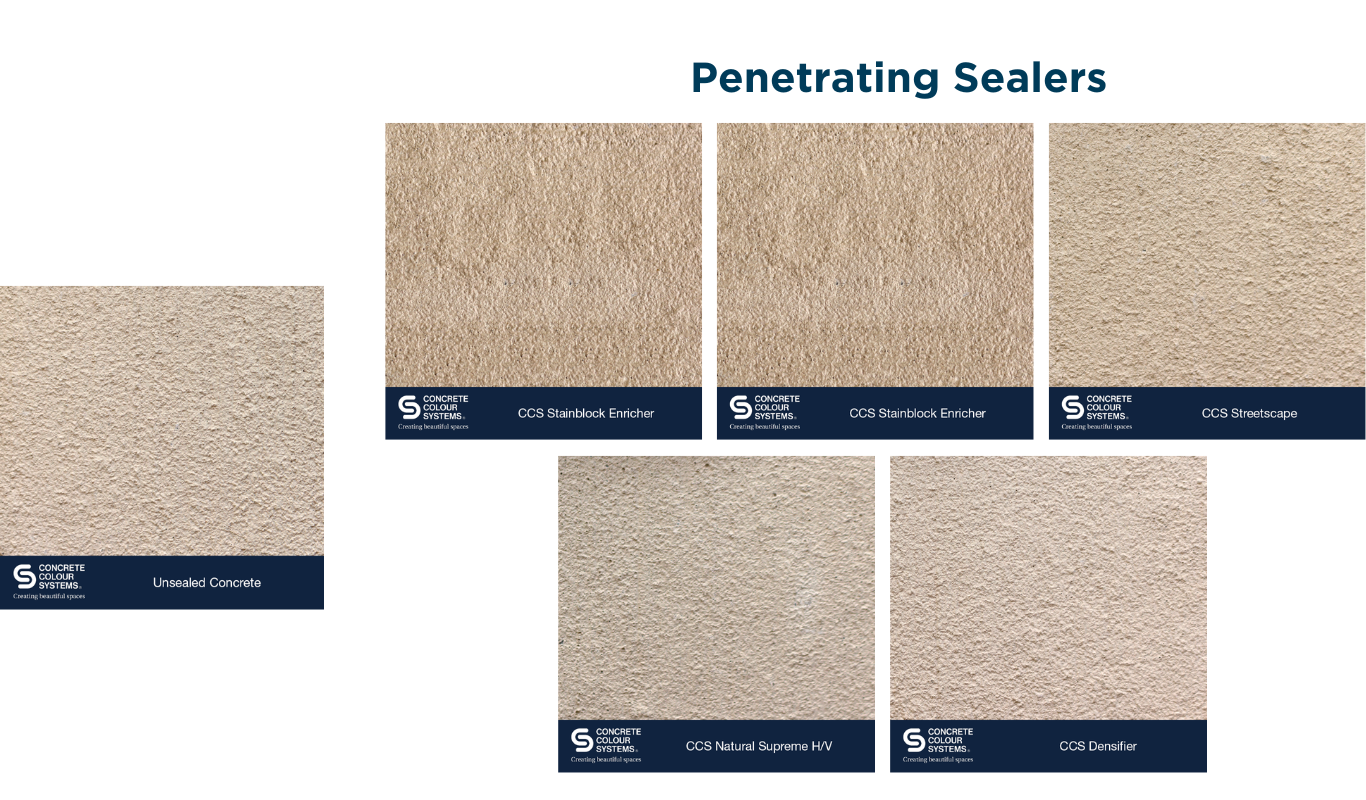
Penetrating sealers are the silent guardians of the concrete world. They don’t sit on the surface; they soak deep into the pores, chemically bonding with the concrete to repel water from within.
Advantages: Water Repellency, Breathability, Matte Finish
The biggest advantage is their “breathability.” Since they don’t form a surface film, moisture trapped *inside* the concrete (from the ground below) can still evaporate out.
This prevents blistering and peeling, which is a common failure point for film-forming sealers in our climate. They leave a natural, matte finish that doesn’t alter the concrete’s look or traction.
Best for Driveways, Walkways, Garage Floors
Penetrating sealers are the go-to choice for high-traffic, exterior areas exposed to moisture and de-icing salts.
They are perfect for a North Haven driveway, a backyard walkway, or a garage floor where you need maximum durability without a slippery, glossy surface.
Film-Forming Sealers (Acrylic, Epoxy, Polyurethane)
Film-forming sealers work by creating a protective layer on top of the concrete, like a clear coat on wood. This layer can be acrylic, epoxy, polyurethane, or a blend.
They are the choice when you want to enhance appearance or add a specific physical barrier.
Advantages: Protective Layer, Glossy Finishes, Color Enhancement
This coating provides excellent resistance to abrasion, chemicals, and UV rays. They can produce beautiful glossy or satin finishes that make colours pop on stamped concrete.
They are also generally easier to apply in a very uniform, consistent coat compared to some penetrating products.
Best for Patios, Decorative Surfaces, Interiors
For a decorative stamped patio in McKenzie Towne where you want to enhance the colour and sheen, a film-forming acrylic is ideal.
They are also the standard for interior concrete floors in garages or basements where you want a thick, durable, and easily cleanable surface.
Solvent-Based vs Water-Based Sealers
Both penetrating and film-forming sealers come in solvent-based and water-based formulas. This choice is about performance versus ease and environmental impact.
Solvent-Based: Durability, Deep Penetration, Weather Resistance
Solvent-based sealers use chemical carriers to deliver the active ingredients deeper into the concrete. They typically offer superior long-term durability, better penetration, and stronger resistance to harsh weather and chemicals.
The trade-off? Stronger odour during application, longer drying times, and more stringent environmental and safety regulations for disposal.
Water-Based: Low Odor, Eco-Friendly, Quick Dry
Water-based sealers are much more user-friendly. They have low odour, dry quickly, are easy to clean up, and are more environmentally friendly.
While their performance has improved dramatically, they may not penetrate as deeply or last quite as long as the best solvent-based options in extreme conditions.
Cure and Seal Products for New Concrete
For new concrete pours, a “cure and seal” product is a smart one-step solution. These are typically acrylic-based films that serve two purposes.
First, they slow the evaporation of water from the fresh concrete, which is critical for proper curing and strength development.
Second, they provide initial protection against stains and moisture. It’s important to note that a cure-and-seal is not a permanent, heavy-duty sealer; it’s a first line of defence that will typically need to be supplemented with a full sealer application after 28-60 days.
Choosing between solvent or water-based often comes down to the project’s exposure and your tolerance for application complexity.
Penetrating vs Film-Forming Sealers: Key Comparison
Now that you know the players, let’s put them head-to-head for the Calgary championship. Your local conditions are the ultimate judge.
Pros and Cons in Cold Climates
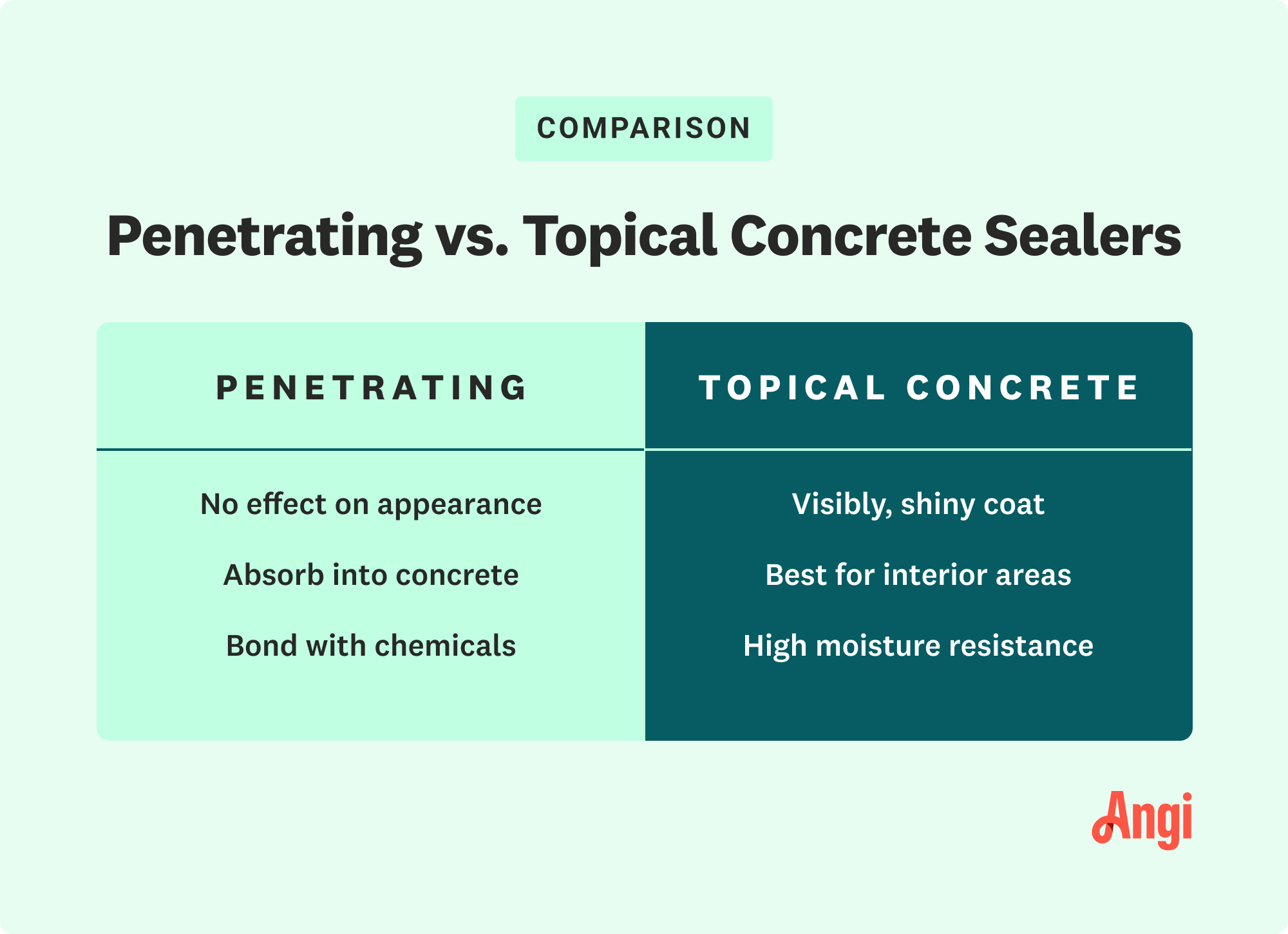
Penetrating sealers excel in our climate because of their breathability. They allow internal moisture vapour to escape, which is crucial when that moisture would otherwise freeze and cause the sealer film to fail.
They don’t yellow or peel from UV exposure. However, they don’t offer much protection against abrasion or chemical spills on the surface itself.
Film-forming sealers provide a tougher physical barrier against wear, stains, and salts sitting on the surface. But that very barrier can trap moisture below it.
If applied over concrete with high moisture content or in an area with poor drainage, you risk blistering, peeling, and a shortened lifespan.
Best Choices for Calgary’s Winter Conditions
For most exterior, ground-level applications in Calgary, a high-quality penetrating sealer (silane/siloxane) is the safer, more durable long-term bet.
It addresses the core enemy: water penetration leading to freeze-thaw damage. This is the recommended choice for driveways, sidewalks, and most walkways.
Film-forming acrylics can be a great choice for vertical surfaces (like foundation walls), decorative patios where enhancing colour is the priority, or interior floors where moisture from below is controlled.
The key is ensuring the concrete is completely dry and has proper drainage before application.
Top Recommended Sealers Tested for Calgary
With hundreds of products on the market, we’ve ranked the top performers based on real-world Calgary testing. Our criteria focused on durability against freeze-thaw, resistance to salt, ease of reapplication, and overall value.
1. Foundation Armor SX5000 (Silane/Siloxane Penetrating)
This solvent-based penetrating sealer ranks first for its exceptional performance in harsh climates. It soaks deep into the concrete pores, creating a powerful water-repellent barrier without changing the surface texture or appearance.
Key Benefit: Its superior penetration and breathability make it virtually immune to the peeling and blistering that plague film-forming sealers here. It’s the gold standard for driveways exposed to constant salt and freeze-thaw cycles.
One Caveat: Being solvent-based, it requires careful handling, proper ventilation during application, and it does not enhance the concrete’s colour or sheen—it preserves the natural look.
2. Foundation Armor AR350 (Solvent-Based Acrylic)
Our top-rated film-forming option, AR350, earns its spot for projects where appearance and a protective top coat are paramount. It forms a tough, flexible, UV-resistant acrylic shield on the concrete surface.
Key Benefit: It provides excellent protection against oil, gas, and chemical stains while offering a range of finishes from matte to high-gloss. It’s ideal for enhancing and protecting stamped concrete patios or coloured concrete.
One Caveat: Its success is 100% dependent on proper surface preparation and application to *completely dry* concrete. In areas with poor drainage or high groundwater, like some older communities with clay soil, it carries a higher risk of failure.
| Option | Best For | Price Range (CAD) | Verdict |
|---|---|---|---|
| Foundation Armor SX5000 | Exterior driveways, walkways, garage floors in freeze-thaw zones | $80 – $120 per 5-gallon pail | Premium |
| Foundation Armor AR350 | Decorative patios, stamped concrete, interior floors, vertical walls | $70 – $100 per 5-gallon pail | Best Value |
How to Choose the Right Concrete Sealer for Calgary
Armed with the top contenders, how do you make the final call? It comes down to matching the product’s strengths to your project’s specific needs and location.
Factors: Durability, Appearance, Application Area, Environmental Impact
First, prioritize the threat. Is freeze-thaw and salt the main enemy (driveway)? Choose a penetrating sealer. Is it UV fading and enhancing colour (patio)? A film-forming acrylic may be better.
Consider the look: Do you want a natural, non-slip matte finish, or a glossy, enhanced sheen? Think about the application area: Is it horizontal, vertical, interior, or exterior?
Finally, weigh environmental and safety factors: Solvent-based products are tougher but require more care; water-based are easier but may need more frequent reapplication.
Best Application Timing (Fall, Dry Moderate Temperatures)
Timing is everything in Calgary. The absolute best time to seal exterior concrete is in the late summer or early fall.
You need a consistent forecast of dry, moderate temperatures (ideally between 10°C and 25°C) for at least 24-48 hours after application. This allows the sealer to properly cure.
Avoid applying in direct, hot sun or when rain is imminent. Never apply to damp concrete or when overnight temperatures are near freezing.
Missing the weather window is the #1 reason DIY sealing projects fail in our city.
Professional Application and Services in Calgary
While some sealers are DIY-friendly, professional application from a company like Omega2000 guarantees a result that lasts.
We bring local knowledge of Calgary’s microclimates and substrate conditions that you simply can’t get from a product label.
Importance of Prep, Local Expertise, and Quality Service
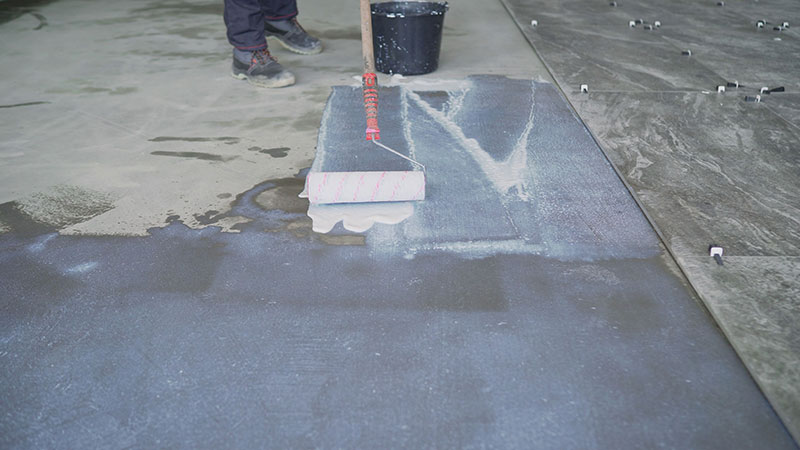
90% of a successful sealing job is in the preparation. This includes thorough cleaning (often with professional power washing and sometimes acid etching), crack repair, and ensuring the surface is bone-dry.
A pro knows how to test for moisture and will wait for the right conditions. They also have commercial-grade spray equipment for an even, consistent coat that maximizes coverage and performance.
Local expertise matters—understanding the soil drainage in Bridgeland versus the sun exposure in Signal Hill affects product choice and application strategy.
Investing in professional service isn’t just about labour; it’s about guaranteeing the performance and lifespan of your investment.
FAQ: Concrete Sealing in Calgary
How often should I reseal my Calgary driveway?
For a high-quality penetrating sealer, expect to reapply every 3 to 5 years under normal Calgary conditions. Film-forming acrylics typically need reapplication every 1 to 3 years, as the surface layer wears down from traffic and UV exposure.
The frequency depends heavily on product quality, application thickness, and exposure to salt and sun. A simple water bead test can tell you when it’s time: if water stops beading and soaks in, it’s time to reseal.
Can I apply a sealer myself, or should I hire a pro?
Many water-based sealers are marketed as DIY-friendly, and for a small patio, it can be a manageable weekend project with proper preparation. However, for large areas like driveways or for solvent-based products, hiring a pro is strongly advised.
Professionals ensure perfect surface prep, use industrial equipment for even coverage, and manage the safety and disposal of materials. A botched application can be costly and difficult to fix.
Is it worth sealing new concrete right away?
Absolutely. Using a “cure and seal” product on new concrete is highly recommended. It protects the fresh slab from staining and slows water evaporation, which is critical for proper curing and achieving full strength.
Remember, a cure-and-seal is not a permanent sealer. Plan to apply a full, dedicated penetrating or film-forming sealer about 60 days after the pour for long-term protection.
What’s the biggest mistake people make when sealing concrete in Calgary?
The biggest mistake is applying any sealer to damp concrete or in poor weather conditions. Trapped moisture is the killer. The second is improper cleaning—sealing over dirt, oil, or previous flaking sealant guarantees failure.
Always clean thoroughly, let the surface dry completely (which can take several sunny days after a rain), and check the weather forecast before you start.
Conclusion
Choosing the best concrete sealer for Calgary’s climate boils down to a simple rule: for maximum durability against our freeze-thaw and salt, a penetrating silane/siloxane sealer is your champion.
For enhancing and protecting decorative surfaces, a high-quality film-forming acrylic is the better tool. Your specific project location, from a sun-baked patio in Auburn Bay to a shaded driveway in Capitol Hill, will point you to the right choice.
Navigating these options doesn’t have to be a gamble. With over a decade of experience protecting Calgary concrete, Omega2000 can assess your specific situation and recommend—and apply—the perfect solution.
Ready to lock in long-lasting protection for your concrete? Get in touch with the local experts at Omega2000 for a consultation and quote tailored to your Calgary property.