

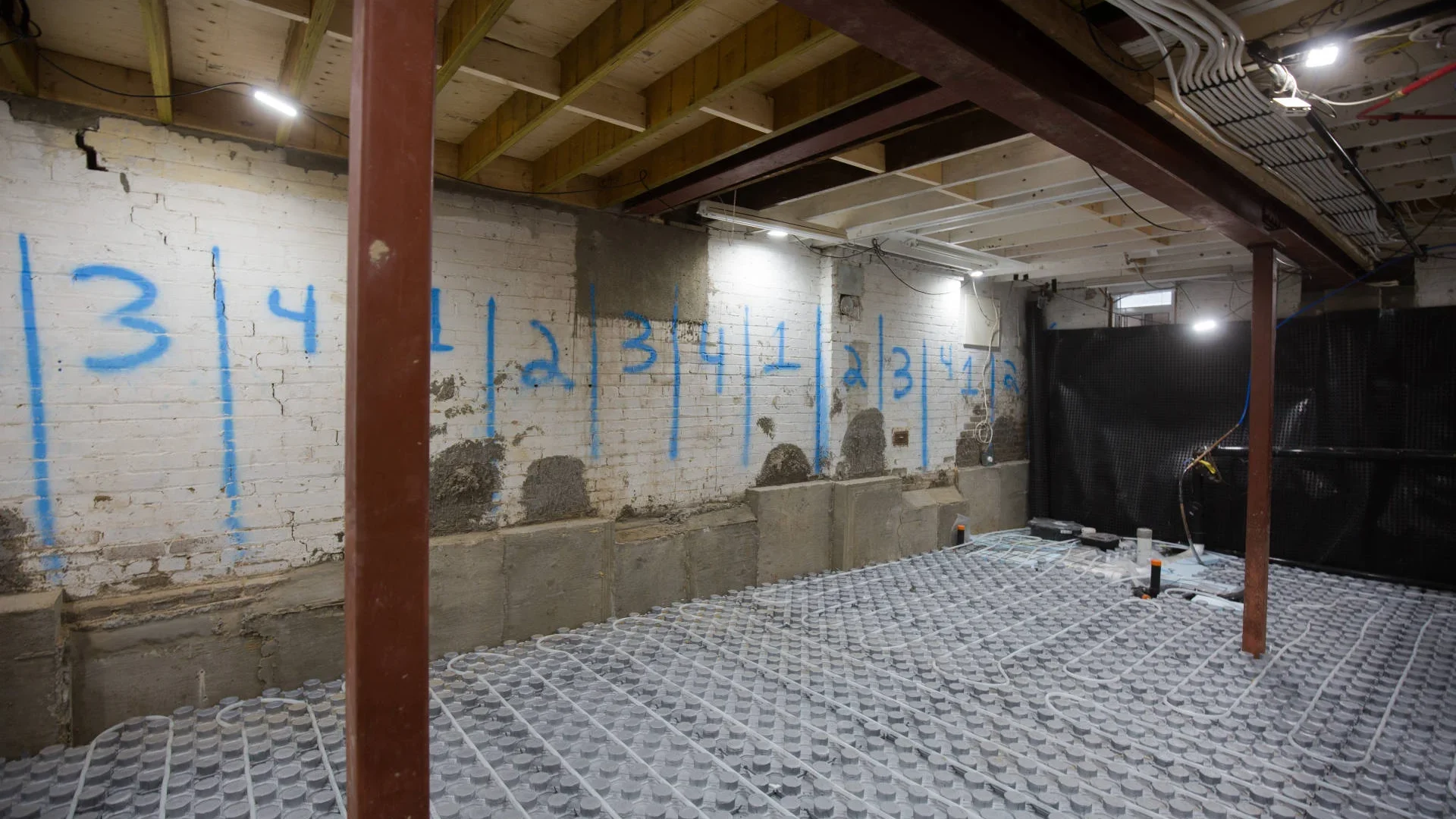
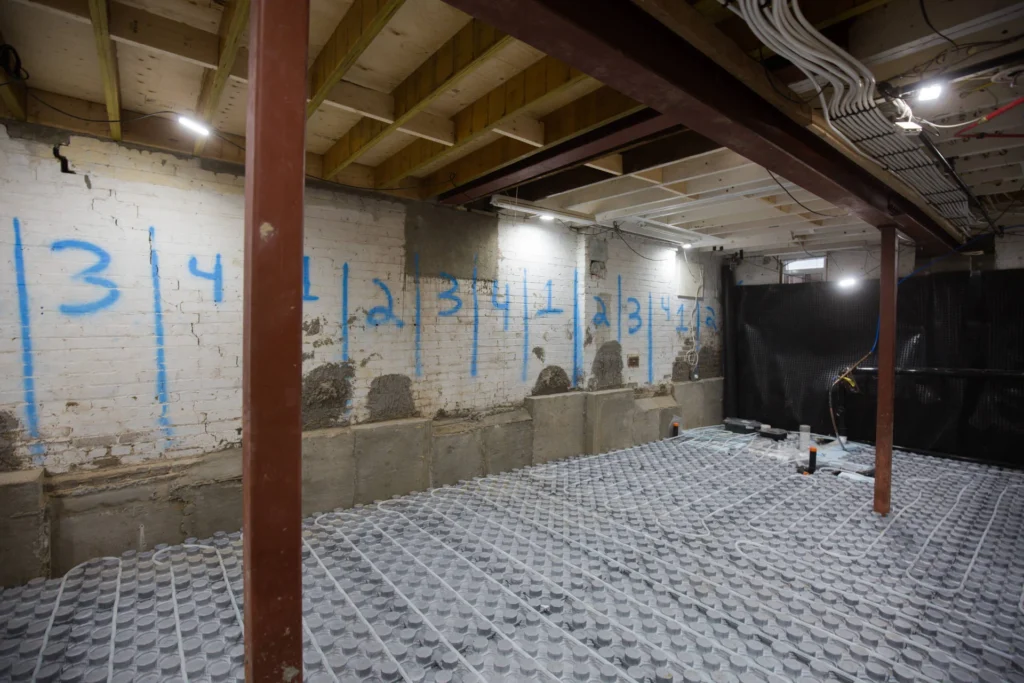
Most Calgary basements that get an underpinning quote don’t actually need underpinning. Underpinning is for active, documented foundation movement: settlement that’s still progressing, soil that can’t carry the load, structural distortion beyond cosmetic cracking. If your problem is water, a stable old crack, or seasonal clay movement, the honest fix is usually drainage correction, a targeted repair, or simply monitoring, at a fraction of the cost. The single most important step is to get a structural engineer (not the company selling the repair) to identify the cause before you spend a dollar.
How do I decide: underpin, lower, or live with it?
You’re here because something cracked, leaked, or moved, and one or more contractors told you what it’ll cost to fix. The problem is that foundation repair is a famously trust-poor category, and the quotes you get often reflect what a company sells more than what your house needs. This guide gives you a neutral, Calgary-specific way to sort the four real options:
| Option | What it is | When it’s the right call | Rough Calgary cost signal |
|---|---|---|---|
| Monitor / live with it | Mark, measure, and watch a stable crack; seal if it weeps | Small, stable, non-spanning cracks that aren’t growing or admitting water | $0–low (a sealant/injection if it weeps) |
| Drainage correction | Fix grading, eavestroughs, weeping tile, waterproofing | The “movement” or water is a drainage problem, not a bearing problem | Low–moderate; far below underpinning |
| Bench footing | A concrete perimeter bench/ledge built inside the existing footing to allow a lower floor | Lowering a low basement when you can give up some floor area; lower-cost lowering | OAF Calgary: ~$3,000–$8,000 (the bench work itself) |
| Underpinning | Extending/lowering the existing footings deeper, preserving full floor area | Active differential settlement, inadequate support soil, or lowering while keeping every square foot | OAF Calgary: ~$15,000–$35,000 (the underpinning work itself) |
*(Cost signals: OAF Construction, Calgary — https://www.oafconstruction.ca/article/how-much-does-it-cost-to-develop-a-basement-in-calgary/. These are point-in-time third-party figures for the structural work alone, not your whole project — validate against current Calgary quotes.)*
The rest of this guide walks each branch. If you’re still trying to figure out whether your crack is even a problem, start with our companion piece, Are Foundation Cracks Normal in Calgary? When to Worry; that’s the diagnosis. This article picks up after diagnosis, when you know there’s something to decide.
When does a Calgary basement actually need underpinning?
Underpinning is a structural method to stabilize or re-support a foundation that is moving, and it is not the first answer to every crack. (Source: KC Waterproofing, https://kcwaterproofing.com/blog/what-is-underpinning-a-foundation-and-when-is-it-necessary/.) It’s genuinely warranted when the evidence points to real, ongoing structural inadequacy:
- Active differential settlement: one part of the foundation is sinking relative to another, and it’s still moving (documented over time, not a one-time historical settle).
- Inadequate support soil: the soil under the footings can’t carry the load, confirmed by a geotechnical read, not assumed from a crack photo. (How the bearing number is established is covered in our companion piece on decoding your geotechnical report.)
- Structural distortion beyond cosmetic repair: bowing walls, significant tilt, doors and windows racking out of square because the structure itself has moved.
- An engineering review that concludes deeper or wider support is actually needed: the recommendation comes from an assessment of the cause, not a sales call.
There’s also a second, entirely legitimate reason Calgary homeowners underpin that has nothing to do with failure: lowering the basement floor to gain ceiling height, usually to make an older basement tall enough to develop or to legalize a suite. That’s an elective renovation decision, covered below. The distinction matters: underpinning to fix movement is structural necessity; underpinning to gain height is a renovation choice with a cost-benefit you control.
When is the real fix drainage, not underpinning? (the anti-upsell answer)
This is the section the underpinning sellers don’t write, and it’s the one that can save you tens of thousands of dollars.
A great deal of what looks like “foundation failure” in Calgary is, at root, a water problem, and the right repair is drainage correction, not structural underpinning. The wrong repair is expensive underpinning where a drainage fix (or a different, smaller stabilization) was what the situation actually called for. The reputable principle across the foundation-repair field is that the repair should be selected only after the cause of movement is understood: as one industry guide puts it, “repair choice depends on damage and cause.” (Source: CrackX, https://crackx.com/what-to-look-for-in-foundation-repair-services-expert-guidance-for-homeowners-and-building-professionals/.) A recommendation built on generic crack photos plus a sales pitch, with no investigation of why the foundation is moving, isn’t a diagnosis. It’s a quote.
In Calgary specifically, the usual water-related culprits are cheap to fix relative to underpinning:
- Grading and downspouts. Negative or flat grading and short downspouts dump roof and surface water against the wall. The City of Calgary’s lot-grading standard exists precisely because slope away from the foundation is a structural protection, not a landscaping nicety. (Source: City of Calgary, Lot Grading, Bylaw 32M2004.)
- Failed or clogged weeping tile / waterproofing. Water that should be carried away pools against the wall and loads it laterally.
- Seasonal expansive-clay movement. Calgary’s Bearpaw-derived clay swells when wet and shrinks when dry, and roughly 128 freeze-thaw cycles a year add to the seasonal flex. A crack that opens and closes with the seasons but isn’t progressing is usually responding to moisture cycling: a drainage-and-monitoring situation, not a footing failure. (Source: City of Calgary Climate Hazards 2022 Year in Review.)
The honest move is to rule out water first. If correcting drainage stops the movement, you never needed the footings touched.
When is “living with it” the right answer?
Sometimes the correct, professional recommendation is to do almost nothing. Small, stable, non-spanning cracks that aren’t growing and aren’t admitting water are usually cosmetic: seal them if they weep, mark and date them, and otherwise leave them alone. (Source: This Old House, https://www.thisoldhouse.com/foundations/foundation-cracks.)
“Living with it” is the right call when:
- the crack is thin, stable, and dry (mark-and-monitor it; see the crack-diagnosis companion for the width thresholds);
- the movement is clearly seasonal (opening in one part of the year, closing in another) without net progression;
- an engineer has looked and found no loss of structural capacity.
This is not negligence; it’s proportionality. Underpinning a foundation that isn’t failing is like getting a new engine because a warning light came on that turned out to be a loose gas cap. The work is real, expensive, and disruptive, and on a stable foundation, it solves a problem you don’t have.
What’s the difference between underpinning and bench footing?
Both are ways to lower a basement floor, and people use the terms loosely, but they’re different builds with different trade-offs:
- Underpinning extends the existing footings downward (and the wall with them), so the new, deeper floor preserves the full original floor area. It’s the more involved, higher-cost method, but you keep every square foot of your footprint. (Source: Revival Construction, underpinning vs bench footing, https://revivalconstruction.ca/basement-underpinning-vs-bench-footing/.)
- Bench footing leaves the existing footings where they are and builds a concrete bench (a ledge) around the perimeter, then lowers the floor only in the middle. It’s typically the lower-cost option (roughly 10–20% cheaper), but the bench consumes usable floor space around the edge of the room. (Source: Revival Construction, URL above; HomiReno, https://homireno.com/cost-of-underpinning-basement/.)
The choice is a classic cost-vs-space trade: bench footing saves money but eats perimeter floor; underpinning costs more but keeps the room full size. Which one fits depends on how low you need to go, how much floor area you can sacrifice, and what an engineer says your foundation can take.
If you’re considering basement lowering because your home sits on a sloped Calgary lot, there’s another foundation configuration to understand before choosing between underpinning and bench footing. A walk-out basement can require a stepped foundation that follows the site elevation while maintaining the required frost protection. See our guide to Walk-out basements on Calgary’s hillside lots: how a stepped footing actually works (and why your frost line follows the slope) for the construction details.
How much does underpinning or basement lowering cost in Calgary?
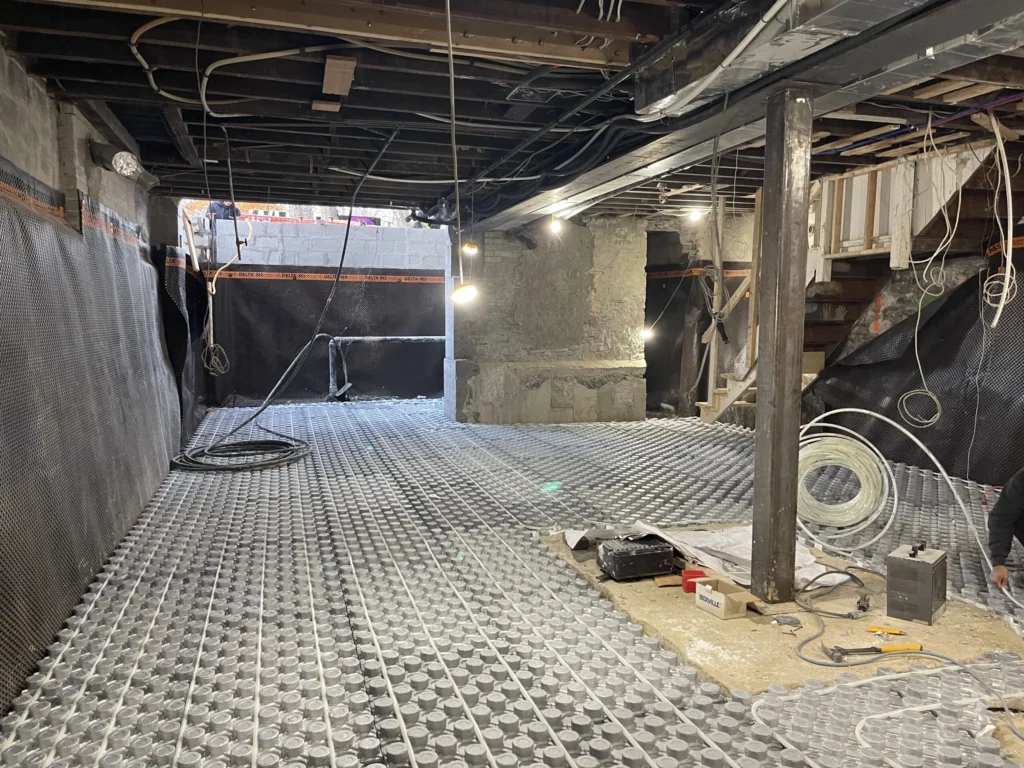
Honest answer first: costs vary widely, and you should validate any figure against current local quotes. Calgary numbers swing on soil (shale, clay, silt, sand), the water table, the depth you’re lowering, and access. (Source for the Calgary cost signals and soil drivers: OAF Construction, https://www.oafconstruction.ca/article/how-much-does-it-cost-to-develop-a-basement-in-calgary/.)
For Calgary, OAF Construction publishes these point-in-time signals for the structural work itself:
- The trigger: if your basement ceiling is below about 6’5″, lowering the floor is usually what’s driving the project, and it’s the single biggest cost variable in a basement development.
- Bench footing (partial lowering): roughly $3,000–$8,000.
- Full underpinning: roughly $15,000–$35,000.
- Basement development overall (finishing): roughly $65–$110 per square foot depending on scope (a legal secondary suite typically runs ~$70–$95/sq ft).
A note on out-of-market numbers: a lot of the underpinning “cost” content that ranks online is Toronto-priced (full underpinning quoted per linear foot at Toronto rates, basement-lowering projects in the tens of thousands). Treat those as an out-of-market benchmark only; Calgary’s soil, permits, and labour market price the work differently, which is exactly why a local quote beats a national average. (Out-of-market benchmark: VMB Group, Toronto, https://underpinnings.ca/cost-of-underpinning-and-basement-lowering-toronto/.)
The decision-relevant point isn’t the exact dollar figure; it’s the order of magnitude gap between fixing drainage (low) and underpinning ($15K–$35K+ before finishing). That gap is the entire reason to confirm the cause before you commit.
Do I need a permit to lower my basement in Calgary?
Yes. Lowering a basement and developing it touches structure, and adding new walls, electrical, plumbing, or a kitchen requires a City of Calgary Building Permit, with the structural work designed and the trades licensed. (Source: OAF Construction permit guide, https://oafconstruction.ca/article/do-you-need-a-permit-for-basement-renovations-in-calgary/.)
If the goal is a legal secondary suite, you also need a Development Permit and licensed trades, the suite must meet the building code (including egress under NBC(AE) 2023 Part 9 §9.9.10.1 and City of Calgary requirements, not the US code), and it must be entered in the City’s secondary-suite registry.
On the incentive side, and this is where homeowners get bad information, the live City of Calgary supports are the Secondary Suite Incentive (up to $10,000), the Backyard Suite Incentive (up to $35,000), and the $0 development-permit fee through Dec 31, 2026. (Re-verify current amounts and dates on calgary.ca at the time you apply.) If you’ve read about a $80,000 federal secondary-suite loan, note that it was cancelled; don’t build your budget around it. The live federal option is a CMHC refinance, and the City incentives above are the current grant-style supports.
How do I tell an honest foundation contractor from an upsell?
This is the question the Equity Upgrader is really asking, so here’s the straight version:
- Get a structural engineer’s assessment first. “The best way to get an honest evaluation of your home’s foundation is to hire a structural engineer.” (Source: Angi, https://www.angi.com/articles/foundation-problems-vs-settling.htm.) The engineer doesn’t sell you the repair, so their read isn’t biased toward the most expensive option.
- Demand the cause before the cure. Any recommendation should explain why the foundation is moving (drainage, soil, settlement, seasonal clay), not just what it’ll cost to fix. A quote with no diagnosis is a sales document, not an assessment.
- Be wary of fear and pressure. “Your foundation could collapse” with a same-day discount is the tell. Real structural problems are diagnosed and scoped calmly, in writing.
- Cross-check against a non-seller. If a company that only does underpinning recommends underpinning, get a second opinion from someone who isn’t selling that specific job.
We’ll say the part our own industry usually won’t: a good outcome is sometimes “you don’t need the work.” Omega 2000 Cribbing has poured Calgary foundations since 1988, and we don’t do crack repair or underpinning as a primary service, which means when we tell you the honest answer is drainage or monitoring, no one here is losing a sale by saying it.
FAQ
Underpinning vs basement lowering vs living with it: how do I decide? Get a structural engineer to find the cause first. If the foundation is actively moving from settlement or inadequate soil, you may need underpinning. If it’s a water problem, fix drainage. If the crack is small, stable, and dry, monitor it. Underpinning and bench footing are also elective ways to lower a floor for ceiling height, a renovation choice, not a failure.
When does a Calgary basement actually need underpinning? When there’s active, documented differential settlement, the support soil is inadequate, the structure has distorted beyond cosmetic cracking, or an engineering review concludes deeper support is genuinely needed. It is not the first answer to every crack, and most cracks don’t require it.
When is the real fix drainage instead of underpinning? Often. A lot of apparent “foundation failure” in Calgary is a water problem: bad grading, short downspouts, failed weeping tile, or seasonal expansive-clay movement. The repair should be chosen only after the cause is understood; expensive underpinning where a drainage fix was needed is the classic over-repair. Rule out water first.
What’s the difference between underpinning and bench footing? Both lower a basement floor. Underpinning extends the existing footings deeper and preserves the full floor area at higher cost. Bench footing builds a perimeter ledge and lowers only the middle, roughly 10–20% cheaper, but it consumes usable floor space around the edges.
How much does underpinning or basement lowering cost in Calgary? Point-in-time Calgary signals (structural work only): bench footing roughly $3,000–$8,000, full underpinning roughly $15,000–$35,000, with basement finishing around $65–$110/sq ft. Costs swing on soil, water table, depth, and access, so validate against current Calgary quotes. Lowering is usually triggered when ceilings are below about 6’5″.
Do I need a permit to lower my basement in Calgary? Yes: a City of Calgary Building Permit for the structural work, new walls, electrical, plumbing, or a kitchen, with licensed trades. A legal secondary suite also needs a Development Permit, code-compliant egress under NBC(AE) Part 9, and registry. Live City incentives: Secondary Suite (up to $10,000), Backyard Suite (up to $35,000), $0 development-permit fee through Dec 31, 2026; verify on calgary.ca.
How do I tell an honest foundation contractor from an upsell? Hire a structural engineer for the assessment first; they don’t sell the repair. Insist the recommendation identify the cause before the cure, walk away from fear-and-pressure tactics, and get a second opinion from someone who doesn’t sell the specific job being recommended. A diagnosis-free quote is a sales document.
Is it worth lowering my basement for a legal suite? It can be, given the City incentives (up to $10,000 / $35,000 and the $0 development-permit fee through Dec 31, 2026) and rental demand, but run the math on the underpinning or bench-footing cost plus finishing, and confirm the existing foundation and slab can carry the new use before you commit. Verify all incentive figures on calgary.ca.
Planning a Basement Project? Start With the Right Foundation Answer.
Before you spend $15,000–$35,000 or more on structural work, make sure you know what problem you’re actually solving.
Omega 2000 Cribbing has been pouring Calgary foundations since 1988. We don’t sell underpinning as a primary service, so our focus is on the foundation work your project actually requires—not pushing a repair you may not need.
Whether you’re planning a basement lowering, a new foundation, a hillside walk-out or an acreage build, talk to our team about the concrete and foundation requirements before you commit to the work.
Talk to Omega 2000 About Your Foundation Project to get a straightforward conversation about your foundation scope, concrete requirements and next steps.