
In Calgary, concrete doesn’t just have to look good—it has to survive. Between long winters, rapid temperature swings, Chinooks, and heavy use of de-icing salts, exterior concrete in Southern Alberta is exposed to some of the harshest conditions in Canada. Yet many homeowners only discover the importance of concrete mix design after their driveway starts flaking or their patio begins cracking just a few winters after installation.
One of the most critical—and most misunderstood—factors in concrete durability is air-entrained concrete. It’s not a premium upgrade or an optional add-on. In Calgary’s freeze-thaw climate, it’s a fundamental requirement for long-lasting exterior concrete. In this article, we’ll break down what air-entrained concrete is, why it matters so much locally, and how it protects your investment for decades—not just the first few seasons.
What Is Air-Entrained Concrete?
Understanding Air Entrainment in Concrete
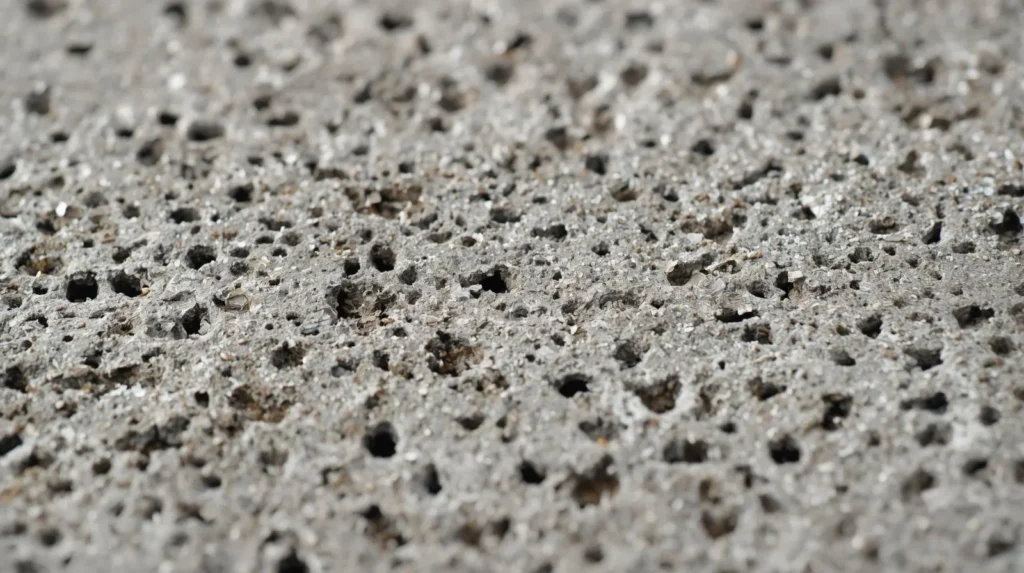
Air-entrained concrete is concrete that contains millions of tiny, intentionally introduced air bubbles distributed evenly throughout the hardened material. These microscopic air voids are not accidental defects—they are engineered into the mix using specialized air-entraining admixtures added at the batch plant.
These air bubbles are extremely small (typically 0.01–1.0 mm in diameter) and invisible to the naked eye. Their purpose is not aesthetic or structural strength, but durability, particularly in climates where concrete is repeatedly exposed to freezing and thawing.
In fact, one of the smartest decisions homeowners can make is to select air-entrained concrete specifically designed for Calgary’s freeze-thaw exposure rather than relying on standard mixes used in milder climates.
Air Entrainment vs. Entrapped Air
It’s important to distinguish between air-entrained concrete and concrete that simply contains trapped air:
- Entrapped air occurs naturally during mixing and placement and consists of large, irregular air pockets.
- Entrained air is intentionally added and forms a stable, microscopic air-void system.
Entrapped air offers little to no protection against freeze-thaw damage. Only properly air-entrained concrete provides the internal pressure relief system needed to handle Calgary’s climate.
Typical Air Content for Exterior Concrete
For exterior flatwork in Calgary—such as driveways, sidewalks, patios, and steps—air content typically falls within the following range:
- 5–8% total air content for most residential exterior concrete
- Higher air content for thinner slabs or severe exposure conditions
Too little air compromises freeze-thaw resistance. Too much air can reduce strength and finishing quality. Achieving the correct balance requires experience, proper mix design, and quality control at every stage—from batching to placement to finishing.
Calgary’s Freeze-Thaw Climate Explained
Why Freeze-Thaw Cycles Are So Destructive to Concrete
Concrete is a porous material. Even when fully cured, it contains microscopic capillaries that absorb water. When temperatures drop below freezing, any water trapped inside the concrete expands by approximately 9%. Without space to relieve that pressure, the internal structure of the concrete begins to crack.
Over repeated freeze-thaw cycles, these microcracks grow larger, eventually leading to visible surface damage such as scaling, flaking, and spalling. Once this process begins, deterioration accelerates quickly.
Why Calgary Is Especially Hard on Concrete
Calgary experiences more freeze-thaw cycles than many colder regions. While some climates stay consistently below freezing for long periods, Calgary frequently moves above and below zero—sometimes multiple times in a single week due to Chinooks.
This constant freezing and thawing creates ideal conditions for moisture movement within concrete. Add de-icing salts, which lower the freezing point of water and increase saturation, and the risk of damage increases significantly.
The Role of De-Icing Salts and Snowmelt
Sodium chloride, calcium chloride, and magnesium chloride are commonly used on Calgary roads and sidewalks. These salts:
- Increase moisture absorption into concrete
- Accelerate freeze-thaw damage
- Contribute to surface scaling in non-air-entrained concrete
This is why concrete that performs well in milder climates often fails prematurely when used in Southern Alberta without proper air entrainment.
How Air-Entrained Concrete Protects Against Freeze-Thaw Damage
The Science Behind the Air Bubble System
Air-entrained concrete works by providing tiny, evenly spaced air pockets that act as pressure relief chambers. When water inside the concrete freezes and expands, it can move into these air voids rather than cracking the surrounding cement paste.
Think of air-entrained concrete like a shock absorber. Instead of resisting expansion forces until it breaks, the concrete accommodates them safely.
Key Benefits of Air-Entrained Concrete in Calgary
- Improved freeze-thaw resistance in harsh winter conditions
- Reduced surface scaling caused by salts and snowmelt
- Longer service life for exterior concrete installations
- Lower long-term maintenance costs
According to industry data, properly air-entrained concrete can last two to three times longer than non-air-entrained concrete in freeze-thaw environments when all other factors are equal.
Real-World Performance in Residential Applications
In practical terms, this means a driveway poured with the correct air-entrained mix is far less likely to experience flaking within the first few winters. Patios retain their surface integrity longer, stairs maintain crisp edges, and walkways remain safer and more visually appealing over time.
For homeowners, the benefit isn’t just technical—it’s financial. Replacing failed concrete costs significantly more than doing it right the first time.
What Happens When Concrete Is Not Air-Entrained?
Early Signs of Freeze-Thaw Failure
When exterior concrete in Calgary is poured without proper air entrainment, damage often appears sooner than expected. Common early warning signs include:
- Surface scaling or flaking after one or two winters
- Hairline cracks that widen over time
- Pop-outs where aggregate breaks through the surface
These issues are not cosmetic defects—they are indicators of internal structural damage caused by freeze-thaw stress.
Why Repairs Are Often Only Temporary
Once freeze-thaw damage begins inside the concrete, surface repairs rarely address the root cause. Patching, resurfacing, or sealing may improve appearance temporarily, but the underlying material continues to deteriorate.
In many cases, homeowners end up paying twice: once for repairs and again for full replacement. This is why experienced concrete contractors in Calgary insist on proper air entrainment from the start.
Air-Entrained Concrete vs. Non-Air-Entrained Concrete
Performance Comparison in Calgary Conditions
While air-entrained and non-air-entrained concrete may look identical on the day of installation, their long-term performance in Calgary’s climate is dramatically different. The table below highlights how each performs under freeze-thaw exposure and de-icing salts.
| Performance Factor | Air-Entrained Concrete | Non-Air-Entrained Concrete |
|---|---|---|
| Freeze-Thaw Resistance | Excellent – designed to handle repeated cycles | Poor – prone to cracking and scaling |
| Salt Resistance | High – reduced surface damage | Low – accelerated deterioration |
| Service Life | 20–30+ years when properly installed | 5–10 years in severe conditions |
| Maintenance Requirements | Minimal | Frequent repairs or replacement |
| Lifecycle Cost | Lower over time | Higher due to early failure |
When Non-Air-Entrained Concrete May Be Acceptable
Non-air-entrained concrete still has appropriate uses—but not for most exterior residential applications in Calgary. It may be suitable for:
- Interior slabs not exposed to freezing
- Heated environments with no moisture exposure
- Specific structural elements where air content must be tightly controlled
For driveways, sidewalks, patios, stairs, and exterior foundations, air entrainment is considered best practice—not an upgrade.
If a contractor dismisses the importance of air content or avoids discussing mix design altogether, that’s one of the most serious concrete contractor red flags homeowners should never ignore.
CSA Standards and Alberta Best Practices
Canadian Standards for Exterior Concrete
In Canada, concrete used in freeze-thaw environments is governed by CSA (Canadian Standards Association) guidelines. These standards recommend minimum air content levels for concrete exposed to moisture and freezing temperatures.
For exterior flatwork in climates like Calgary’s, CSA standards typically require:
- Proper air-void systems for freeze-thaw durability
- Controlled water-to-cement ratios
- Durable aggregates suitable for severe exposure
Why “Meets Code” Isn’t Always Enough
Meeting minimum code requirements does not guarantee long-term performance. Many concrete failures occur in projects that technically meet code but lack proper execution, finishing timing, or quality control.
Experienced contractors go beyond minimum standards by:
- Verifying air content before placement
- Adjusting mixes based on weather conditions
- Using finishing techniques that preserve the air-void system
Where Air-Entrained Concrete Is Essential in Calgary Homes
Concrete Driveways
Driveways are exposed to the harshest combination of conditions: vehicle loads, snow buildup, freeze-thaw cycling, and de-icing salts. Without air entrainment, surface scaling is almost guaranteed over time.
Patios and Walkways
Even light foot traffic can accelerate damage when freeze-thaw cycles weaken the surface. Air-entrained concrete helps patios and walkways maintain both structural integrity and visual appeal.
Concrete Steps and Stairs
Stairs are especially vulnerable due to sharp edges and thin profiles. Air-entrained concrete significantly reduces edge spalling and improves long-term safety.
Foundations and Exterior Walls
While foundations may not always be exposed directly, exterior foundation walls and above-grade sections benefit from air entrainment when subject to moisture and freezing temperatures.
Common Myths About Air-Entrained Concrete
“Air-Entrained Concrete Is Weaker”
While higher air content can slightly reduce compressive strength, properly designed mixes easily meet residential and structural requirements. The trade-off is improved durability—which is far more critical in Calgary’s climate.
“It Costs More”
The cost difference for air-entrained concrete is minimal compared to the cost of premature replacement. Over the life of the concrete, air entrainment almost always results in lower total costs.
“Any Concrete Will Do in Winter”
This misconception leads to many early failures. Concrete performance depends on mix design, placement, finishing, and curing—not just the season it’s poured.
How to Choose the Right Concrete Contractor in Calgary
Questions Homeowners Should Ask
- Do you use air-entrained concrete for exterior work?
- How do you verify air content on site?
- How do you adjust mixes for weather conditions?
Why Experience Matters
Air entrainment only works when the entire process is handled correctly. Poor finishing techniques, overworking the surface, or improper curing can destroy the air-void system and negate its benefits.
Contractors with decades of local experience understand how Calgary’s climate affects every stage of concrete placement—and how to prevent costly mistakes.
Frequently Asked Questions About Air-Entrained Concrete
How much air should exterior concrete have in Calgary?
Most residential exterior concrete requires 5–8% air content, depending on exposure conditions and slab thickness.
Can air-entrained concrete still crack?
Yes. Air entrainment protects against freeze-thaw damage but does not eliminate cracking caused by settlement, poor base preparation, or lack of control joints.
Does stamped or exposed aggregate concrete need air entrainment?
Absolutely. Decorative concrete is still exposed concrete and requires air entrainment to perform well in Calgary’s climate.
Can air content be adjusted on site?
Minor adjustments can be made, but proper air content is best achieved through correct batch plant mix design and quality control.
Final Thoughts: Why Air-Entrained Concrete Matters in Calgary
Air-entrained concrete is not a luxury—it’s a necessity for exterior concrete in Calgary. Without it, freeze-thaw cycles, moisture, and de-icing salts will eventually break down even the best-looking installations.
By understanding how air-entrained concrete works and choosing an experienced local contractor who prioritizes durability over shortcuts, homeowners can protect their investment and enjoy concrete that performs for decades.
Planning a concrete project in Calgary? Work with a contractor who understands local conditions and uses the right materials from the start. Contact Omega 2000 to ensure your next concrete project is built to last.