When building or renovating a home in Calgary, few decisions are as critical as choosing the right basement foundation. Your foundation doesn’t just support your house — it protects it from shifting soils, extreme temperature swings, moisture intrusion, and long-term structural damage. Yet many homeowners are forced to choose between poured concrete and concrete block foundations without fully understanding how each performs in Calgary’s unique climate.
At first glance, the difference may seem like a simple cost comparison. In reality, the choice you make can impact durability, waterproofing, energy efficiency, maintenance costs, and even resale value for decades. In this guide, we break down the two most common basement foundation types in Calgary, explain how they behave in local soil and weather conditions, and help you make an informed, confident decision.
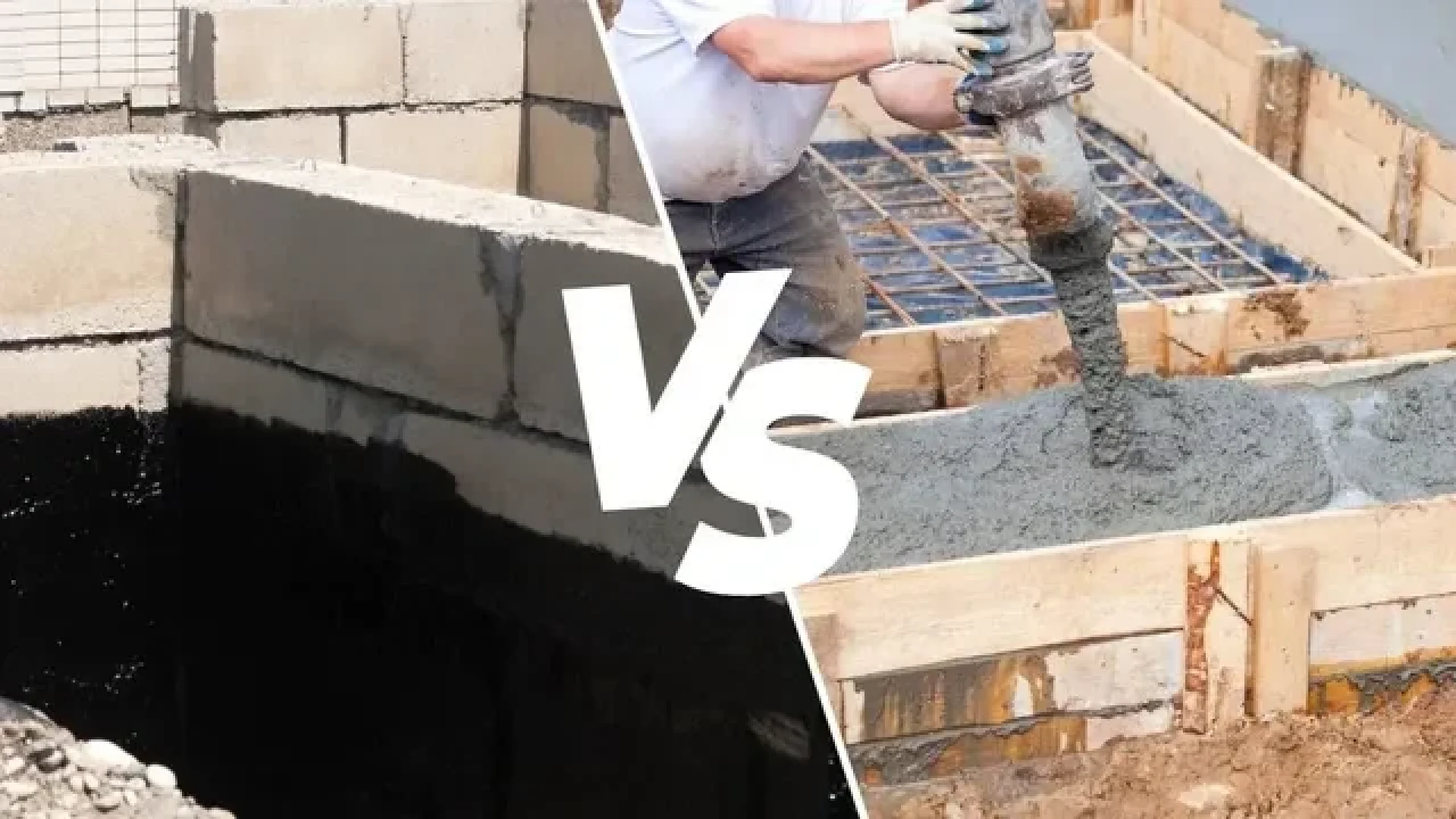
Compare poured concrete and block foundations for Calgary homes.
Why Basement Foundation Choice Matters in Calgary
Calgary Soil Conditions and Climate Challenges
Calgary’s geology and climate create demanding conditions for residential foundations. Much of the city sits on expansive clay soils, which swell when wet and shrink when dry. This constant movement places lateral pressure on foundation walls, increasing the risk of cracking and long-term displacement.
On top of that, Calgary experiences significant freeze-thaw cycles each year. As moisture in the soil freezes, it expands; when it thaws, it contracts. This repeated action can stress foundation walls, particularly those with joints or weak points. According to the National Research Council of Canada, freeze-thaw activity is one of the leading contributors to foundation deterioration in cold climates.
These environmental factors mean that foundation systems used successfully in warmer or drier regions may underperform in Calgary if not designed and built correctly.
Long-Term Impact on Structural Integrity
The foundation you choose affects far more than the construction phase. Over time, the wrong system can lead to:
Horizontal or stair-step cracking
Water seepage and basement dampness
Higher heating and insulation costs
Costly structural repairs
Reduced home resale value
In contrast, a properly engineered foundation designed for Calgary conditions can last the lifetime of the home with minimal maintenance. That’s why understanding the differences between poured concrete and block foundations is so important.
Overview of Basement Foundation Types
What Is a Poured Concrete Foundation?
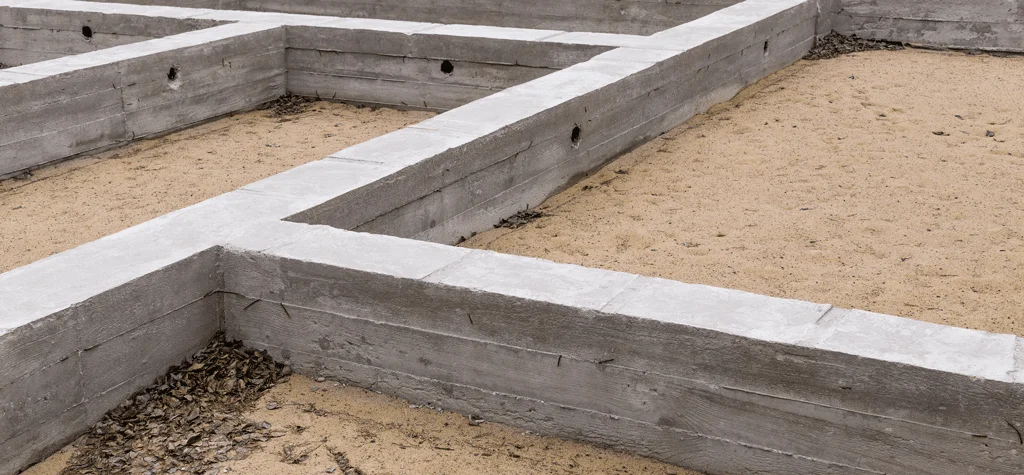
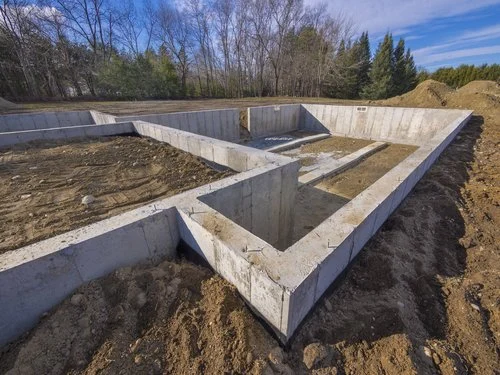
A poured concrete foundation is created by placing steel reinforcement (rebar) inside formwork and pouring concrete in a single, continuous operation. Once cured, the result is a monolithic concrete wall with no mortar joints and uniform strength throughout.
In Calgary, poured concrete foundation walls are typically 8 to 10 inches thick and reinforced to meet or exceed Alberta Building Code requirements. Because the concrete is poured as one solid mass, it distributes soil pressure evenly across the wall, making it particularly effective in areas with expansive soils.
Modern poured concrete foundations are often paired with advanced waterproofing membranes, drainage systems, and insulation strategies, making them the preferred choice for most new residential construction in the city.
What Is a Concrete Block Foundation?
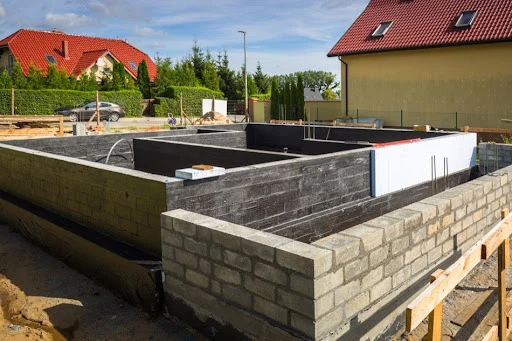
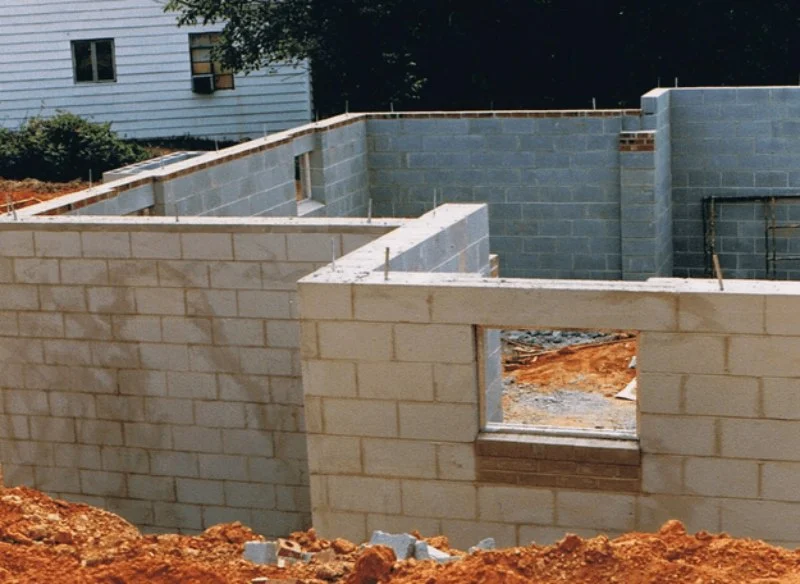
Concrete block foundations, also known as CMU (Concrete Masonry Unit) foundations, are built using individual concrete blocks stacked together and bonded with mortar. Steel reinforcement and grout may be added inside block cavities for additional strength.
This method was widely used in older Calgary homes and is still permitted under building codes when properly engineered. However, because block foundations rely on multiple mortar joints, they inherently contain more potential weak points compared to poured concrete systems.
While block foundations can perform adequately under certain conditions, their long-term success in Calgary depends heavily on workmanship quality, reinforcement details, and waterproofing practices.
Homeowners should also consider long-term expenses, as thefoundation repair cost in Calgary is often higher for block foundations due to cracking, joint movement, and water intrusion over time.
Understanding basement foundation options in Calgary’s climate.
Poured Concrete Foundations — Pros and Cons
Advantages of Poured Concrete Foundations
Poured concrete foundations offer several advantages that make them well-suited to Calgary’s climate:
Superior structural strength: Continuous concrete walls resist lateral soil pressure more effectively than segmented systems.
Fewer joints: With no mortar joints, there are fewer pathways for water infiltration.
Better performance in freeze-thaw conditions: Uniform material reduces stress concentration points.
Faster construction timeline: Once forms are set, walls can be poured in a single day.
From decades of real-world experience in Calgary, poured concrete foundations consistently show fewer long-term issues related to cracking and moisture compared to block systems.
Disadvantages of Poured Concrete Foundations
Despite their strengths, poured concrete foundations are not without drawbacks:
Higher upfront cost: Materials, formwork, and skilled labor typically cost more initially.
Weather sensitivity during construction: Extreme cold can affect pour scheduling if not managed correctly.
Requires experienced crews: Poor forming or reinforcement placement can compromise performance.
However, when evaluated over the full lifespan of a home, many homeowners find that the reduced maintenance and repair costs outweigh the higher initial investment.
Concrete Block Foundations — Pros and Cons
Advantages of Block Foundations
Concrete block foundations still appeal to some builders and homeowners for a few key reasons:
Lower upfront material cost: Blocks can be less expensive than poured concrete in some cases.
Flexibility for small repairs: Individual blocks can sometimes be repaired or replaced.
Familiar construction method: Common in older homes and certain renovation projects.
In limited scenarios — such as small additions or specific soil conditions — block foundations may be a practical solution when properly designed.
Disadvantages of Block Foundations
In Calgary’s climate, block foundations present notable challenges:
Increased leak risk: Mortar joints are more susceptible to water penetration.
Lower resistance to soil movement: Joints can crack under lateral pressure.
Higher long-term maintenance: Sealing, crack repair, and waterproofing upgrades are more common.
Reduced suitability for modern basement finishing: Uneven surfaces complicate insulation and drywall installation.
For these reasons, many Calgary homeowners and builders now view block foundations as a secondary option rather than a first choice for new construction.
Ongoing maintenance matters as well, and understanding how to clean concrete surfacesproperly can help extend the life of basement walls, whether poured or block construction is used.
Poured Concrete vs Block Foundation — Side-by-Side Comparison
To clearly understand which basement foundation type performs better in Calgary, it helps to compare poured concrete and block foundations across the factors that matter most to homeowners.
Comparison Factor
Poured Concrete Foundation
Concrete Block Foundation
Structural Strength
High – continuous, reinforced concrete walls
Moderate – strength depends on mortar joints and reinforcement
Resistance to Soil Pressure
Excellent for expansive Calgary clay soils
Lower – joints are more vulnerable to movement
Waterproofing Performance
Superior – fewer seams for water intrusion
Weaker – multiple joints increase leak risk
Construction Speed
Fast once forms are set
Slower due to block-by-block installation
Long-Term Maintenance
Low
Moderate to high
Ideal Use Case
New homes, long-term durability
Small additions, specific retrofit situations
From a performance standpoint, poured concrete foundations clearly align better with Calgary’s climate and soil behavior, particularly for full basement construction.
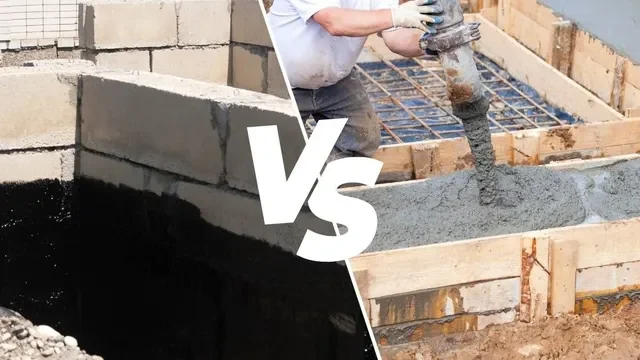
Poured concrete vs block —strength, cost, and performance.
Basement Foundation Cost in Calgary
Average Cost of Poured Concrete Foundations
The cost of a poured concrete foundation in Calgary typically ranges based on several variables, including basement size, depth, soil conditions, and access. On average, homeowners can expect poured concrete basement foundations to cost more upfront than block systems.
However, poured concrete foundations often include integrated reinforcement and are well-suited to modern waterproofing systems. Over time, this reduces repair and moisture-related expenses, making them a cost-effective long-term investment.
Average Cost of Block Foundations
Concrete block foundations generally have a lower initial material cost. Labor costs, however, can vary depending on reinforcement requirements and construction complexity. While block foundations may appear more affordable initially, homeowners should factor in higher long-term maintenance costs.
In Calgary, block foundations are more likely to require crack repairs, re-sealing, or additional waterproofing measures as the home ages.
What Impacts Foundation Pricing in Calgary?
Excavation depth and soil conditions
Steel reinforcement and engineering requirements
Waterproofing membranes and drainage systems
Site access and lot constraints
Permit and inspection requirements
Choosing the right foundation is not just about the initial quote — it’s about total lifecycle cost.
Choosing the right basement type for Calgary conditions
Which Foundation Type Is Best for Calgary Homes?
Best Choice for New Home Construction
For new residential construction in Calgary, poured concrete foundations are widely considered the industry standard. Their strength, moisture resistance, and compatibility with modern building practices make them the preferred choice for builders and homeowners alike.
Best Choice for Budget-Conscious Builds
In limited situations — such as small additions or specific site constraints — block foundations may still be viable. However, they require careful engineering, proper reinforcement, and robust waterproofing to perform well in Calgary’s environment.
Best Choice for Long-Term Value and Peace of Mind
When long-term durability, lower maintenance, and resale value are priorities, poured concrete foundations consistently deliver better results. Many homeowners find that the initial cost difference is offset by fewer issues and greater peace of mind over the life of the home.
Common Foundation Mistakes to Avoid in Calgary
Choosing Based on Price Alone
Focusing only on upfront cost can lead to higher repair expenses later. Foundations are not an area where cutting corners pays off.
Skipping Proper Waterproofing
Even the strongest foundation can fail if waterproofing and drainage systems are inadequate. Proper membranes, weeping tile, and grading are essential.
Underestimating Soil Pressure
Expansive soils exert significant lateral force. Foundations must be designed to resist these pressures year-round.
Hiring Inexperienced Contractors
Foundation performance depends heavily on workmanship. Experience with Calgary soil, weather, and building codes matters.
Why Calgary Homeowners Trust Omega 2000 for Foundations
35+ Years of Calgary Concrete Experience
With more than three decades of experience, Omega 2000 understands Calgary’s soil conditions, climate challenges, and construction requirements better than most. This local expertise translates directly into better-performing foundations.
Full-Service Foundation Construction
Omega 2000 provides end-to-end foundation solutions, including forming, reinforcement, concrete placement, and coordination with waterproofing and drainage systems. This integrated approach ensures consistency and quality at every stage.
Proven Quality and Accountability
Every foundation is built to meet or exceed local building codes, with a focus on long-term durability and homeowner confidence.
“A foundation should never be the weakest part of a home. In Calgary, it needs to be engineered for the environment from day one.”
A practical comparison of poured concrete and block in Calgary.
Frequently Asked Questions About Basement Foundations in Calgary
Is poured concrete better than block for Calgary basements?
In most cases, yes. Poured concrete foundations perform better under Calgary’s soil pressure and freeze-thaw conditions.
How long does a poured concrete foundation last?
When properly built and maintained, poured concrete foundations can last the lifetime of the home.
Are block foundations still allowed in Calgary?
Yes, but they must meet building code requirements and are less commonly used for new homes.
Which foundation type is more energy-efficient?
Poured concrete foundations typically perform better when paired with modern insulation systems.
Can an existing block foundation be reinforced?
Yes, reinforcement and waterproofing upgrades are possible, depending on the condition of the foundation.
Final Verdict: Poured Concrete vs Block Foundations in Calgary
Choosing the right basement foundation is one of the most important decisions you’ll make when building or renovating a home in Calgary. While both poured concrete and block foundations have their place, poured concrete consistently offers superior strength, moisture resistance, and long-term value in local conditions.
If you’re planning a new foundation or evaluating your options, working with an experienced Calgary concrete contractor can make all the difference.
Looking for expert guidance or a foundation quote?Contact Omega 2000 today to discuss your project and build with confidence from the ground up.