
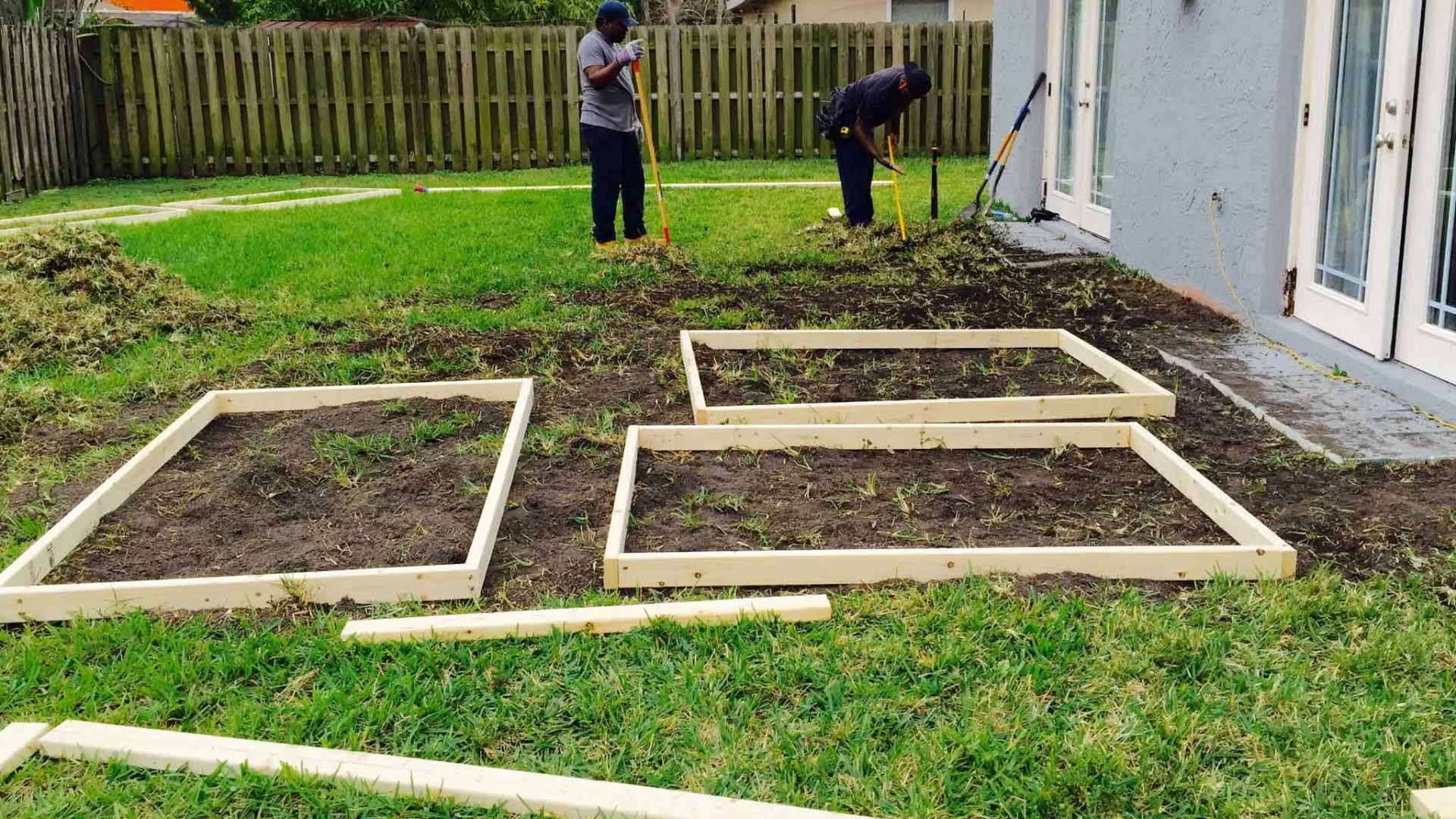
If you’ve ever seen a concrete driveway crack prematurely, a foundation wall bow outward, or a patio slope the wrong way, there’s a good chance the problem started long before the concrete truck arrived. In many cases, the root cause isn’t the concrete itself—it’s the formwork. Concrete formwork is the silent framework that determines the shape, strength, and finish of every concrete project. When it’s done right, the pour goes smoothly and the results last for decades. When it’s done poorly, even the best concrete mix can fail.
For homeowners, builders, and developers alike, understanding concrete formwork basics provides valuable insight into why professional preparation matters so much. With over 35 years of hands-on experience delivering residential and commercial concrete projects in Calgary, we’ve seen firsthand how proper formwork sets the stage for a high-quality pour. This guide walks you through the fundamentals—what formwork is, why it matters, and how it’s properly set up—so you know what to expect and what to look for before any concrete is placed.
What Is Concrete Formwork?
Definition of Concrete Formwork
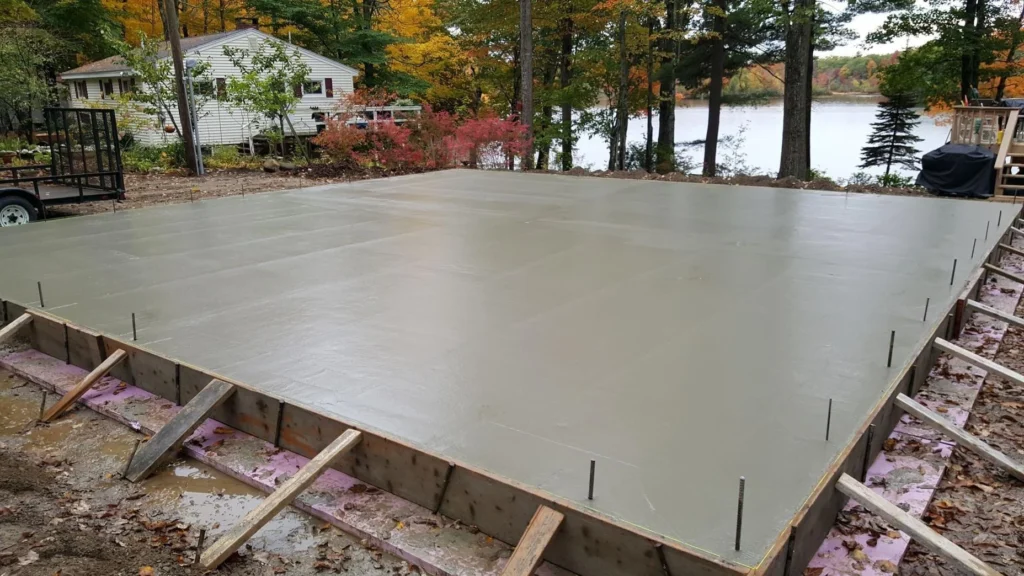
Concrete formwork refers to the temporary or permanent molds used to hold wet concrete in place until it hardens and gains enough strength to support itself. These forms define the concrete’s final shape, dimensions, elevation, and alignment. In simple terms, formwork is the “container” that concrete is poured into, whether it’s for a driveway, foundation wall, staircase, or structural slab.
Formwork can be built from wood, metal, plastic, or insulated systems, depending on the project requirements. Once the concrete cures, temporary forms are stripped away, leaving behind the hardened structure. Permanent form systems, such as insulated concrete forms (ICFs), remain in place and become part of the finished assembly.
Why Formwork Quality Matters
The quality of concrete formwork directly affects both the appearance and performance of the finished concrete. Properly built forms ensure the concrete is placed exactly where it’s intended, at the correct thickness, and with consistent support during curing. Poorly built forms, on the other hand, can shift, bulge, or fail under pressure, leading to costly repairs or complete replacement.
- Structural integrity: Accurate formwork helps concrete achieve its designed load-bearing capacity.
- Dimensional accuracy: Straight, square, and level forms prevent uneven surfaces and alignment issues.
- Surface finish: Tight joints and clean form faces reduce honeycombing and surface defects.
- Cost control: Correct formwork minimizes rework, delays, and material waste.
According to industry research published by the American Concrete Institute, formwork can account for up to 40–60% of the total cost of a concrete structure when labor and materials are combined. That statistic alone highlights how critical formwork is to overall project success.
Before hiring a contractor, it’s important to understand what protection you receive after the pour. Reviewing detailed concrete contractor warranties and guarantees helps ensure your investment is protected long after the forms are stripped.
Types of Concrete Formwork Systems
Traditional Wood Formwork
Wood formwork is one of the most common systems used in residential concrete construction. Typically built from plywood and dimensional lumber, wood forms are highly adaptable and well-suited for custom shapes and site-specific conditions.
In residential projects such as driveways, sidewalks, and patios, wood formwork allows crews to adjust elevations, slopes, and curves with precision. However, it also requires skilled installation. Improper fastening, weak bracing, or poor material selection can lead to form movement during the pour.
Advantages: Flexible, cost-effective for small projects, easy to customize.
Disadvantages: Labor-intensive, less reusable, higher risk of inconsistency if not installed by experienced crews.
Metal and Aluminum Formwork
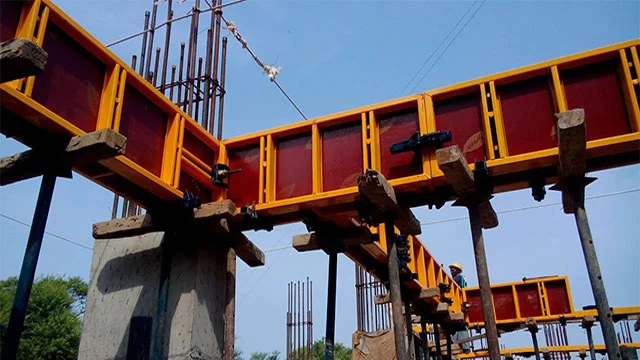
Metal and aluminum formwork systems are commonly used in commercial and large-scale residential applications where repetition and accuracy are critical. These systems are engineered for strength and are designed to handle higher concrete pressures without deformation.
Because aluminum forms are lightweight and modular, they allow for faster setup and stripping compared to traditional wood forms. This efficiency makes them ideal for foundations, retaining walls, and multi-unit developments where speed and consistency matter.
While the upfront cost is higher, the durability and reusability of metal formwork often result in long-term savings for larger projects.
Plastic and Modular Form Systems
Plastic and modular form systems are increasingly popular in residential construction. These systems are lightweight, reusable, and designed to interlock, creating consistent and uniform results. They are commonly used for foundation walls, grade beams, and small structural elements.
For contractors, modular systems reduce labor time and improve consistency. For property owners, this translates into straighter walls, smoother finishes, and fewer construction delays.
Insulated Concrete Forms (ICFs)
Insulated concrete forms are a permanent formwork system made from rigid insulation panels that remain in place after the concrete cures. These systems serve a dual purpose: forming the concrete and providing continuous insulation.
ICFs are especially well-suited for foundations and structural walls in climates like Calgary, where energy efficiency and thermal performance are key considerations. Buildings constructed with ICFs often achieve higher energy efficiency ratings and improved indoor comfort.
Key Components of a Concrete Formwork System
Form Panels
Form panels create the actual mold that shapes the concrete. Whether made of plywood, steel, aluminum, or plastic, panels must be strong enough to withstand the pressure of freshly placed concrete without bending or leaking.
Panel thickness, material quality, and surface condition all influence the final concrete finish. Warped or damaged panels can leave visible imperfections that affect both appearance and durability.
Stakes, Bracing, and Ties
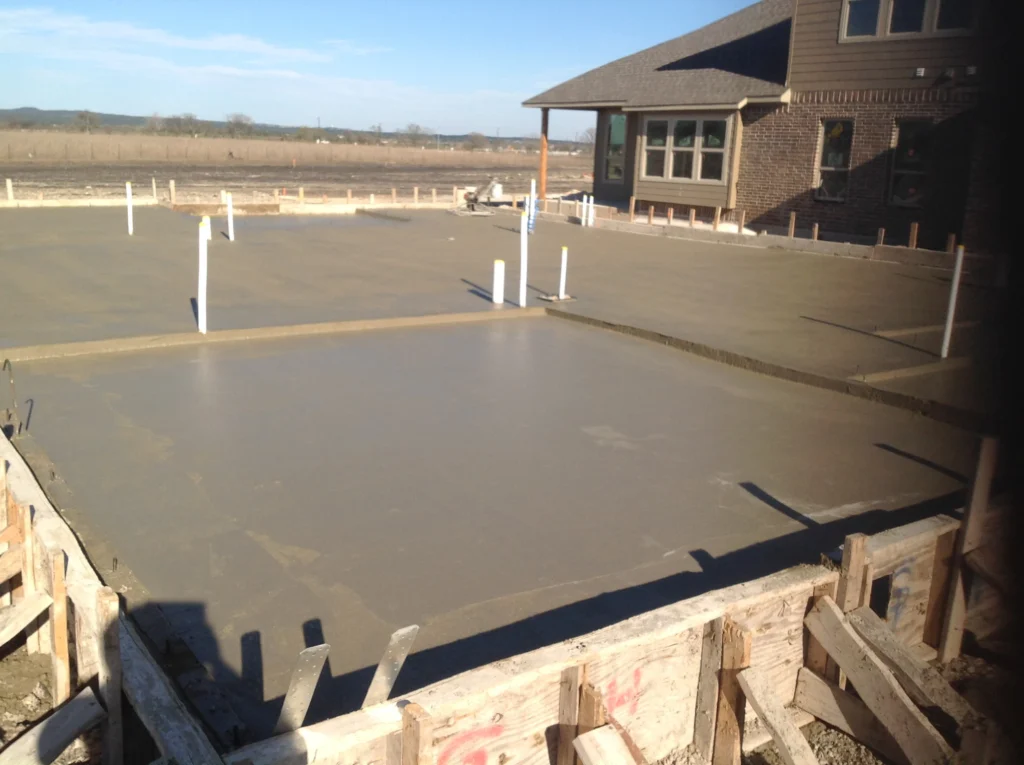
Stakes, braces, and form ties are what keep form panels in place during the pour. Fresh concrete behaves like a liquid and exerts significant lateral pressure, especially in walls and deep pours. Without adequate bracing, forms can shift or fail entirely.
Proper bracing is not guesswork—it’s calculated based on pour height, concrete placement rate, and mix design. Experienced concrete crews understand how to space stakes and braces to maintain alignment and prevent blowouts.
Release Agents
Release agents are applied to form surfaces before the pour to prevent concrete from bonding to the forms. This allows for clean removal once the concrete has cured and helps protect both the concrete surface and the form materials.
Using the correct release agent also improves surface appearance and reduces patching or surface repairs after stripping.
Research from the National Ready Mixed Concrete Association highlights improper subgrade preparation as a leading cause of premature concrete failure.
Step-by-Step: How to Set Up Concrete Formwork Properly
Site Preparation and Layout
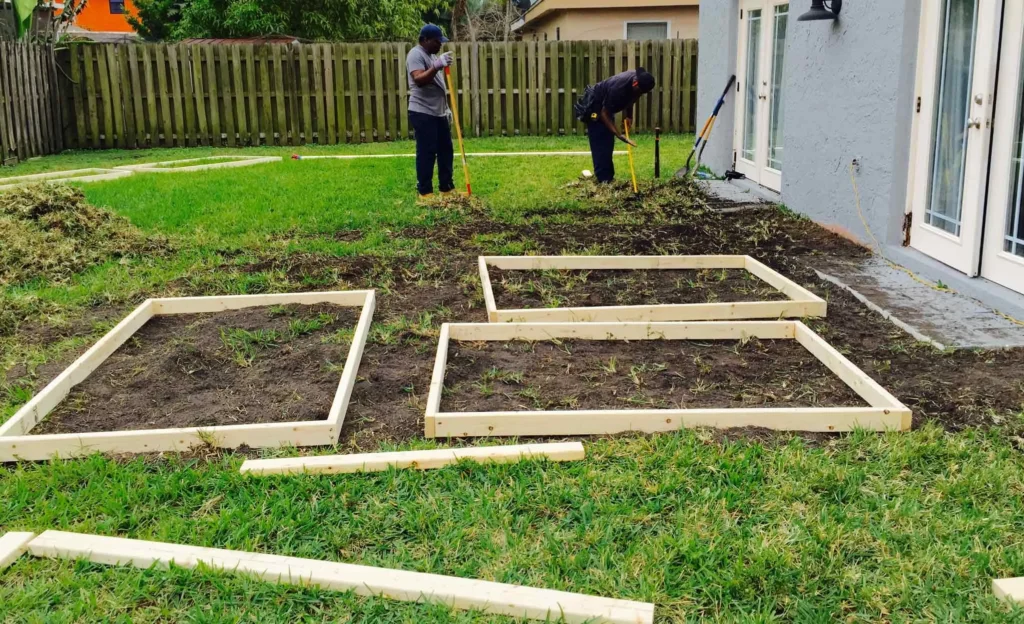
Every quality concrete pour starts with thorough site preparation. This includes excavation to the correct depth, proper soil compaction, and ensuring adequate drainage. In Calgary’s freeze-thaw climate, poor subgrade preparation can lead to settlement and cracking, regardless of how good the concrete itself may be.
Once the subgrade is prepared, layout lines are established using string lines, stakes, and laser levels. Accurate layout ensures the finished concrete meets design dimensions and slopes correctly for drainage.
A study by the National Ready Mixed Concrete Association shows that improper subgrade preparation is one of the leading causes of premature concrete failure, reinforcing the importance of getting this step right.
Building and Positioning the Forms
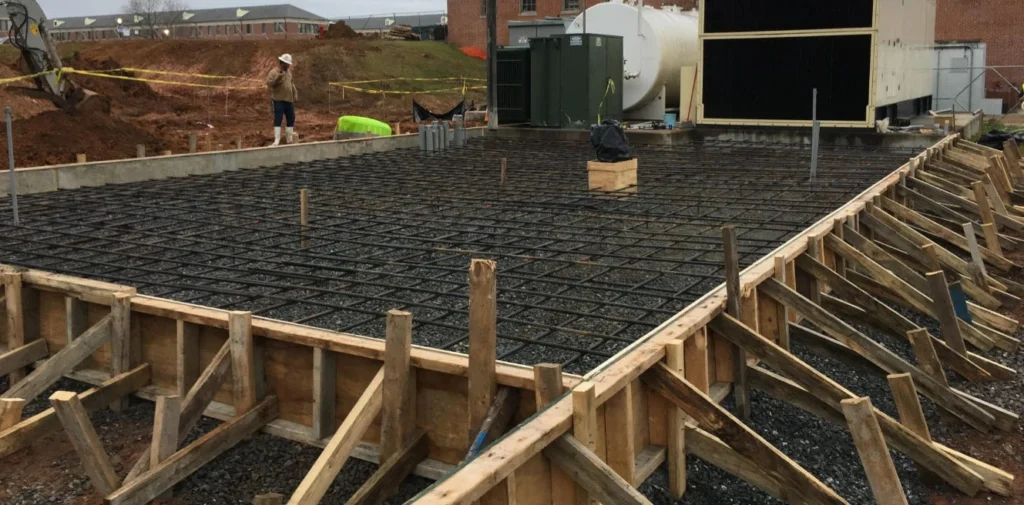
After layout, form panels are assembled and positioned according to the project design. Crews carefully check for straightness, square corners, and correct elevations. Even minor deviations at this stage can result in visible defects once the concrete hardens.
Professional concrete contractors rely on levels, lasers, and measuring tools to verify alignment before moving forward. This attention to detail is what separates long-lasting concrete work from short-term fixes.
If a contractor minimizes the importance of bracing, alignment, or inspection, that can be one of several serious concrete contractor red flags homeowners should never ignore.
Bracing and Reinforcement
Once the forms are positioned, bracing becomes the critical safeguard that holds everything together during the pour. Fresh concrete exerts significant lateral pressure, especially in vertical elements like foundation walls or deep grade beams. Without proper bracing, even well-built forms can shift, bow, or fail entirely.
Bracing systems typically include diagonal kickers, horizontal walers, and form ties designed to distribute pressure evenly. The spacing and strength of these components depend on factors such as pour height, concrete placement rate, and ambient temperature. For example, faster pours increase pressure, requiring closer bracing intervals.
Reinforcement placement also ties directly into formwork quality. Rebar, wire mesh, or fiber reinforcement must be correctly positioned within the forms to meet structural requirements. If forms are misaligned, reinforcement can end up too close to the surface, increasing the risk of corrosion and long-term damage.
Final Pre-Pour Inspection
Before any concrete is placed, a thorough pre-pour inspection is essential. This step ensures that all formwork components are secure, aligned, and ready to handle the load. Experienced concrete crews follow a detailed checklist to avoid surprises once the pour begins.
- Confirm forms are level, square, and at correct elevations
- Check bracing and ties for tightness and stability
- Ensure reinforcement is properly spaced and supported
- Verify form release agent has been applied evenly
- Confirm access for concrete placement and finishing
Skipping this inspection can lead to costly delays or structural issues that are difficult to correct after the concrete sets.
Common Concrete Formwork Mistakes (And How to Avoid Them)
Inadequate Bracing
One of the most common formwork failures occurs when forms are under-braced. As concrete is placed, pressure builds rapidly, and weak points give way. This can result in bulging walls, uneven surfaces, or complete form blowouts.
Avoiding this issue requires understanding concrete pressure and installing bracing based on engineering principles, not assumptions. Experienced contractors plan bracing layouts in advance rather than reacting during the pour.
Poor Alignment and Leveling
Forms that are not properly aligned or leveled lead to sloped driveways, uneven patios, and walls that are visibly out of plumb. These issues are often noticeable immediately after stripping and can significantly reduce both functionality and visual appeal.
Using laser levels, string lines, and frequent checks during setup ensures alignment remains accurate from start to finish.
Ignoring Concrete Pressure
Concrete behaves like a liquid when freshly placed. Many formwork failures happen because this hydrostatic pressure is underestimated. Taller pours and faster placement rates dramatically increase lateral forces on forms.
Managing pressure means controlling pour speed, using appropriate mix designs, and reinforcing form systems accordingly.
Rushing the Setup
Time pressure can tempt crews to rush formwork installation, but shortcuts almost always lead to problems. A few extra hours spent on careful setup can prevent days of repairs or complete replacement.
Residential vs Commercial Concrete Formwork
Residential Applications
Residential formwork is commonly used for driveways, patios, walkways, garage pads, and stairs. These projects often involve complex slopes for drainage and tight tolerances around existing structures.
Proper formwork ensures water drains away from buildings, surfaces remain level, and edges are clean and durable. Even small residential pours benefit significantly from professional-grade setup.
Commercial and Structural Applications
Commercial concrete formwork must meet higher structural demands and stricter code requirements. Foundations, retaining walls, and structural slabs often require engineered form systems and detailed inspection processes.
Because loads are higher and tolerances tighter, commercial formwork relies heavily on modular systems, engineered bracing, and coordinated placement strategies.
Differences in Code and Load Requirements
Building codes in Alberta require specific standards for concrete thickness, reinforcement, and structural performance. Commercial projects often involve additional inspections and engineering oversight, making precision in formwork even more critical.
Climate Considerations for Concrete Formwork in Calgary
Cold Weather Challenges
Calgary’s climate introduces unique challenges for concrete formwork. Cold temperatures can affect soil conditions, concrete curing rates, and overall project timing. In colder months, forms must account for frost protection and thermal control.
Moisture and Freeze-Thaw Cycles
Repeated freeze-thaw cycles can accelerate concrete deterioration if formwork allows water infiltration or improper drainage. Well-designed forms help create dense, well-compacted concrete that resists moisture penetration.
Seasonal Planning for Quality Results
Experienced contractors plan pours around seasonal conditions, adjusting mix designs, curing methods, and formwork strategies to ensure consistent quality year-round.
When to Hire a Professional Concrete Contractor
Signs a Project Requires Professional Formwork
While small DIY projects may seem manageable, many concrete applications require professional expertise. Structural elements, complex layouts, and code-regulated work benefit significantly from experienced crews.
- Foundations and retaining walls
- Stamped or decorative concrete
- Projects requiring permits or inspections
- Cold-weather pours
Benefits of Experienced Concrete Forming Crews
Professional contractors bring proven systems, skilled labor, and accountability to every project. This reduces risk, improves efficiency, and ensures the finished concrete performs as intended for decades.
Why Proper Formwork Leads to a Better Concrete Finish
Surface Quality and Edges
Tight, well-aligned forms create crisp edges, smooth surfaces, and consistent textures. This is especially important for visible concrete such as driveways, patios, and stairs.
Long-Term Performance
Concrete that is properly formed cures evenly and develops its full strength potential. This results in fewer cracks, better load distribution, and improved durability over time.
Frequently Asked Questions About Concrete Formwork
How long should concrete forms stay in place?
Forms typically remain in place for 24–48 hours for flatwork and several days for walls, depending on weather conditions and structural requirements.
Can concrete be poured without forms?
Most concrete applications require some form of containment or edge control. Without forms, achieving accurate shape, level, and finish is extremely difficult.
What happens if forms move during a pour?
Movement during a pour can cause misalignment, uneven surfaces, or structural defects. This often requires grinding, patching, or full replacement.
Are reusable form systems better?
Reusable systems offer consistency and efficiency, especially for larger projects. The best choice depends on project size, complexity, and budget.
How much does professional concrete formwork cost?
Costs vary based on project size, form type, and complexity. While professional formwork may cost more upfront, it often saves money by preventing failures and rework.
Conclusion: The Foundation of Every Quality Concrete Project
Concrete formwork is far more than a temporary structure—it’s the foundation of every successful concrete pour. From defining shape and alignment to supporting concrete under pressure, proper formwork ensures strength, durability, and visual appeal.
By understanding the basics of concrete formwork, property owners and builders can make informed decisions and recognize the value of professional preparation. Investing in quality formwork is one of the most effective ways to ensure your concrete project stands the test of time.
Ready to Start Your Concrete Project?
If you’re planning a concrete driveway, foundation, patio, stairs, or walkway in Calgary, working with an experienced concrete contractor makes all the difference. With decades of hands-on experience, proven formwork systems, and a commitment to quality, we help ensure every pour is set up for long-term success.
Contact us today to request a quote or schedule a consultation—and start your concrete project the right way, from the ground up.