
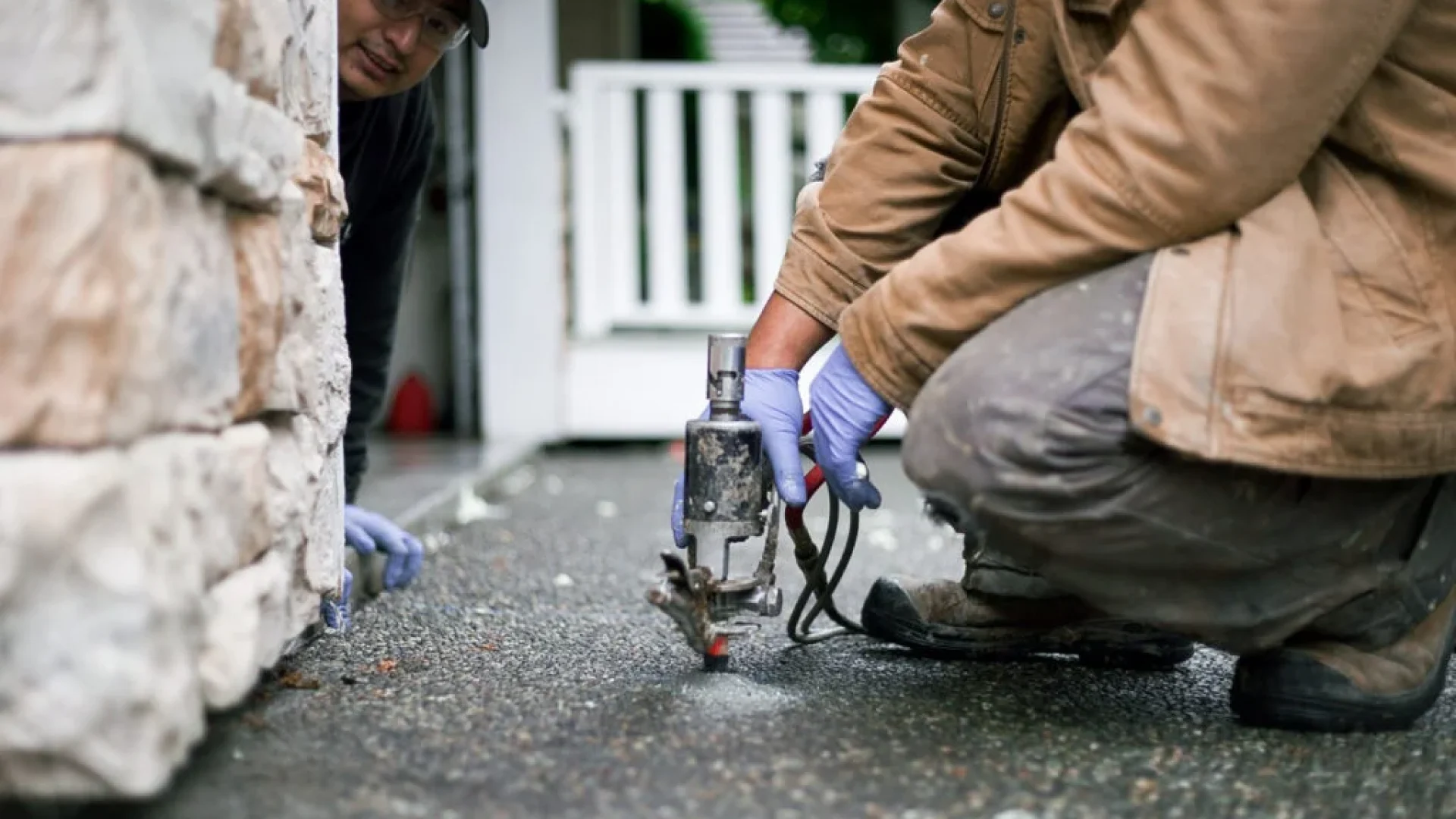
If your driveway, sidewalk, or patio in Calgary has started to sink or slope, you’re not alone. Uneven concrete is a common issue across the city due to expansive clay soils, freeze-thaw cycles, and fluctuating moisture levels. The good news? In many cases, you don’t need to tear out and replace the concrete. Professional concrete leveling can often restore safety, appearance, and function at a fraction of the cost.
In this guide, we’ll break down concrete leveling cost in Calgary, explain how mudjacking and polyleveling work, and help you determine which solution makes the most sense for your property. Drawing on over 35 years of hands-on concrete experience in Calgary, this article is designed to give you clear, honest, and practical insights—without sales hype.
What Is Concrete Leveling and Why It’s Needed in Calgary
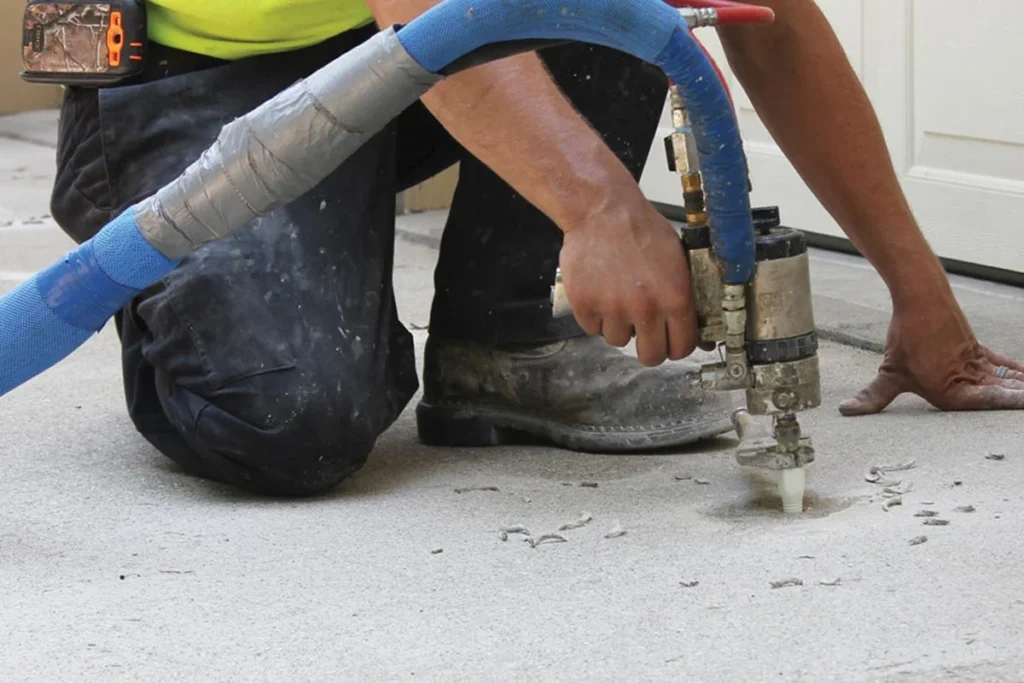
Concrete leveling, sometimes called concrete lifting, is a repair method used to raise sunken or uneven concrete slabs back to their original position. Instead of demolishing and replacing the slab, material is injected beneath it to fill voids and lift it evenly from below.
In Calgary, concrete leveling isn’t just about aesthetics—it’s about safety, drainage, and protecting your long-term investment. Uneven slabs create tripping hazards, cause water to pool near foundations, and can accelerate cracking if left unaddressed.
Common Causes of Sunken Concrete in Calgary
Calgary’s climate and soil conditions are especially hard on concrete. The most common causes of settlement include:
- Expansive clay soils: Much of Calgary sits on clay-based soils that expand when wet and shrink when dry, creating voids under concrete slabs.
- Freeze-thaw cycles: Water beneath concrete freezes, expands, and then melts, gradually shifting the soil base over time.
- Poor base preparation: Older concrete or improperly compacted subgrades can settle unevenly.
- Water erosion: Downspouts, poor grading, or melting snow can wash away supporting soil.
According to the National Research Council of Canada, freeze-thaw damage combined with moisture movement is one of the leading causes of concrete distress in cold climates like Southern Alberta.
Left untreated, uneven concrete can worsen drainage and increase the foundation repair cost in Calgary, especially when water is allowed to pool near basement walls or footings.
Concrete Areas That Commonly Need Leveling
Concrete leveling is commonly used for:
- Driveways with settled panels near the garage or street
- Sidewalks and walkways that have become trip hazards
- Patios that now slope toward the house
- Garage floors with uneven transitions
- Concrete steps and landings
In many real-world Calgary projects, homeowners are surprised to learn that lifting a slab can restore functionality in a single day, with minimal disruption to landscaping or daily use.
Overview of Concrete Leveling Methods
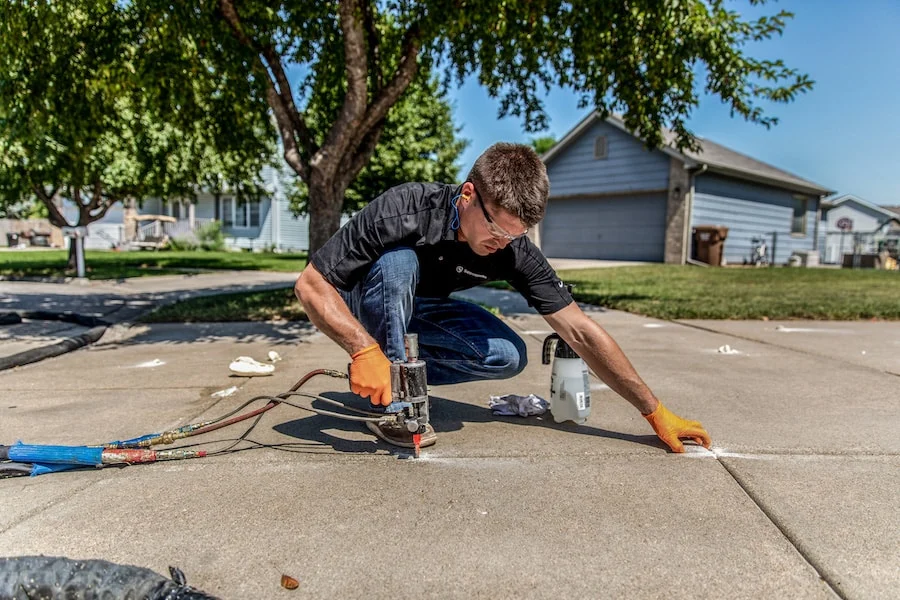
There are two primary professional methods used to level concrete in Calgary: mudjacking and polyleveling. While both aim to solve the same problem, they differ significantly in materials, cost, precision, and long-term performance.
What Is Mudjacking?
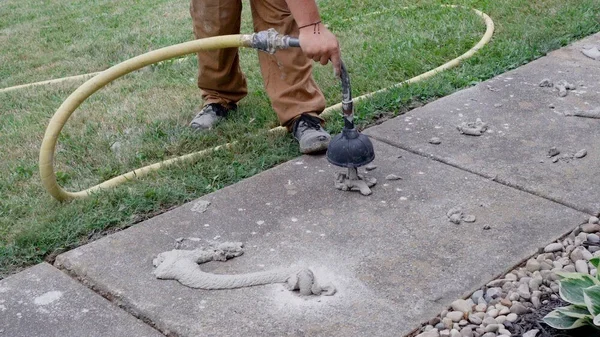
Mudjacking—also known as slabjacking—is a traditional concrete leveling method that has been used for decades. It involves pumping a cement-based slurry beneath the sunken slab to lift it back into place.
The slurry typically consists of sand, cement, water, and sometimes additives. Because it is relatively heavy, mudjacking works best where large voids need to be filled and where minor future settlement is less critical.
How Mudjacking Is Performed (Step-by-Step)
- Small holes (usually 1–2 inches in diameter) are drilled through the concrete slab.
- A pressurized cement slurry is pumped beneath the slab.
- The slab is gradually lifted and leveled.
- The holes are patched with cement and finished to blend in.
Mudjacking has long been popular for sidewalks, older driveways, and large commercial slabs where cost control is a priority.
What Is Polyleveling?
Polyleveling is a newer concrete lifting technology that uses high-density polyurethane foam instead of cement slurry. The foam is injected beneath the slab, where it expands, fills voids, and lifts the concrete with remarkable precision.
Because polyurethane foam is extremely lightweight yet strong, it adds minimal load to the underlying soil—an important advantage in Calgary’s sensitive clay conditions.
How Polyleveling Works (Step-by-Step)
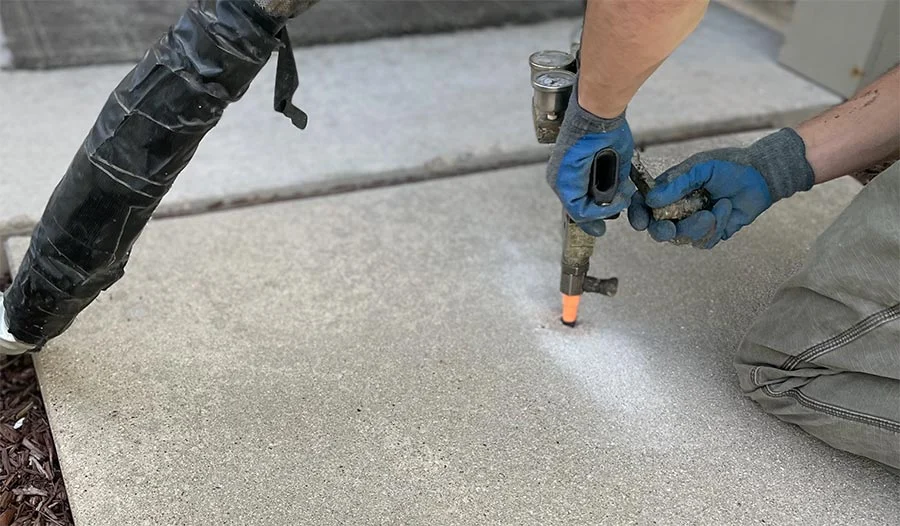
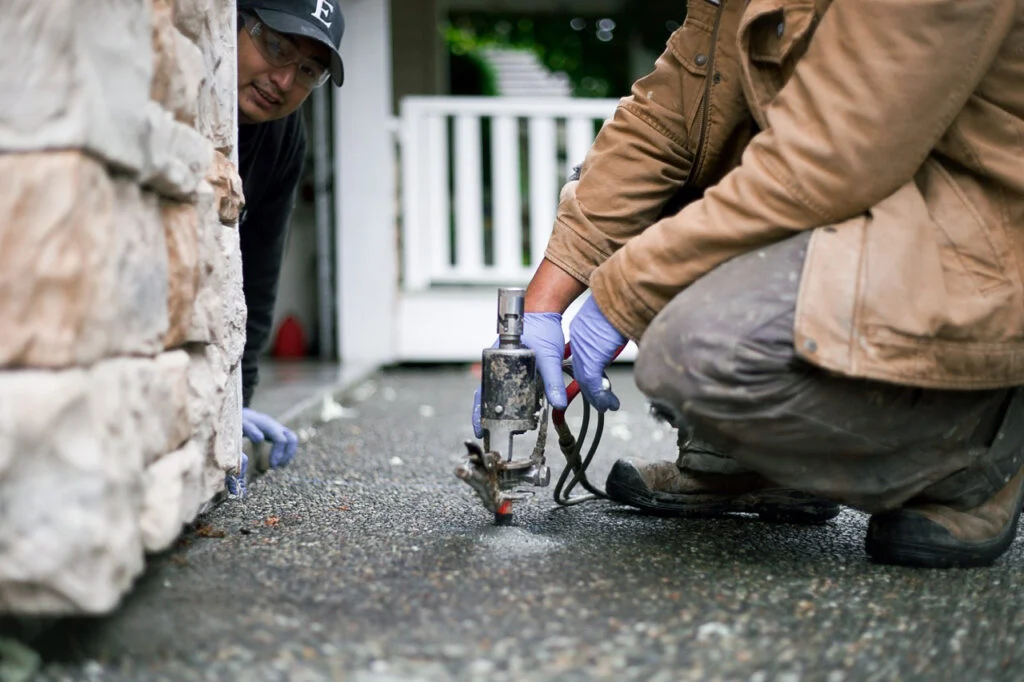
- Small injection ports (often less than ⅝ inch) are drilled into the slab.
- Liquid polyurethane foam is injected beneath the concrete.
- The foam expands within seconds, lifting and stabilizing the slab.
- Ports are sealed, and the area is ready for use almost immediately.
According to the American Concrete Institute, polyurethane foam systems can achieve higher lift accuracy and longer-term stability when soil conditions are variable—making them increasingly popular in residential settings.
After leveling is complete, knowing how to clean concrete surfaces properly helps preserve appearance and prevents dirt buildup that can hide early signs of movement.
Concrete Leveling Cost in Calgary (Detailed Breakdown)
Understanding concrete leveling cost in Calgary requires looking beyond simple price tags. Costs vary based on slab size, depth of settlement, access, and the method used. However, general pricing ranges can help homeowners budget realistically.
Average Concrete Leveling Costs in Calgary
While every project is unique, most Calgary homeowners can expect concrete leveling to cost significantly less than full replacement. On average:
- Small residential leveling projects typically range from a few hundred to a few thousand dollars.
- Concrete replacement for the same areas often costs three to five times more, especially when demolition and disposal are involved.
An experienced contractor will always assess soil conditions, drainage issues, and slab integrity before recommending a solution. In some cases, leveling may not be appropriate if the concrete is structurally compromised.
Mudjacking Cost in Calgary
Mudjacking is generally the more affordable of the two leveling methods. In Calgary, typical mudjacking costs are influenced by:
- The number of slabs being lifted
- The total square footage
- The volume of slurry required
- Site accessibility
For many homeowners, mudjacking represents a practical, budget-friendly solution—especially for sidewalks, older driveways, or areas where cosmetic perfection is less critical.
Factors That Increase Mudjacking Costs
- Deep voids requiring large amounts of material
- Difficult access for pumping equipment
- Multiple settlement points requiring staged lifting
It’s important to note that because the slurry is heavy, it can sometimes contribute to future settlement if underlying soil issues are not addressed. A reputable contractor will explain these trade-offs clearly before work begins.
Polyleveling Cost in Calgary
Polyleveling typically costs more upfront than mudjacking, but it offers higher precision and long-term stability—qualities that matter in Calgary’s challenging soil conditions. The overall price is influenced by the amount of polyurethane foam required, the accuracy needed to achieve proper drainage, and the structural sensitivity of the slab being lifted.
Homeowners often choose polyleveling for visible or high-performance areas such as driveways near garage slabs, front entry walkways, and patios that slope toward the foundation. While the initial investment is higher, many clients view it as a longer-term solution with fewer future adjustments.
Factors That Affect Polyleveling Pricing
- Depth and size of voids beneath the concrete
- Level of precision required for drainage control
- Number of injection points needed
- Accessibility for specialized equipment
Because the foam cures within minutes, surfaces can often be used the same day—an important benefit for busy households or commercial properties.
Mudjacking vs Polyleveling Cost Comparison
To help clarify the differences, the table below compares the two methods across cost, performance, and suitability for Calgary conditions.
| Factor | Mudjacking | Polyleveling |
|---|---|---|
| Typical Cost | Lower upfront cost | Higher upfront cost |
| Material Weight | Heavy cement-based slurry | Lightweight polyurethane foam |
| Precision | Moderate | High |
| Cure Time | Several hours to a day | Minutes |
| Longevity | Good, but may settle again | Excellent long-term stability |
| Best Use Cases | Sidewalks, older slabs, large areas | Driveways, patios, structural slabs |
Pros and Cons of Mudjacking
Advantages of Mudjacking
- Lower initial cost compared to polyleveling
- Well-established, proven technique
- Effective for large, heavy slabs
Disadvantages of Mudjacking
- Heavy material can contribute to future settlement
- Larger drill holes are more noticeable
- Not as precise for fine leveling adjustments
- Longer cure time
Mudjacking remains a solid option when budget is the primary concern and minor future movement is acceptable.
Pros and Cons of Polyleveling
Advantages of Polyleveling
- Extremely lightweight, reducing soil stress
- High precision for proper drainage
- Fast curing—often same-day use
- Long-lasting performance in Calgary climates
Disadvantages of Polyleveling
- Higher upfront cost
- Not necessary for all applications
For homeowners prioritizing durability, accuracy, and long-term value, polyleveling is often the preferred solution.
Which Concrete Leveling Method Is Best for Calgary Homes?
Best Choice for Driveways
Driveways often benefit from polyleveling due to the need for precise slope control and long-term stability under vehicle loads.
Best Choice for Sidewalks and Walkways
Mudjacking is commonly sufficient for sidewalks, especially where cost efficiency is a priority and appearance is secondary.
Best Choice for Patios and Steps
Polyleveling excels in patios and steps where drainage toward the home must be avoided and surface appearance matters.
When Concrete Replacement Is the Better Option
If concrete is severely cracked, heaved, or structurally compromised, replacement may be more cost-effective long term. An experienced contractor will advise honestly when leveling is no longer suitable.
How Long Does Concrete Leveling Last?
Mudjacking Lifespan in Calgary
Mudjacking typically lasts several years, but performance depends heavily on soil conditions and drainage improvements.
Polyleveling Lifespan in Calgary
Polyleveling can last decades due to its moisture resistance and minimal soil impact, making it ideal for Calgary’s freeze-thaw cycles.
Maintenance Tips to Extend Results
- Improve surface drainage
- Extend downspouts away from slabs
- Seal joints and cracks regularly
Why Hire a Professional Concrete Leveling Contractor in Calgary
Risks of DIY Concrete Leveling
Improper lifting can crack slabs, worsen settlement, or create drainage issues that damage foundations.
Importance of Soil and Drainage Assessment
Experienced contractors assess underlying causes—not just symptoms—to prevent recurring problems.
Equipment, Experience, and Safety
Professional-grade equipment and trained crews ensure controlled lifting and consistent results.
Why Choose Omega 2000 for Concrete Leveling in Calgary
With over 35 years of experience in Calgary’s concrete industry, Omega 2000 provides honest assessments, expert workmanship, and full-service concrete solutions—from leveling and repairs to complete replacement when required.
Our team understands local soil behavior, climate challenges, and long-term performance expectations. We don’t push one method—we recommend the right solution for your property.
Concrete Leveling Cost in Calgary: Frequently Asked Questions
How much does concrete leveling cost in Calgary?
Costs vary by method, slab size, and soil conditions, but leveling is typically far more affordable than replacement.
Is mudjacking cheaper than polyleveling?
Yes, mudjacking usually has a lower upfront cost, while polyleveling offers longer-term performance.
Does concrete leveling increase home value?
Level, safe concrete improves curb appeal, safety, and buyer confidence.
How long does the process take?
Most residential projects are completed in a few hours, with polyleveling often ready for use the same day.
Can concrete leveling be done in winter?
Concrete leveling is typically performed during warmer months, but assessments can be done year-round.
Get a Concrete Leveling Quote in Calgary
If you’re dealing with sunken or uneven concrete, professional leveling may be the smartest and most cost-effective solution. A proper on-site assessment is the only way to determine the right method and accurate pricing.
Contact Omega 2000 today to schedule a concrete leveling evaluation and get expert guidance you can trust. Restoring safety, function, and value starts with the right information—and the right contractor.