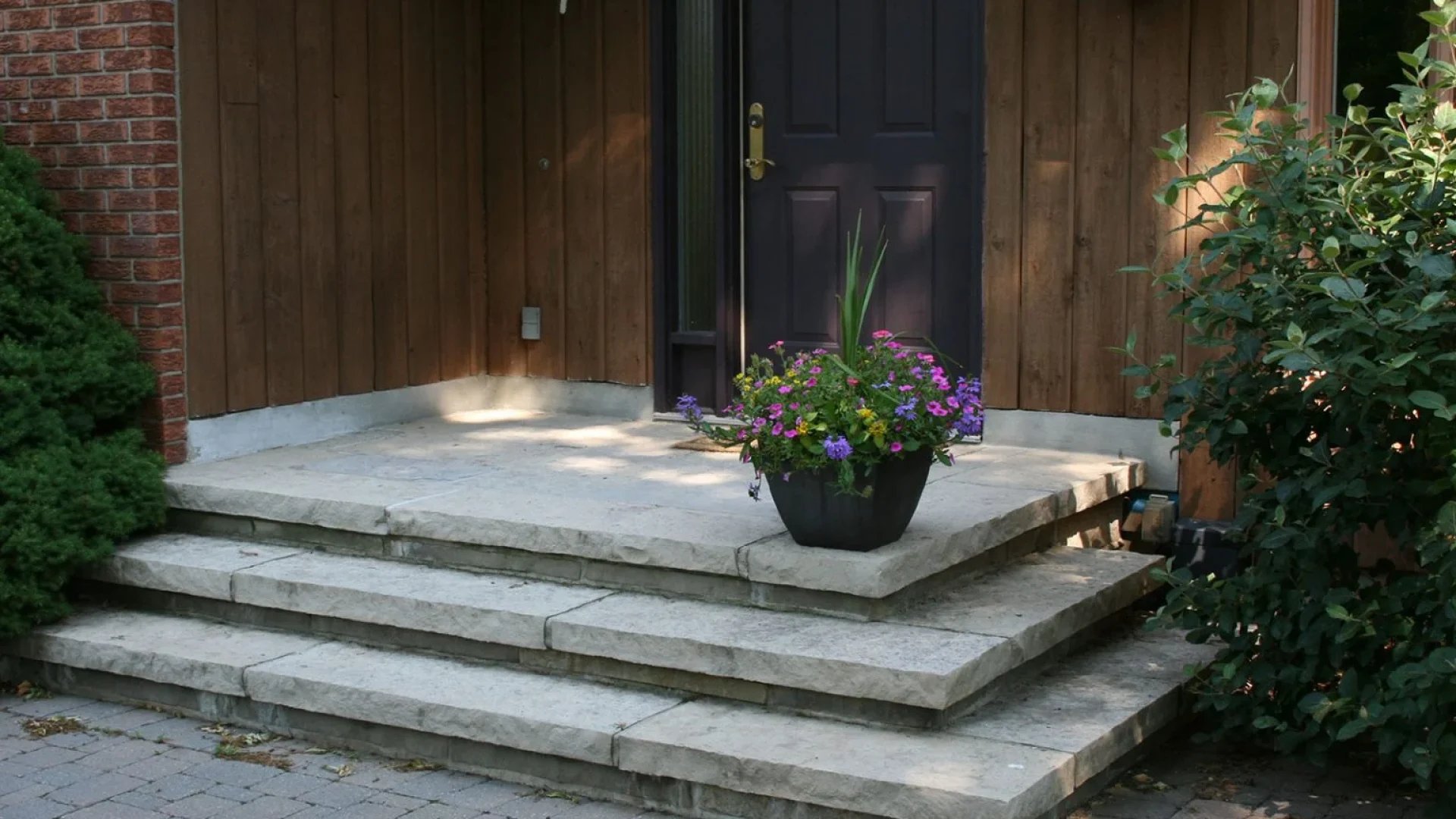
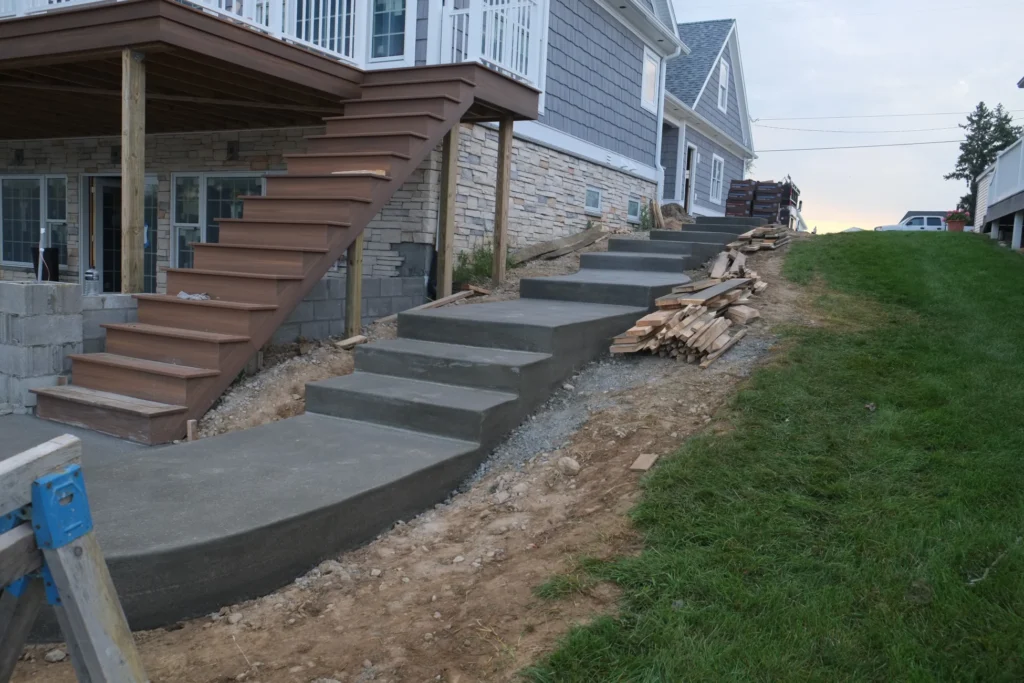
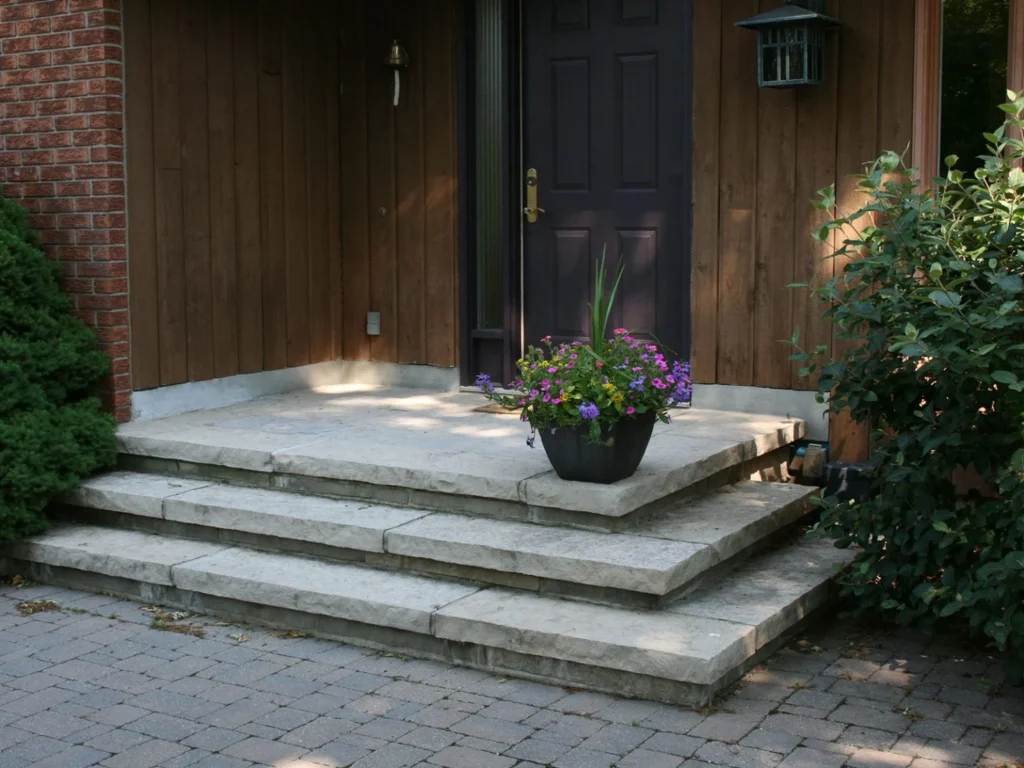
I like an entrance that feels calm when you carry groceries or walk out with a toddler. Concrete steps should feel the same from the first tread to the last, and concrete landings should give you a place to turn without rushing.
That sense of calm does not happen by accident. It comes from understanding how people naturally slow down, turn, and shift weight when approaching a door. Good concrete steps guide movement instead of forcing it.
Omega 2000 looks at concrete steps and concrete landings as one build. They focus on safety, drainage, and finish choices that stand up to winter use.
By treating the stairs and landing as a single system, they avoid the common problem where steps feel fine but the landing becomes slippery, cramped, or uneven over time.
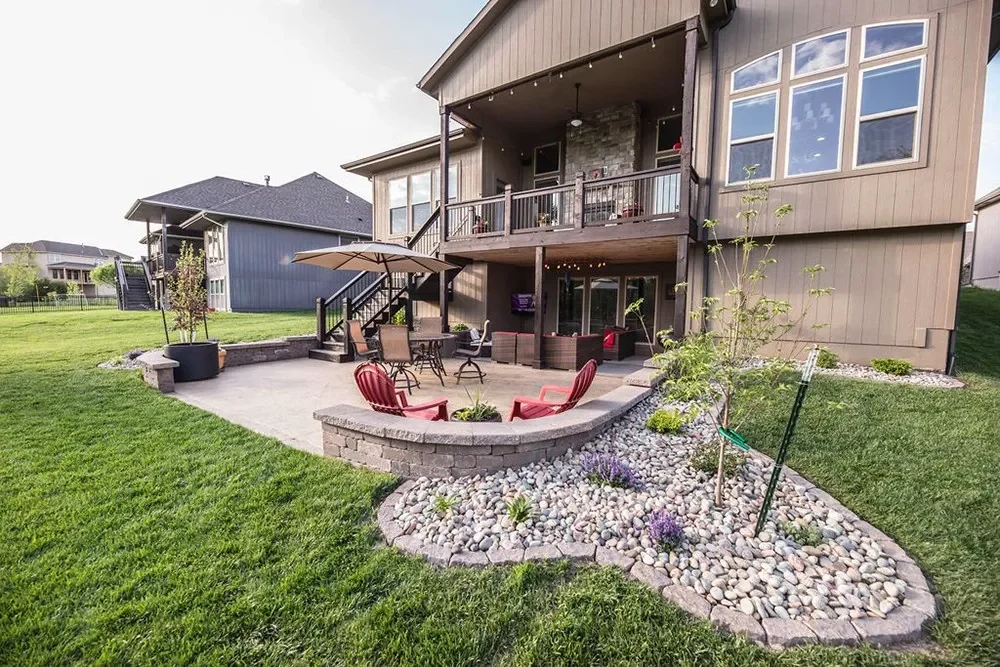
Proper landings and drainage protect walk-out basements from water and slip hazards.
What winter does to concrete
Let’s break it down. Calgary puts concrete through freeze and thaw, plus meltwater and de-icing salts.
When water sits on the surface and then freezes, concrete can scale if the mix and finishing do not match the exposure. Air-entrained concrete and careful finishing practices help reduce scaling risk in severe freezing and thawing conditions.
In Calgary, winter damage usually starts small. Fine surface flaking, hairline cracking, or dark moisture patches often show up long before major failure. These early signs are almost always linked to water sitting where it shouldn’t.
That’s why exterior concrete steps and landings must be designed with winter in mind from day one—not retrofitted after problems appear.
Industry guidance on freeze–thaw durability shows that air entrainment and proper finishing significantly reduce scaling in exterior concrete exposed to de-icing salts and meltwater.
Step size matters more than most people think
This is the part I do not compromise on. A staircase feels safe when each step repeats.
Alberta guidance calls for consistent rise and run within a flight of stairs, and it lists ranges used for exterior stairs.
Omega 2000 sets the layout so each tread and riser stays consistent. They keep the same width where people walk so the stairs do not feel awkward.
Even small variations—less than half an inch—can throw off muscle memory. People notice it subconsciously, especially when visibility is reduced by snow, ice, or low light.
Consistent geometry does more than meet code. It reduces slips, improves confidence, and makes stairs feel natural instead of technical.
Alberta building guidance emphasizes consistent rise and run within a flight of stairs to improve safety and reduce missteps—especially in icy conditions.
Safe, durable concrete steps start with smart design—especially in Calgary’s climate.
Landings are not “extra”
Here is why. Concrete landings create a pause point. They also give you room to open the door, turn, and manage snow buildup.
Concrete landings can also tie into patios and walkways so the property reads as one route.
A properly sized landing also reduces wear on door hardware and framing by allowing doors to swing freely without obstruction.
In winter, that extra space matters. It gives you somewhere to stand while clearing snow or shaking off ice without stepping backward onto a narrow tread.
Drainage and slope at the stairwell
Next steps: decide where water will go before you pick a finish.
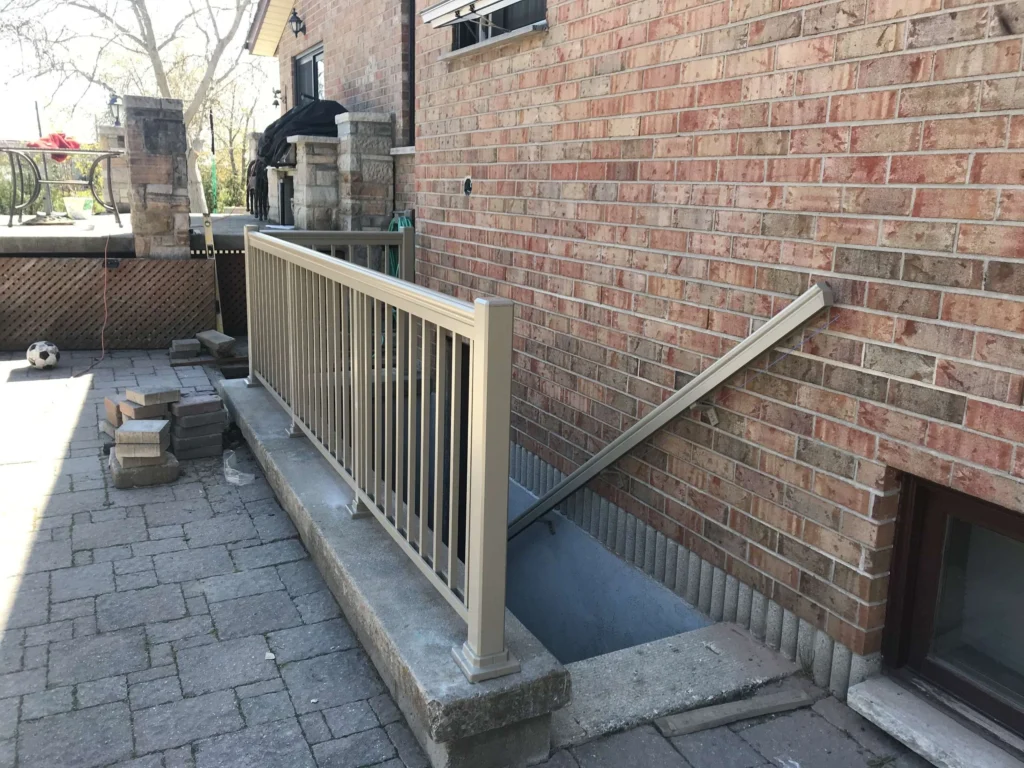
A basement entrance stairwell should move water away from the door and away from the foundation. Many waterproofing guides call for a dedicated drain at the base of the stairwell, plus a path to a weeping tile or sump system where that applies.
When the landing sheds water well, you cut down on ice at the door and reduce wet conditions on the steps.
Poor drainage is one of the most common reasons concrete steps fail early. Standing water accelerates freeze–thaw damage and increases slip risk long before visible cracking occurs.
A slight, intentional slope—designed early—does far more for safety than any surface treatment added later.
Some homeowners also compare stamped concrete to unit pavers for steps and landings. A clear stamped concrete vs pavers comparison helps weigh factors like joint maintenance, drainage behavior, and winter performance.
Handrails and guard details
The city publishes a stair handrail bulletin that includes a handrail height range measured from stair nosings.
I like to plan the rail early because it affects the landing size and post locations. Omega 2000 builds concrete steps so rails can anchor cleanly at the entrance.
Planning handrails after the concrete is poured often leads to awkward anchors or compromised finishes. Early coordination keeps the structure strong and the entrance visually clean.
Well-placed rails also guide movement naturally, especially during icy conditions or when carrying loads.
Finish choices: traction first, looks second
Concrete steps can look sharp, yet traction still comes first.
A broom finish gives grip on concrete steps and concrete landings. It also hides scuffs well.
Stamped concrete can bring pattern to match patios. Stamped concrete steps look best when the tread edges stay crisp. Stamped concrete also needs a sealing plan that fits winter use.
Exposed aggregate adds texture. Exposed aggregate on landings helps when meltwater refreezes.
A smooth finish can work on a sheltered landing, but I still keep traction where boots land.
Finish selection should always match how the space is used. A sheltered front entrance may allow for more decorative options, while a walkout or basement stairwell demands aggressive traction.
Blending finishes—such as broom-finished treads with a decorative landing—often provides the best balance between safety and appearance.
For homeowners who want warmth without wood maintenance, stamped finishes can soften the look of concrete. When done correctly, it’s possible to achieve a natural look with wood plank stamped concrete on landings while still keeping proper traction for winter use.
From drainage to tread consistency, concrete steps matter more than you think.
Strength, curing, and timing
Some facts do not change. Many concrete specs use 28-day compressive strength as a standard checkpoint for strength.
I watch early traffic because it can scar the finish. Omega 2000 protects the concrete during curing so concrete steps and concrete landings keep their look.
Curing is where long-term durability is either locked in or compromised. Proper moisture retention during the first days directly affects surface strength and resistance to scaling.
Rushing access to the stairs may save time in the short term, but it often leads to permanent surface damage that no sealer can fix later.
Durability depends on mix design, finishing, and protection during curing. Homeowners often ask how long decorative finishes will hold up, and understanding how long stamped concrete lasts in Calgary’s climate helps set realistic expectations.
Cold weather placement
Concrete Alberta notes exposure requirements and mix targets tied to Alberta conditions, including air content and water-cementing materials limits for certain exterior exposures.
That affects when a crew pours, how they protect the work, and what they allow on the steps during the first days.
Cold weather placement requires coordination. Temperature control, insulation, and timing all work together to ensure the concrete gains strength instead of freezing too early.
Experienced crews adjust schedules around weather windows rather than forcing pours under risky conditions.
When stairs feel wrong
Concrete steps feel off when landings hold water, when the grade sends meltwater toward the door, or when step sizes vary. People notice it right away.
Omega 2000 fixes the geometry, then rebuilds concrete landings and concrete steps so the entrance feels steady again.
Homeowners often describe the difference as immediate. Once the geometry and drainage are corrected, the entrance stops feeling stressful and starts feeling dependable.
Well-designed concrete steps and landings improve safety and drainage for Calgary walk-out basements.
Talk through your plan
If you want concrete steps Calgary homeowners can trust for a walkout entrance, start with photos and measurements. Share notes on water flow and the current landings.
Homeowners often describe the difference as immediate. Once the geometry and drainage are corrected, the entrance stops feeling stressful and starts feeling dependable.