

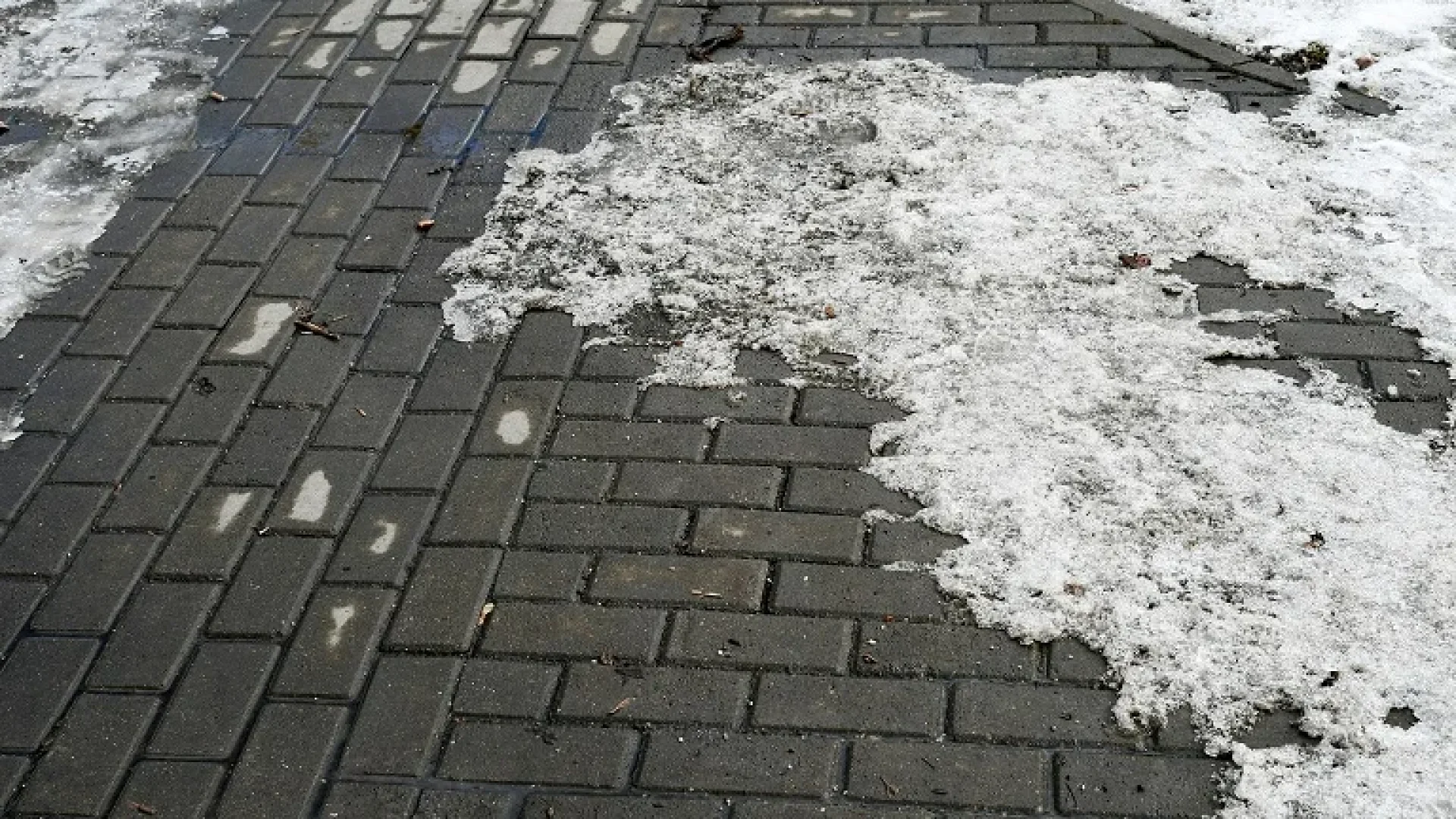
In the cold climes, the challenge of keeping concrete surfaces clear of ice and snow is a perennial one. Homeowners and businesses alike grapple with finding effective solutions for melting ice that do not compromise the integrity of their concrete driveways, walkways, and patios. At Omega 2000, we’re dedicated to providing not just top-notch concrete services, but also insightful guidance on maintaining these surfaces during the winter months.
The goal is to remove ice while minimizing the amount of water, salt, and repeated freeze-thaw exposure affecting the concrete.
The Dilemma of Melting Ice on Concrete
The use of ice melt on concrete surfaces is a topic of much concern. The primary question is: Is any ice melt concrete safe? The answer is nuanced. While some ice melt products, including various formulations of rock salt and calcium chloride, can help melt ice, their impact on concrete surfaces can vary greatly.
The Chemistry of Ice Melt and Concrete
Understanding the interaction between ice melt products and concrete requires a basic grasp of chemistry. Products like rock salt (sodium chloride) and calcium chloride work by lowering the freezing point of water, effectively turning ice back into liquid. However, this process can be harsh on concrete surfaces, especially those that are not properly sealed or are new. The frequent freeze-thaw cycles, exacerbated by ice melts, can cause cracking and chipping in concrete.
Concrete-Friendly Ice Melt Options
When it comes to concrete surfaces, not all ice melt products are created equal. Formulations like calcium magnesium acetate and potassium chloride are often touted as more concrete-friendly options. These compounds are less aggressive in their chemical reaction, thereby reducing the risk of damage to the concrete surface.
Effective and Safe Methods to Melt Ice on Concrete
While chemical ice melts are common, there are also natural and alternative methods for melting ice on concrete surfaces.
Natural Deicing Solutions: Common household items like beet juice and coffee grounds can provide a more environmentally friendly way to melt ice. These substances, while not as fast-acting as traditional ice melts, are safer for both the concrete and the surrounding plant life.
Snow Melting Mats: A more technologically advanced solution, snow melting mats can be placed on concrete surfaces to melt snow and ice without the need for chemicals.
Preventive Measures: Regularly removing snow and applying sand for traction can reduce the need for ice melt products.
Maintaining Your Concrete Surface Post Ice Melt
After using ice melt products, it’s crucial to care for the concrete surface to mitigate any potential damage. This includes regular cleaning to remove ice melt residue and checking for any signs of damage. At Omega 2000, we offer comprehensive guides on maintaining your concrete surfaces, ensuring they withstand the harsh conditions of winter.
Best Practices for Using Ice Melt on Concrete
To effectively use ice melt on concrete surfaces while minimizing damage, follow these best practices:
Choose the Right Product: Select ice melt products that are specifically labeled as safe for concrete surfaces.
Apply Sparingly: More is not always better. Use the minimum amount of product necessary to melt the ice.
Prompt Removal: Once the ice has melted, remove the slush and residual product to prevent prolonged contact with the concrete.
Innovative Solutions for Snow and Ice Removal
As we navigate the challenges of winter weather, it’s crucial to consider innovative solutions for snow and ice removal that prioritize both effectiveness and safety.
Exploring Environmentally Friendly Ice Melt Options
Calcium Chloride Pellets: These pellets are efficient in very low temperatures and are less harmful to concrete than traditional rock salt. However, they should be used judiciously to minimize environmental impact.
Beet Juice Mixtures: Beet juice, often mixed with traditional ice melt products, offers an eco-friendlier alternative. Its lower freezing point and sticky nature help to reduce the amount of product needed.
Coffee Grounds and Sugar Beet Juice: These natural products provide traction and a mild melting effect without the harsh chemicals found in traditional deicers.
The Impact of Rock Salt Products on Pets and Plants
For pet owners and gardeners, the choice of ice melt product is even more critical. Safe Paw and similar pet-safe ice melts are formulated to be less irritating to pets’ paws and less likely to harm plant life. It’s essential to consider these factors when choosing a product to ensure the safety of our furry friends and the environment.
Advanced Snow Melting Systems
For larger areas or commercial properties, snow melting mats and embedded heating systems offer a chemical-free way to keep surfaces snow-free. These systems, while more costly upfront, provide a long-term solution with minimal environmental impact.
Answering Key Questions
To address common concerns about ice melt and concrete, we’ve compiled answers to frequently asked questions:
What is the fastest way to melt ice on concrete? Fast-acting chemical melters like calcium chloride and magnesium chloride are effective, but natural alternatives like beet juice mixtures can also be efficient.
What kind of salt doesn’t ruin concrete? Calcium magnesium acetate and potassium chloride are safer for concrete than traditional sodium chloride rock salt.
Does calcium chloride salt damage concrete? While less damaging than sodium chloride, calcium chloride can still cause harm if overused.
Navigating the Freeze-Thaw Cycle: Protecting Concrete in Winter
Dealing with the freeze-thaw cycle is a critical aspect of winter concrete care. This natural process can wreak havoc on concrete surfaces if not managed correctly.
Understanding the Freeze-Thaw Cycle
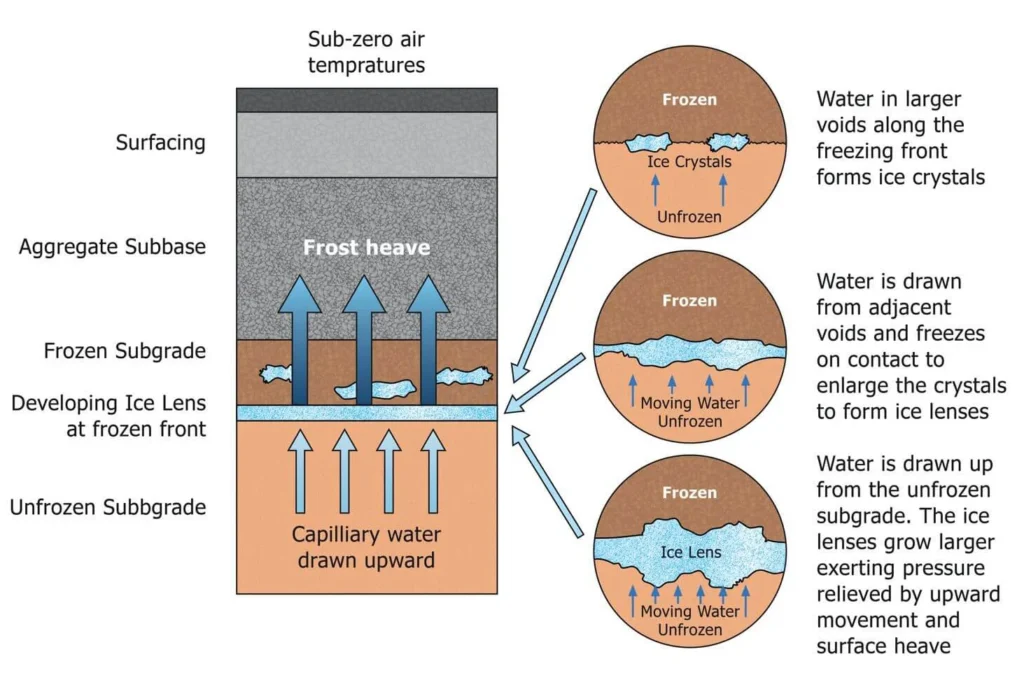
Ice melt is only one part of the winter concrete equation.
The freeze-thaw cycle is fundamental.
Water enters the pores, cracks, joints, and other openings in concrete. When temperatures fall below freezing, that water freezes and expands. When temperatures rise, it thaws. Repeating that cycle can gradually weaken vulnerable concrete.
High-quality concrete designed for freezing and thawing exposure is much more resistant. ACI notes that freeze-thaw durability is strongly influenced by factors including concrete quality, water-to-cementitious-material ratio, air-void system, aggregate quality, and allowing concrete to mature before severe exposure.
This is why good concrete design matters just as much as winter maintenance.
You cannot protect poorly designed or damaged concrete simply by switching from one bag of ice melt to another.
Ice Melt and New Concrete: Special Considerations
For new concrete surfaces, extra care is needed. New concrete is more porous and susceptible to damage from harsh deicing agents. In such cases, opting for gentler products or natural alternatives like sand or cat litter can provide traction without damaging the concrete.
The Role of Snow Removal Services
For those who prefer a hands-off approach, professional snow removal services offer an efficient solution. These services use the right equipment and techniques to clear snow and ice without damaging the concrete.
Seasonal Strategies for Concrete Maintenance and Ice Management
The winter season brings unique challenges for maintaining concrete surfaces. Developing a seasonal strategy is key to ensuring the longevity and safety of these areas.
Preparing for Winter: Proactive Measures
Sealing Concrete Surfaces: Applying a high-quality sealant before the winter months can protect concrete from the corrosive effects of ice melts and the freeze-thaw cycle.
Stocking Up on Supplies: Having a supply of environmentally friendly ice melt products on hand ensures you’re prepared for sudden snowfalls.
Inspecting for Cracks: Addressing any existing damage before winter can prevent further deterioration due to ice and snow.
During the Winter: Active Maintenance
Regular Snow Clearing: Keeping up with snowfall prevents the build-up of ice.
Judicious Use of Ice Melt: Apply ice melt products sparingly and only as needed.
Post-Snowfall Cleanup: Removing slush and residual salt can prevent long-term damage to concrete.
After the Winter: Repair and Recovery
Thorough Cleaning: Wash away any salt residue and debris as the snow melts.
Damage Assessment: Examine concrete surfaces for cracks or spalling.
Repair Work: Address any damage promptly to prevent further issues.
Embracing Sustainable and Safe Winter Practices
As we face the challenges of winter, it’s crucial to embrace practices that are not only effective in dealing with snow and ice but also sustainable and safe for our environment and concrete infrastructure.
The Shift Towards Eco-Friendly Ice Melting Practices
Using Biodegradable Deicers: Products like calcium magnesium acetate and beet juice are gaining popularity for their lower environmental impact.
Innovative Mixtures: Companies are experimenting with less corrosive and more environmentally friendly mixtures, such as combining traditional rock salt with safer additives.
Awareness and Education: Educating the public about the impact of deicing agents on the environment and concrete structures is key to fostering sustainable practices.
Impact on Wildlife and Ecosystems
The use of traditional deicing agents like rock salt can have a negative impact on local flora and fauna. Switching to more eco-friendly options can help protect our natural ecosystems.
Long-Term Vision: Building Sustainable Communities
By integrating these sustainable winter practices, communities can ensure the longevity of their concrete infrastructure while also protecting the environment. It’s a win-win situation where safety and sustainability go hand in hand.
Why Ice Melt Can Damage Concrete
The biggest misconception about winter concrete care is that the chemical itself simply “eats” the concrete. The problem is more complicated.
Concrete damage often occurs because water, freezing temperatures, deicing chemicals, and repeated freeze-thaw cycles interact. When concrete contains enough internal moisture, freezing causes that water to expand. Repeated freezing and thawing can gradually create internal stresses that lead to scaling, cracking, and surface deterioration.
Deicing salts can make the situation worse by keeping the concrete surface wet and increasing the amount of salt-rich water that enters pores, joints, cracks, and other vulnerable areas. ACI identifies both physical freeze-thaw mechanisms and chemical mechanisms associated with chloride-based deicing chemicals.
This is particularly important around:
- Control joints
- Saw cuts
- Cracks
- Concrete edges
- Poorly drained areas
- Low spots where melting snow collects
- Older or porous concrete
- Concrete that has not developed adequate durability before winter exposure
The goal, therefore, isn’t simply to find the strongest ice melt. The goal is to remove ice while minimizing the amount of water, salt, and repeated freeze-thaw exposure affecting the concrete.
Does Rock Salt Damage Concrete?
Rock salt generally refers to sodium chloride (NaCl). It is inexpensive and widely available, which makes it a common choice for residential driveways and sidewalks.
However, inexpensive does not mean harmless.
When sodium chloride is repeatedly used on concrete exposed to freezing and thawing, it can contribute to surface deterioration. The risk becomes greater when concrete is already saturated, poorly drained, cracked, or not adequately air-entrained for its exposure.
The visible symptoms can include:
- Surface scaling
- Flaking
- Pitting
- Cracking
- Spalling
- Deterioration around joints
- Loss of the concrete’s surface paste
A particularly vulnerable area is the joint. Salt-rich water can accumulate around joints and saw cuts, creating conditions where freeze-thaw and chemical deterioration become concentrated.
That doesn’t mean one application of rock salt will automatically destroy a driveway. The issue is repeated exposure over multiple winters.
Is Calcium Chloride Better for Concrete?
Calcium chloride is often preferred because it remains effective at lower temperatures than ordinary sodium chloride.
However, it should not be interpreted as completely harmless to concrete.
Calcium chloride is still a chloride-based deicer, and excessive or repeated use can contribute to concrete deterioration under unfavorable conditions. ACI’s research and guidance specifically identify chloride-based deicing chemicals as a factor in premature deterioration of concrete pavements and joints.
For homeowners, the practical rule is:
Use the minimum amount necessary, remove the resulting slush, and don’t allow concentrated deicer residue to remain on the concrete.
The correct product also depends on the condition and age of the concrete, the temperature, drainage, and the amount of ice present.
What About Magnesium Chloride?
Magnesium chloride is another chloride-based deicer commonly marketed for winter use.
It can be effective for melting ice at relatively low temperatures and is sometimes perceived as a gentler alternative to traditional rock salt.
But “gentler” should not be confused with “damage-proof.”
Magnesium chloride still introduces chloride ions and moisture to the concrete environment. If it is heavily applied over concrete that is already vulnerable to freeze-thaw deterioration, it can contribute to long-term problems.
For that reason, homeowners should focus less on finding a product advertised as 100% concrete safe and more on controlling the entire winter-maintenance process.
What Is the Safest Way to Remove Ice From Concrete?
The safest strategy is often to minimize the amount of chemical deicer you need in the first place.
A practical winter sequence is:
1. Remove snow immediately
Fresh snow is much easier to shovel than compacted snow.
If snow remains on the surface and repeatedly melts and freezes, it can eventually form a hard ice layer that requires much more aggressive treatment.
2. Break up thin ice mechanically
Use an appropriate plastic or non-damaging snow tool rather than aggressively striking the concrete with a metal blade.
The objective is to remove the ice without damaging the surface.
3. Use traction materials where appropriate
Sand or other traction materials can help reduce slipping without relying entirely on chemical melting.
Remember, however, that traction materials do not melt ice. They simply improve grip.
4. Apply deicer sparingly
If chemical deicing is necessary, use only enough to loosen the ice.
More product does not necessarily mean faster or better results.
5. Remove the slush
Once the ice begins to melt, shovel or sweep away the resulting slush.
This step is often overlooked.
Leaving concentrated salt water sitting on concrete allows prolonged contact with the surface and can leave residue behind as the water evaporates.
Why New Concrete Needs Extra Protection
New concrete deserves special attention during winter.
Concrete does not instantly become fully mature when the finishing crew leaves the site. It needs time to develop the strength and durability required for its intended exposure.
That means homeowners should be particularly cautious about applying deicing chemicals to newly constructed driveways, sidewalks, patios, steps, and garage approaches.
Instead of relying on aggressive chemical deicers, consider:
- Prompt snow removal
- Sand or traction materials
- Careful drainage management
- Avoiding unnecessary chemical exposure
- Following the contractor’s recommendations for the specific concrete
If you’re unsure how old the concrete is or what mix was used, ask the contractor before applying large quantities of deicer.
Deicing is only one part of protecting concrete through a Calgary winter. The bigger question is how the concrete was produced, placed and protected in the first place. If you’re planning a new driveway, foundation, sidewalk or slab during the colder months, read our guide to winter concrete pouring to understand how contractors manage temperature, curing and early-age protection.
The effects of winter deicing chemicals are well documented by concrete and environmental authorities. The American Concrete Institute (ACI) discusses the relationship between chloride-based deicing chemicals, freeze-thaw exposure and premature deterioration, particularly around concrete joints and saw cuts. For the environmental side, Environment and Climate Change Canada explains that road salts can pose risks to plants, animals and aquatic environments and provides a national code of practice for responsible salt management. Homeowners can use these resources alongside professional concrete-maintenance advice when deciding how much deicing material their property actually needs.
Protect Your Concrete Before Calgary Winter Does the Damage
Winter damage is easier—and usually far less expensive—to prevent than to repair.
If your driveway, walkway, patio, steps or other concrete is showing cracks, scaling, spalling or surface deterioration, don’t wait until spring to find out how serious the problem is. The right winter maintenance strategy starts with understanding the condition of your concrete, how water moves across the surface, and what level of protection it needs.
Planning a new concrete project in Calgary? We can also help you choose the right approach for your project and prepare concrete for Alberta’s demanding freeze-thaw conditions.
Contact Omega 2000 today for professional concrete advice, maintenance guidance or a quote for your next Calgary concrete project.
Protect it before winter. Repair it before it gets worse. Build it right for the next season.