
A cracked concrete driveway is more than just an eyesore—it can be an early warning sign of deeper structural or environmental issues. In Canada’s harsh climate, where freeze-thaw cycles, heavy loads, and moisture are constant challenges, even well-built concrete driveways are vulnerable over time. The good news? Not all cracks mean costly replacement. With the right knowledge, tools, and timing, many driveway cracks can be repaired effectively, extending the life of your concrete and protecting your investment.
In this in-depth guide, our concrete specialists draw on real-world experience from precast concrete manufacturing and field applications across Canada to explain how to repair cracks in your concrete driveway properly. You’ll learn why cracks form, how to identify their type, and when DIY repairs are appropriate versus when professional expertise is essential.

Why Concrete Driveways Crack Over Time
Concrete is one of the most durable construction materials available, yet it is not immune to cracking. Understanding why cracks occur is the first step toward choosing the correct repair method and preventing future damage.
Natural Shrinkage During Concrete Curing
As concrete cures, it loses moisture and naturally shrinks. This process creates internal tensile stress, especially if the slab is large or dries too quickly. According to the American Concrete Institute (ACI), shrinkage cracking is one of the most common causes of early-age concrete damage.
Even high-quality concrete—such as factory-controlled precast products—can develop minor shrinkage cracks. The difference lies in consistency and control: professionally produced concrete experiences fewer and more predictable cracks than site-mixed pours.
According to the American Concrete Institute (ACI), shrinkage cracking is one of the most common forms of early-age concrete distress when moisture loss is not properly controlled.
Freeze-Thaw Cycles in Canadian Climates
Canada’s climate is especially hard on concrete driveways. Water seeps into small surface pores and cracks, freezes, expands by nearly 9%, and then contracts as it thaws. This repeated freeze-thaw action gradually widens cracks and weakens the slab.
- Spring thaw accelerates crack expansion
- De-icing salts increase surface scaling
- Poor drainage worsens freeze-related damage
Heavy Loads and Daily Wear
Driveways are not designed solely for passenger vehicles. Garbage trucks, delivery vans, moving trucks, and RVs exert far greater loads than many residential slabs were engineered to handle. Over time, this stress concentrates at weak points, leading to cracking.
Real-world example: We frequently see cracking near garage entrances, where vehicles stop, turn, and apply repeated point loads.
Poor Installation or Subgrade Issues
A concrete driveway is only as strong as what lies beneath it. Inadequate base preparation, poorly compacted soil, or improper drainage can cause sections of the slab to settle unevenly. This settlement creates structural cracks that often worsen if left untreated.
Types of Concrete Driveway Cracks You Need to Identify
Not all cracks are equal. Correctly identifying the type of crack determines whether a simple surface repair will suffice or if deeper structural attention is required.
Hairline Cracks
Hairline cracks are thin, shallow, and typically less than 1/8 inch wide. They are often cosmetic and caused by shrinkage or minor thermal movement.
- Usually stable and non-structural
- Easy to repair with liquid crack fillers
- Important to seal to prevent water intrusion
Settlement Cracks
Settlement cracks occur when the soil beneath the driveway shifts or compresses unevenly. These cracks may appear wider at one end or show vertical displacement between slab sections.
Warning: If one side of the crack is higher than the other, the issue is no longer cosmetic and may require professional evaluation.
Expansion and Contraction Cracks
Concrete expands in summer heat and contracts in cold weather. Control joints are designed to manage this movement, but when they are poorly placed or missing, random cracking can occur.
Structural Cracks
Structural cracks are wide, deep, and often continue to grow over time. They may indicate serious subgrade problems, drainage failures, or excessive loading.
As concrete expert Bryan Magee, PE, notes: Cracks that continue to widen or shift vertically are symptoms of underlying issues—not just surface defects.
Is It Safe to Repair Concrete Driveway Cracks Yourself?
One of the most common questions homeowners ask is whether DIY concrete crack repair is safe and effective. The answer depends on the crack type, size, and cause.
When DIY Repair Works Well
DIY repair is often suitable for:
- Hairline cracks
- Non-moving, shallow cracks
- Early-stage surface damage
With proper surface preparation and the right repair materials, homeowners can achieve long-lasting results for minor issues.
When to Call a Professional Concrete Expert
Professional assessment is strongly recommended if you notice:
- Cracks wider than 1/4 inch
- Vertical displacement or slab movement
- Recurring cracks after repair
- Water pooling or drainage problems
At Omega2000, our experience in precast concrete manufacturing across Canada shows that addressing the root cause—not just the visible crack—is key to long-term durability.
Best-practice guidelines published by the National Ready Mixed Concrete Association emphasize that improper curing significantly increases the risk of cracking and surface defects.

Tools and Materials Needed for Concrete Crack Repair
Before starting any repair, having the right tools and materials ensures better adhesion, cleaner results, and longer-lasting performance.
Essential Tools
- Wire brush or stiff broom
- Cold chisel and hammer
- Shop vacuum or compressed air
- Caulking gun
- Protective gloves and safety glasses
Common Repair Materials
The choice of repair material depends on crack size and movement:
- Concrete crack fillers: Ideal for hairline cracks
- Polyurethane sealants: Flexible and water-resistant
- Epoxy compounds: High-strength structural repairs
- Cement-based patching mixes: Best for wider, shallow cracks
Before sealing or repairing cracks, it’s important to remove surface contaminants—especially oil—using proven methods outlined in our guide on how to remove oil stains from concrete driveways.
In the next section, we’ll walk through a detailed, step-by-step process showing exactly how to repair cracks in your concrete driveway for long-lasting results.
Step-by-Step Guide: How to Repair Cracks in Your Concrete Driveway
Once you’ve identified the crack type and gathered the proper tools, it’s time to begin the repair process. Following each step carefully ensures the repair bonds correctly and lasts through Canada’s challenging weather conditions.
Step 1 – Clean the Crack Thoroughly
Proper cleaning is the most critical step in concrete crack repair. Dirt, loose concrete, oil, and organic debris prevent bonding and lead to premature failure.
- Use a wire brush or chisel to remove loose material
- Vacuum the crack or blow it out with compressed air
- Wash with clean water and allow to dry unless the product specifies a damp surface
Industry data shows that over 70% of failed concrete repairs are caused by poor surface preparation rather than product quality.
Step 2 – Prepare the Crack for Repair
For wider cracks, undercutting the edges slightly with a chisel creates a “V” shape, allowing repair materials to lock in mechanically.
Some cement-based fillers require a lightly damp surface to cure properly, while epoxy-based systems require a completely dry crack. Always follow manufacturer instructions.
Step 3 – Apply the Right Repair Material
Choose the material based on crack size and movement:
- Hairline cracks: Use liquid concrete crack filler or sealant
- Medium cracks: Apply polyurethane or cement-based patch
- Deep cracks: Use epoxy or layered repair compounds
Apply slowly to avoid air pockets, working the material deep into the crack for maximum adhesion.
Step 4 – Smooth, Level, and Finish
Use a putty knife or trowel to level the surface and blend the repair with the surrounding concrete. Light texturing helps maintain a consistent appearance.
Step 5 – Curing and Protection
Allow adequate curing time before allowing foot or vehicle traffic. In cooler temperatures, curing can take longer. Protect the repair from rain, frost, and direct sunlight during this period.
Following proper curing timelines—similar to those explained in proper time that you can drive on a new concrete driveway is essential to prevent early cracking and surface failure.
Repair Solutions for Different Crack Sizes
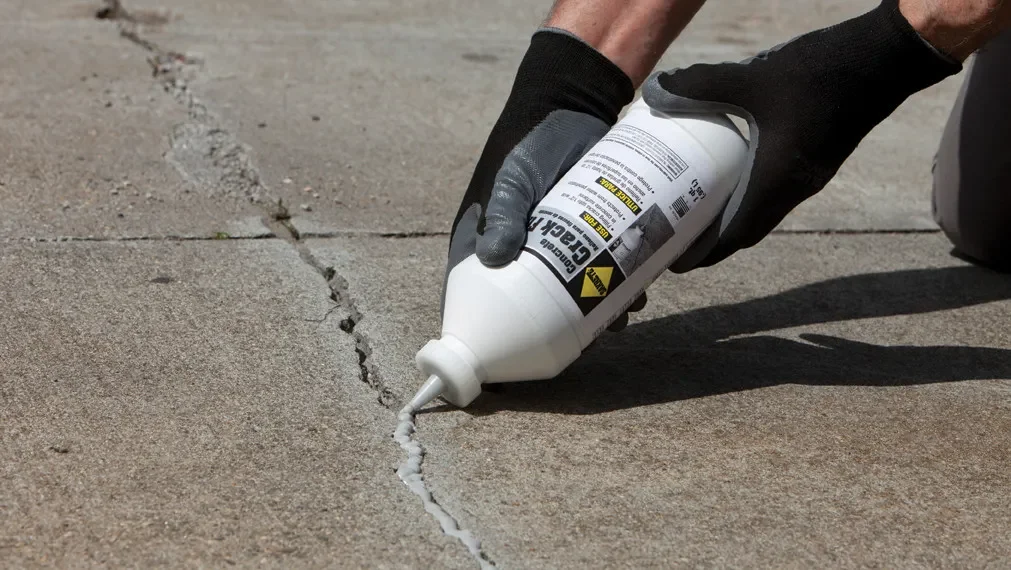
Matching the repair solution to the crack size improves durability and appearance.
Repairing Hairline Cracks
Hairline cracks are best treated with liquid fillers or penetrating sealers that prevent moisture intrusion and freeze-thaw damage.
Repairing Medium-Width Cracks
Cracks between 1/8 and 1/2 inch benefit from flexible polyurethane sealants that accommodate seasonal movement.
Repairing Large or Deep Cracks
Structural cracks often require epoxy injection or professional intervention. These materials restore strength but require precise application.
Common Mistakes to Avoid When Repairing Concrete Cracks
- Ignoring the underlying cause of cracking
- Using rigid materials in moving cracks
- Skipping surface preparation
- Applying repair materials in extreme temperatures
Avoiding these mistakes significantly increases repair lifespan.
How to Prevent Future Cracks in Your Concrete Driveway
Seal Your Driveway Regularly
Applying a quality concrete sealer every 2–3 years reduces water penetration and surface wear.
Improve Drainage Around the Slab
Ensure water flows away from the driveway to prevent subgrade erosion and freeze damage.
Use High-Quality Concrete Products
Concrete manufactured under controlled conditions—such as precast concrete—offers superior consistency, strength, and durability compared to on-site mixes.
The Role of Quality Concrete in Long-Term Durability
Why Precast Concrete Offers Better Consistency
Precast concrete is produced in controlled environments with precise material ratios, curing conditions, and quality checks. This results in fewer defects and longer service life.
Omega2000’s Commitment to Concrete Excellence Across Canada
At Omega2000, we manufacture high-quality precast concrete products using modern equipment and proven engineering standards. Our professional team supports residential, commercial, and infrastructure projects across Canada with dependable, long-lasting concrete solutions.
When Repair Is Not Enough: Replacing or Upgrading Your Driveway
Signs Your Driveway Needs Replacement
- Extensive cracking across multiple areas
- Severe settlement or heaving
- Repeated repair failures
Precast Concrete Solutions for Long-Term Performance
Precast elements can offer faster installation, improved strength, and reduced long-term maintenance compared to traditional poured concrete driveways.
Frequently Asked Questions About Concrete Driveway Crack Repair
How wide is too wide for DIY repair?
Cracks wider than 1/4 inch or those showing vertical movement should be inspected by a professional.
Can cracks come back after repair?
Yes. If the underlying cause is not addressed, cracks may reappear over time.
How long do concrete crack repairs last?
Properly repaired cracks can last 5–10 years or longer, depending on materials and environmental conditions.
What is the best season to repair driveway cracks in Canada?
Late spring to early fall offers ideal temperatures for curing and long-term performance.
Final Thoughts: Protecting Your Concrete Driveway Investment
Knowing how to repair cracks in your concrete driveway empowers you to protect both safety and property value. Early intervention, proper materials, and quality concrete make a measurable difference in durability and appearance.
If your driveway shows signs of structural damage or recurring cracking, consulting experienced concrete professionals can save time and long-term costs.
Looking for durable concrete solutions?
Contact Omega2000 today to learn how our precast concrete expertise and modern manufacturing capabilities support long-lasting performance across Canada.
We support your investment.