
Stamped concrete has become one of the most popular decorative concrete options for homeowners and builders across Calgary—and for good reason. It delivers the high-end look of stone, slate, brick, or wood while offering the strength and versatility of concrete. But one question comes up again and again: how long does it last, especially in a climate known for freeze-thaw cycles, snow, and temperature swings?
The short answer is reassuring. When properly installed and maintained, it can last 20 to 30 years or more. In many cases, it outperforms other hardscaping materials in both durability and long-term value. In this guide, we’ll break down what stamped concrete really is, what affects its lifespan, and what homeowners in Calgary should realistically expect based on decades of real-world experience from Omega 2000.
If you’re considering a driveway, patio, or walkway—or already have one—this article will help you make informed decisions that protect your investment for decades.
What Is Stamped Concrete?
How Stamped Concrete Is Made
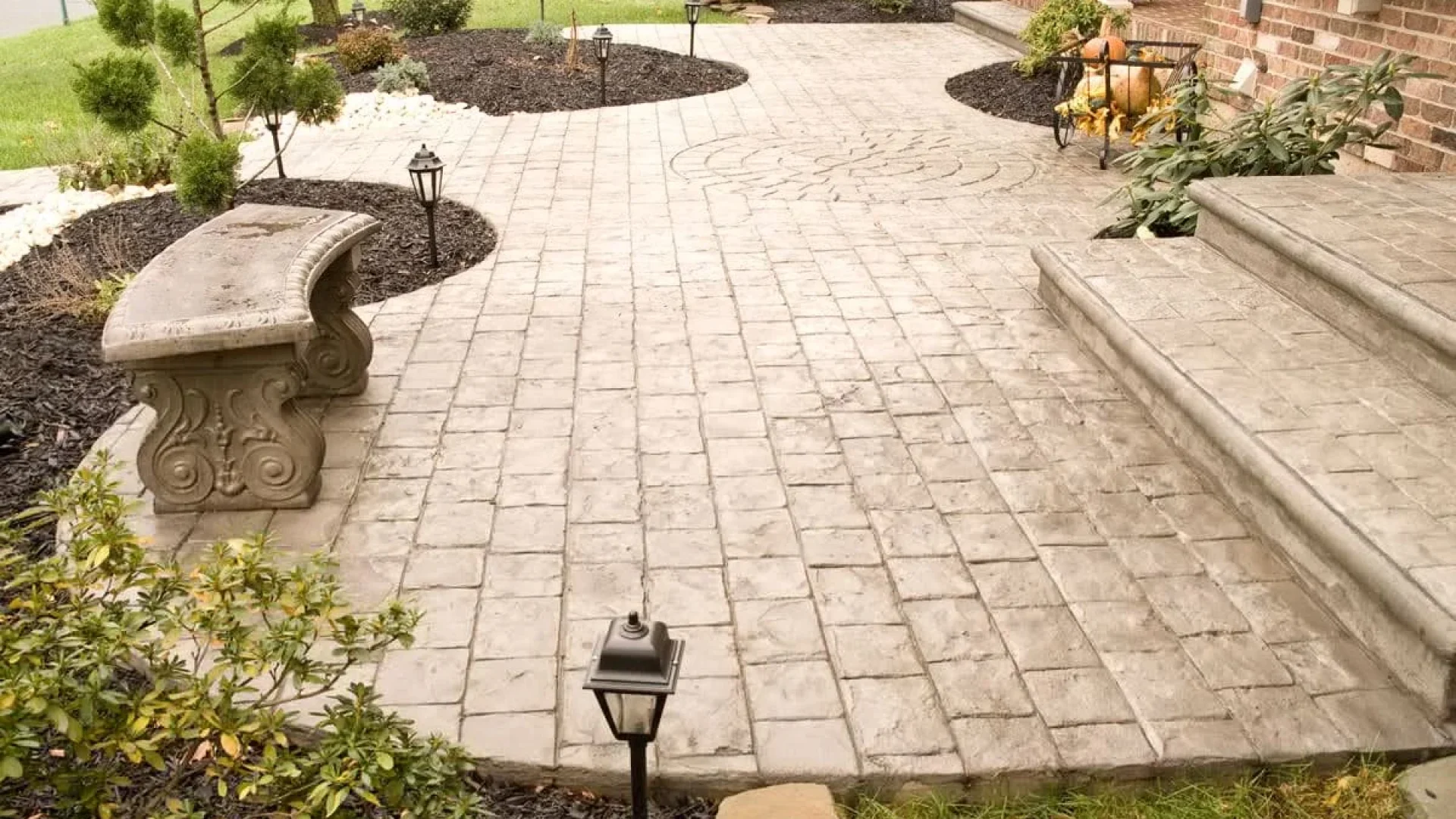
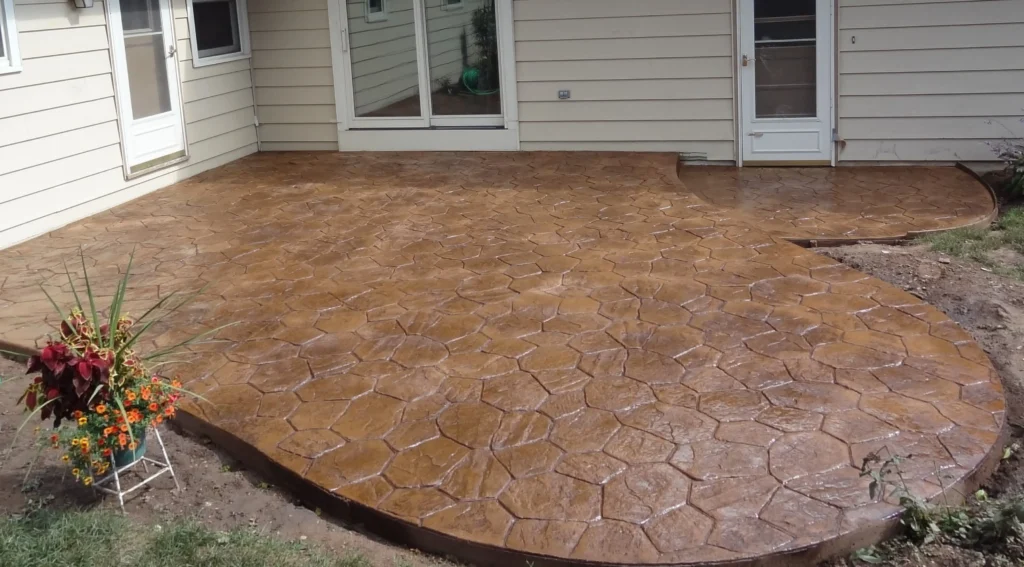
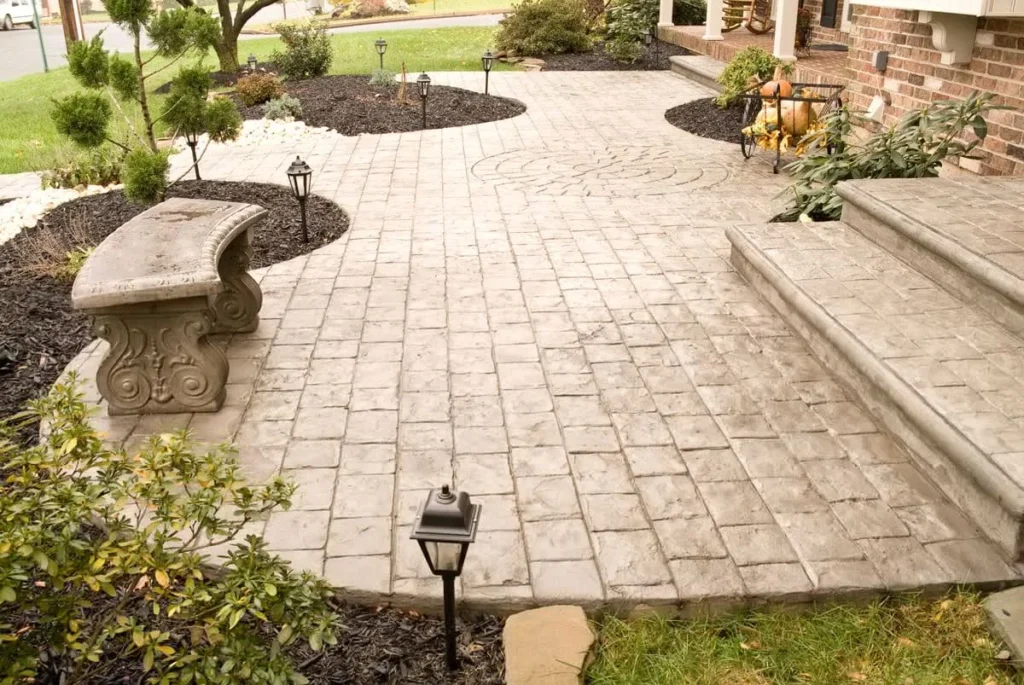
Stamped concrete is poured concrete that is patterned, textured, and colored while still in its plastic (workable) state. Specialized stamping mats are pressed into the surface to replicate materials like natural stone, flagstone, slate, tile, or even wood planks.
The durability of it starts with its structure. Unlike pavers or stone laid individually, it is a single, reinforced slab. When installed correctly, this monolithic surface distributes weight evenly and resists movement caused by soil shifting or frost.
Most high-quality installations include:
- Air-entrained concrete to withstand freeze-thaw cycles
- Steel reinforcement or rebar grid for structural strength
- Integral color or color hardeners for long-lasting appearance
- A protective sealer to guard against moisture, stains, and UV fading
Popular Stamped Concrete Applications
Stamped concrete is incredibly versatile, which is why it’s used in both residential and commercial projects throughout Alberta. Common applications include:
- Driveways that combine curb appeal with load-bearing strength
- Patios designed for entertaining and outdoor living
- Walkways and sidewalks with slip-resistant textures
- Front entry features that enhance first impressions
Because it’s poured in place, it can be customized to fit irregular shapes, slopes, and integrated drainage—something that significantly affects long-term performance.
Some finishes, such as wood plank stamping, require extra care and sealing—especially if you want to maintain a realistic appearance over time. This is why many homeowners explore how to achieve a natural look with wood plank stamped concrete before choosing a design.
How Long Does Stamped Concrete Last? (Short Answer)
Average Lifespan Range
Under typical conditions, it lasts between 20 and 30 years. With professional installation and regular maintenance, many surfaces last 30 to 40 years without needing replacement.
According to data from the American Concrete Institute, properly designed concrete structures often exceed their intended service life by decades when exposed to normal residential loads and maintained appropriately. Decorative concrete is no exception.
Why Lifespan Varies So Much
The reason stamped concrete lifespan varies isn’t the material itself—it’s how the system is designed, installed, and cared for. Two patios poured in the same year can age very differently depending on:
- Soil preparation and base compaction
- Concrete mix quality
- Exposure to moisture and de-icing chemicals
- Frequency of sealing and maintenance
This is why contractor experience and climate-specific knowledge matter so much, especially in Calgary.
Key Factors That Affect Stamped Concrete Lifespan
Installation Quality (The Most Important Factor)
If it fails prematurely, installation is almost always the root cause. Proper subgrade preparation ensures the slab has uniform support and reduces the risk of settlement or cracking.
Professional installations account for:
- Soil conditions and frost depth
- Minimum slab thickness based on use (patio vs driveway)
- Reinforcement placement to control cracking
- Control joints that work with the stamped pattern
As many concrete professionals say, “Concrete doesn’t crack if—it cracks when.” The goal isn’t to prevent cracking entirely, but to control where it happens so it’s barely noticeable.
Concrete Mix Design
Stamped concrete designed for Alberta climates typically includes air entrainment—microscopic air bubbles that allow water to expand safely when it freezes. This significantly reduces surface scaling and spalling.
A lower water-cement ratio also increases strength and reduces shrinkage. These mix details may not be visible once the concrete is finished, but they play a massive role in longevity.
Homeowners weighing long-term performance often review a full stamped concrete vs pavers comparison to understand how each material handles freeze–thaw cycles, maintenance, and settling.
Industry research consistently shows that air-entrained concrete significantly improves resistance to freeze–thaw damage in cold climates.
Calgary Climate & Freeze-Thaw Cycles
Calgary experiences dozens of freeze-thaw cycles each year. Moisture that penetrates unprotected concrete can freeze, expand, and slowly damage the surface over time.
This is why sealing stamped concrete is not optional—it’s essential. A quality sealer acts as a barrier against moisture intrusion while also enhancing color depth.
Drainage & Water Management
Even the strongest concrete won’t last if water is allowed to pool on the surface. Proper slope, downspout placement, and site drainage prevent standing water that accelerates wear.
Does Stamped Concrete Crack Over Time?
Why All Concrete Cracks (Reality Check)
All concrete cracks. This includes foundations, sidewalks, and stamped decorative surfaces. Cracking is a natural result of curing, temperature changes, and structural movement.
What matters is whether those cracks are structural or cosmetic.
How Control Joints Reduce Visible Cracking
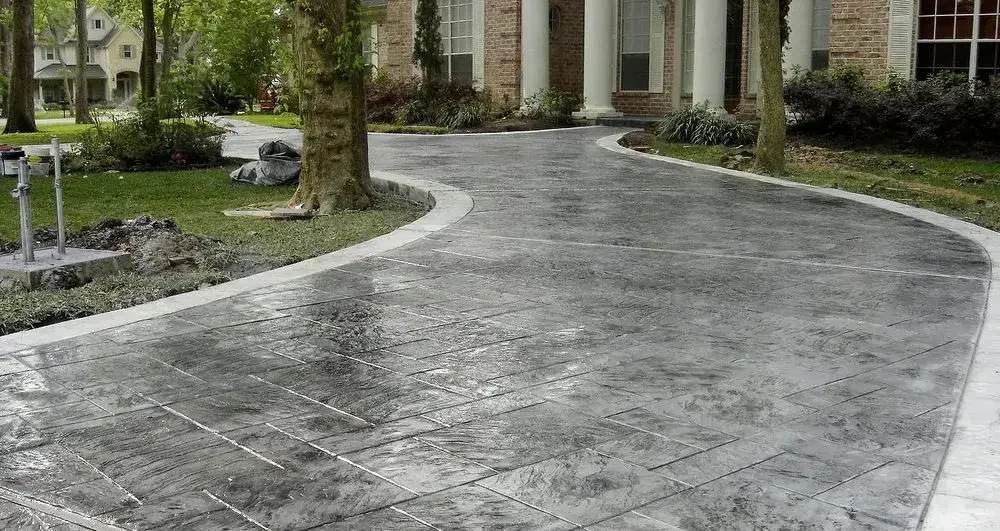
Experienced contractors place control joints strategically within the stamped pattern. These joints create intentional weak points that guide cracks into less visible areas.
When done correctly, most homeowners never notice these cracks because they blend into grout lines or texture transitions.
Cracks vs Structural Failure
Hairline surface cracks are common and rarely affect lifespan or performance. Structural issues, on the other hand, are typically caused by poor base preparation or drainage—not the stamping process itself.
According to the Portland Cement Association, properly reinforced residential concrete slabs can maintain structural integrity for several decades even with minor surface cracking.
Up next: we’ll compare stamped concrete to pavers and exposed aggregate, break down maintenance requirements, and show how it performs specifically in Calgary’s climate—plus when repair makes more sense than replacement.
Thinking about it built to last? Talk to the team at Omega 2000 for expert guidance backed by 35+ years of Calgary concrete experience.
Stamped Concrete vs Other Hardscaping Options
Stamped Concrete vs Pavers
One of the most common comparisons homeowners make is stamped concrete versus paving stones. Both offer attractive finishes, but their long-term performance and maintenance requirements differ significantly.
| Feature | Stamped Concrete | Pavers |
|---|---|---|
| Average Lifespan | 25–35+ years | 20–30 years |
| Maintenance | Reseal every 2–3 years | Joint re-sanding, weed control |
| Freeze-Thaw Performance | Excellent with proper sealing | Can shift or settle over time |
| Long-Term Cost | Lower | Higher due to ongoing repairs |
While pavers allow for individual replacement, stamped concrete offers a seamless surface that resists movement—an important advantage in Calgary’s freeze-thaw conditions.
Stamped Concrete vs Exposed Aggregate
Exposed aggregate concrete is known for its traction and durability, making it popular for sidewalks and driveways. However, it offers far greater design flexibility while delivering a comparable lifespan when properly maintained.
Both finishes rely on the same structural concrete base. The difference lies primarily in aesthetics and surface treatment—not strength.
Stamped Concrete vs Plain Broom-Finish Concrete
Standard broom-finish concrete can last just as long structurally, but it lacks the visual appeal that it provides. For homeowners concerned with curb appeal and resale value, it often delivers a stronger return on investment.
Maintenance Requirements to Maximize Lifespan
Sealing Schedule
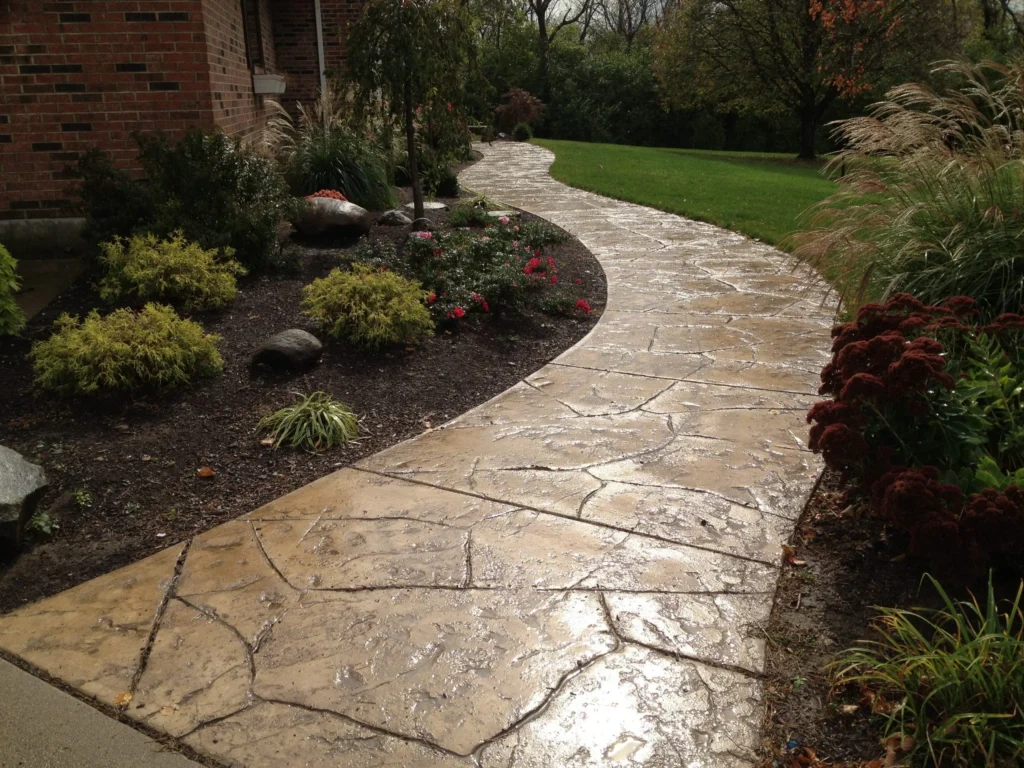
Sealing is the single most important maintenance step for stamped concrete. In Calgary’s climate, most professionals recommend resealing every 2 to 3 years, depending on exposure and use.
A quality sealer:
- Blocks moisture penetration
- Protects against freeze-thaw damage
- Enhances color depth and sheen
- Reduces surface wear
Cleaning Best Practices
Routine cleaning helps preserve both appearance and durability. Mild detergent and water are usually sufficient. Avoid harsh chemicals or excessive pressure washing, which can degrade sealers and surface texture.
Winter Care in Calgary
Winter maintenance plays a major role in stamped concrete longevity. De-icing salts—especially calcium chloride—can accelerate surface deterioration.
Best practices include:
- Using sand for traction instead of salt
- Shoveling snow promptly to reduce moisture exposure
- Resealing before winter if the surface appears worn
Building science organizations note that proper drainage, sealing, and base preparation are key factors in extending the service life of exterior concrete surfaces.
Signs Your Stamped Concrete Is Aging
Fading Color
UV exposure gradually fades surface color over time, particularly on south-facing areas. Resealing with color-enhancing sealers can often restore much of the original appearance.
Surface Wear or Scaling
Minor scaling or surface flaking is usually an early warning sign of moisture penetration. Addressing this early can prevent more extensive damage.
When Repair Is Enough vs Replacement
In many cases, it does not need full replacement. Crack repairs, resealing, or decorative overlays can extend service life by another 10–15 years at a fraction of the cost of removal.
Can Old Stamped Concrete Be Repaired or Refreshed?
Resealing & Color Enhancement
Resealing is often all that’s needed to refresh older stamped concrete. Modern sealers provide better UV resistance and longer service life than earlier products.
Crack Repair & Patching
Professional crack repair blends patched areas into existing patterns, preserving appearance while restoring performance.
Overlays & Resurfacing Options
Decorative overlays allow homeowners to update texture and color without removing the original slab—an efficient way to extend lifespan and modernize aesthetics.
How Long Does Stamped Concrete Last in Calgary Specifically?
Realistic Expectations for Alberta Climate
In Calgary, well-installed stamped concrete typically lasts 25 to 35 years. Homes with excellent drainage, regular sealing, and limited salt exposure often exceed that range.
Why Professional Installation Matters More in Cold Climates
Freeze-thaw resilience depends on proper base preparation, air-entrained concrete, and experienced finishing techniques. These factors matter far more in Alberta than in mild climates.
Lessons from Decades of Local Experience
Long-lasting stamped concrete is never an accident—it’s the result of climate-specific design choices, quality materials, and proven installation methods refined over decades.
Cost vs Lifespan – Is Stamped Concrete Worth It?
Initial Cost vs Long-Term Value
While stamped concrete costs more upfront than plain concrete, its durability, low maintenance, and visual impact often make it more economical over its full lifespan.
ROI & Curb Appeal
Stamped concrete consistently ranks among the top exterior upgrades for improving curb appeal and resale value, particularly for driveways and front entrances.
Frequently Asked Questions
How long does stamped concrete last on a driveway?
Typically lasts 25–35 years when installed correctly and sealed regularly.
Does stamped concrete last longer than pavers?
It often outlasts pavers in freeze-thaw climates because it does not shift or settle over time.
How often should stamped concrete be sealed?
Most of its surfaces should be resealed every 2–3 years in Calgary.
Is stamped concrete slippery when wet?
When textured and sealed properly with slip-resistant additives, stamped concrete provides good traction.
Can stamped concrete survive harsh winters?
Yes. With proper air-entrainment, drainage, and sealing, it performs exceptionally well in harsh winter climates.
Final Thoughts – Is Stamped Concrete a Long-Lasting Choice?
Stamped concrete combines durability, design flexibility, and long-term value in a way few hardscaping materials can match. When installed by experienced professionals and maintained properly, it delivers decades of performance—even in Calgary’s demanding climate.
Understanding how long it lasts allows homeowners to invest confidently, knowing their surface will remain functional and attractive for years to come.
Ready to Build Stamped Concrete That Lasts?
If you’re planning a stamped concrete driveway, patio, or walkway and want results that stand the test of time, work with a contractor who understands Calgary conditions inside and out.
Contact Omega 2000 today for expert guidance, proven craftsmanship, and stamped concrete designed to last for decades—not just years.