
Finding a new crack in your foundation can send a chill down any homeowner’s spine, whether you’re in a century-old Kensington bungalow or a new build in Mahogany. The good news is that not all cracks spell disaster. Understanding the difference between a harmless cosmetic flaw and a serious structural warning is the key to protecting your investment.
Here’s what you actually need to know about concrete foundation cracks in Calgary. We’ll break down the common types, explain their causes, and give you clear signs for when it’s time to call a professional like Omega2000. Let’s demystify what’s happening beneath your feet.
Common Types of Foundation Cracks
Foundation cracks come in many shapes and sizes, each telling a different story. The pattern, direction, and location of a crack are like clues left behind by the forces acting on your concrete. Recognizing these patterns is your first step toward an accurate diagnosis.
It’s not just about the crack itself, but what it indicates about the stability of your home. Let’s walk through the most common types you might encounter in Calgary homes.
Vertical Cracks
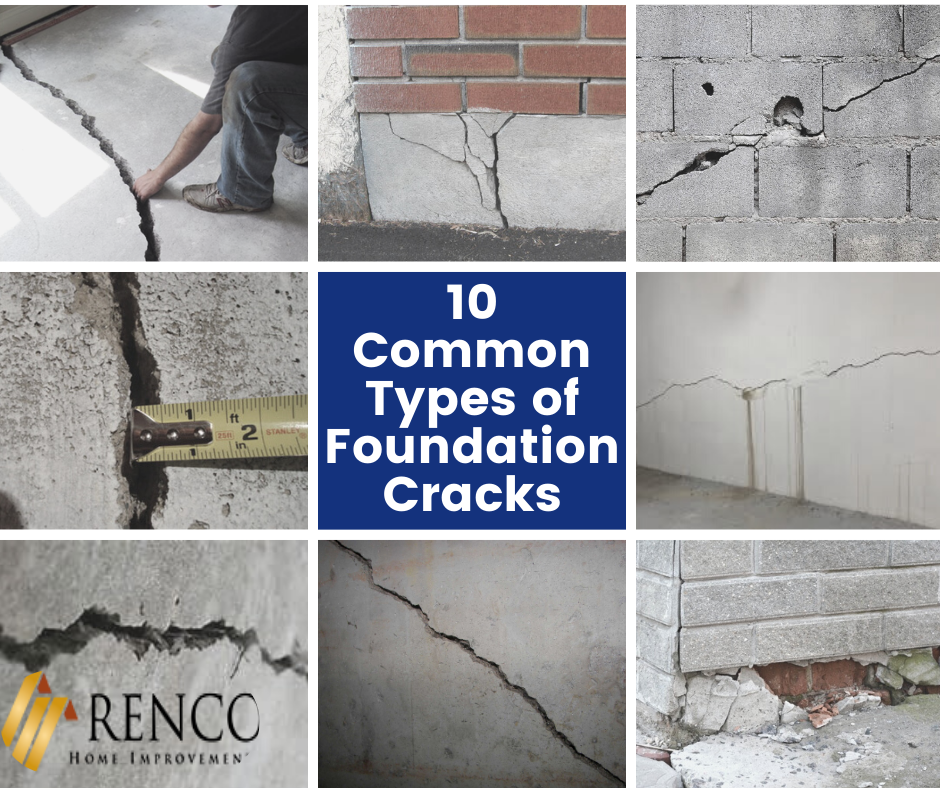
Vertical cracks run straight up and down your foundation wall. They are often caused by the natural settling of a new home or slight shrinkage as the concrete cures. You’ll frequently see these running from the top of a basement wall toward the floor.
In most cases, these are non-structural and more of a cosmetic concern. However, if a vertical crack is wider than 1/8 inch, or if you see water seeping through it, it warrants a closer professional look.
Horizontal Cracks
Horizontal cracks are a more serious red flag. These cracks run parallel to the ground, often across the middle of your basement wall. They are typically caused by excessive lateral pressure from the soil outside, a common issue in Calgary’s expansive clay soil after heavy rain or spring thaw.
This pressure can cause the wall to bow inward over time. A horizontal crack is rarely something to ignore, as it directly indicates structural stress on the foundation.
Diagonal Cracks
Diagonal cracks run at an angle, usually starting at a corner of a door or window and moving outward. They often point toward an area of differential settling, where one part of the foundation has sunk slightly more than another.
The severity depends on the angle and width. A fine, hairline diagonal crack might be minor, but a wide, growing diagonal crack suggests ongoing settlement that needs addressing.
Stair-Step Cracks
As the name implies, these cracks follow the mortar joints between concrete blocks or bricks, creating a staircase pattern. They are very common in block foundations and are a classic sign of settling or frost heave, especially in older neighbourhoods like Mount Royal with mature landscaping and soil movement.
Monitoring their growth is crucial. Small, stable stair-step cracks can be sealed, but active ones indicate movement that must be stabilized.
Shrinkage Cracks
Shrinkage cracks are hairline fractures that occur as concrete loses moisture and contracts during the curing process. They are usually very fine, random, and do not extend through the entire thickness of the wall. You’ll often find them on the surface of a new basement floor or a freshly poured wall.
These are almost always cosmetic. They don’t affect structural integrity but should be sealed to prevent moisture from finding a path inside.
Slab Foundation Cracks
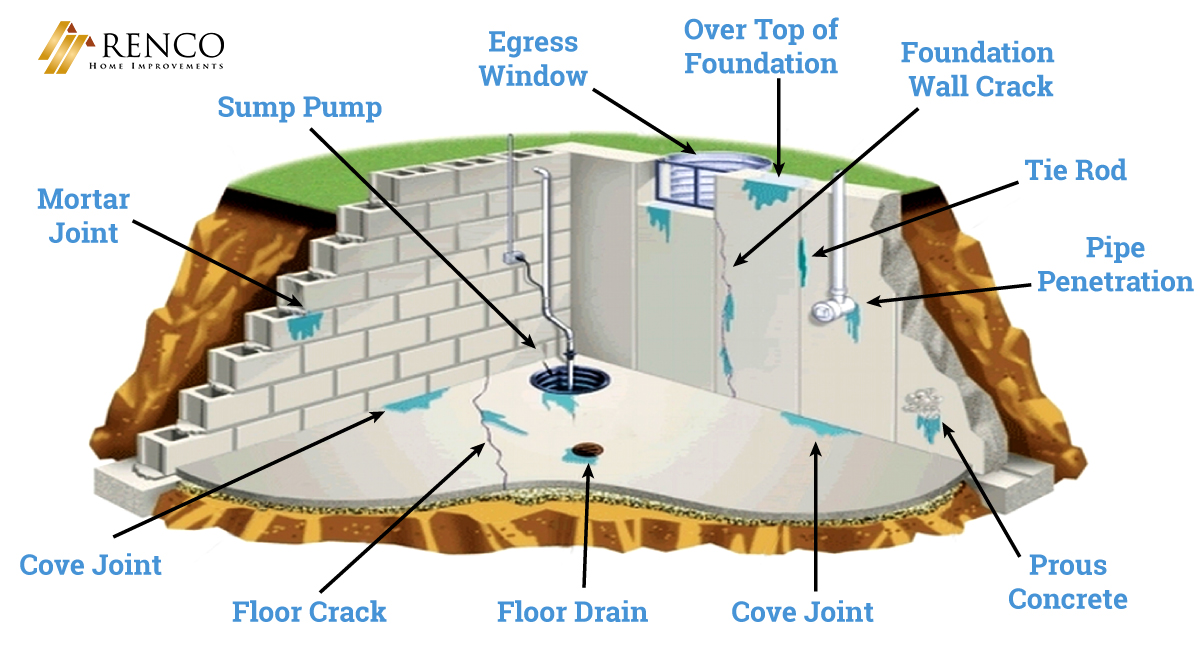
Cracks in a concrete slab-on-grade foundation (common in garages and basements) have their own causes. These can be from shrinkage, settlement of the sub-base, or stress from a heavy load. A crack that causes one side of the slab to be higher than the other is called a “differential” crack and is more serious.
For garage floors in communities like Signal Hill, where vehicles are parked daily, monitoring slab cracks for width and vertical displacement is important for both safety and door operation.
Non-Structural Cracks
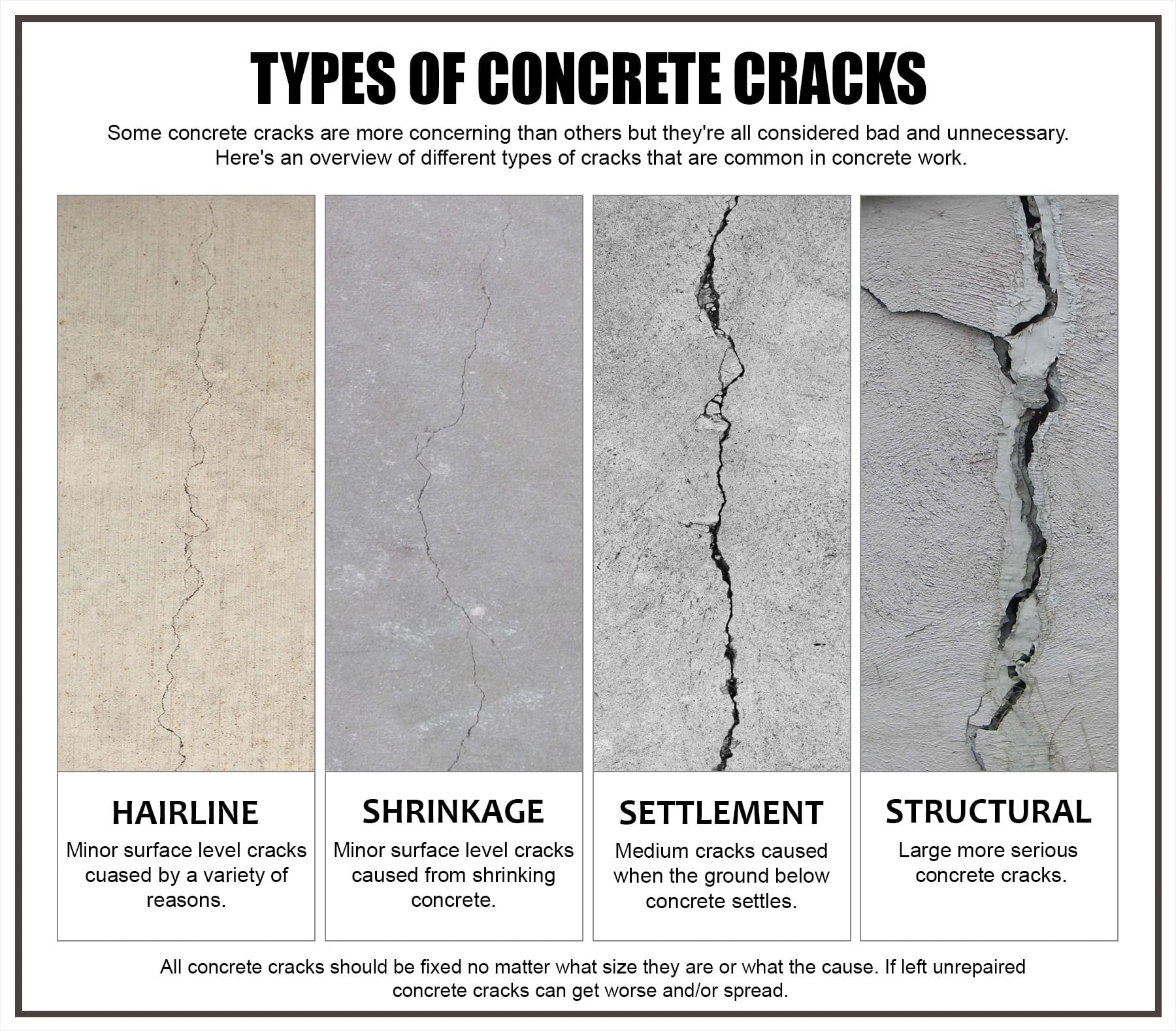
Non-structural cracks do not compromise the load-bearing capacity of your foundation. They are superficial and caused by concrete shrinkage, minor settling, or surface stresses. The key identifiers are that they are narrow, don’t change over time, and aren’t accompanied by other symptoms like bowing walls.
Think of them like a scratch on your car’s paint—they might need touching up, but the car still drives perfectly fine.
Wet Non-Structural Cracks
This is a critical sub-category. A crack that is technically non-structural can become a major problem if it allows water ingress. Even a hairline crack can channel significant water into your basement during Calgary’s heavy summer storms or spring runoff.
Addressing the water issue is paramount. This often means excavating outside to apply a waterproof membrane, not just sealing the crack from the inside.
Bottom line: A wet crack is a problem crack, regardless of its structural rating.
Structural Cracks
Structural cracks threaten the stability of your foundation and, by extension, your home. They are caused by excessive loads, severe soil movement, or foundational failure. Horizontal cracks, wide vertical cracks (over 1/4 inch), and cracks that are growing rapidly all fall into this category.
These cracks are a clear signal that the foundation can no longer properly distribute the weight of the house. Professional intervention is not just recommended; it’s essential.
Causes of Foundation Cracks
To fix a crack properly, you need to understand why it happened in the first place. In Calgary, our unique environment creates a perfect storm of challenges for concrete foundations. The cause dictates the repair, so let’s dig into the common culprits.
Soil Movement and Settling
All homes settle slightly after construction as the soil beneath compresses. This is normal. Problems arise with differential settling, where one section of the foundation sinks more than another. This uneven movement places immense stress on the concrete, leading to diagonal or stair-step cracks.
Calgary’s variable soil conditions, from sand to heavy clay, make uniform settling a rarity. Proper soil compaction during construction is the best prevention.
Poor Drainage and Hydrostatic Pressure
This is a huge factor in our climate. When water saturates the soil around your foundation, it creates hydrostatic pressure—a powerful force pushing against your basement walls. Over time, this pressure can cause horizontal cracking or bowing.
Faulty downspouts, missing window well covers, or a yard that slopes toward the house are common culprits. Ensuring water is directed away from your foundation is the cheapest form of crack prevention you can do.
Frost Heave and Freezing/Thawing Cycles
Calgary’s signature freeze-thaw cycle is brutal on foundations. Water in the soil freezes and expands, lifting the ground (and your foundation) upward. When it thaws, the ground settles back down.
This annual lifting and dropping can gradually fracture concrete. It’s particularly damaging to slab foundations in driveways and walkways, but it also affects house foundations if the footing isn’t below the frost line.
Soil Expansion and Contraction
Our prevalent clay soil is “expansive.” It swells significantly when wet and shrinks when dry. This seasonal expansion and contraction constantly tug at your foundation, creating a cycle of stress that leads to cracking.
This is why maintaining consistent soil moisture around your home with proper grading and drainage is so critical. A dramatic dry spell followed by heavy rain is a recipe for movement.
Construction Issues
Sometimes, the problem is in the original pour. Using a concrete mix with too much water, improper curing (especially in hot or windy conditions), or insufficient rebar reinforcement can create a weak foundation prone to cracking.
While modern building codes are strict, older homes or those built without proper oversight can have these inherent weaknesses from day one.
Tree Roots
Large trees planted too close to the house are a double threat. Their roots can physically grow into and exert pressure on foundation walls. More commonly, they act as powerful moisture pumps, sucking water from the soil and causing the clay to shrink dramatically, leading to settlement cracks.
If you have mature trees in communities like Altadore, it’s wise to monitor the foundation on that side of the house.
Concrete Curing Process
Concrete doesn’t “dry”; it cures through a chemical reaction that generates heat. If this process happens too quickly, excessive internal stress causes shrinkage cracks. This is why professional contractors carefully control the curing environment with blankets or sprays.
Most shrinkage cracks from curing appear early in a foundation’s life and, if they remain stable, are not a structural concern.
The cause is your repair roadmap—you must address it, or the crack will simply return.
When to Worry About Foundation Cracks
So, when does a crack cross the line from “keep an eye on it” to “call a pro immediately”? It’s rarely about just one factor. You need to look at a combination of clues to assess the real risk to your home.
Signs of Serious Issues
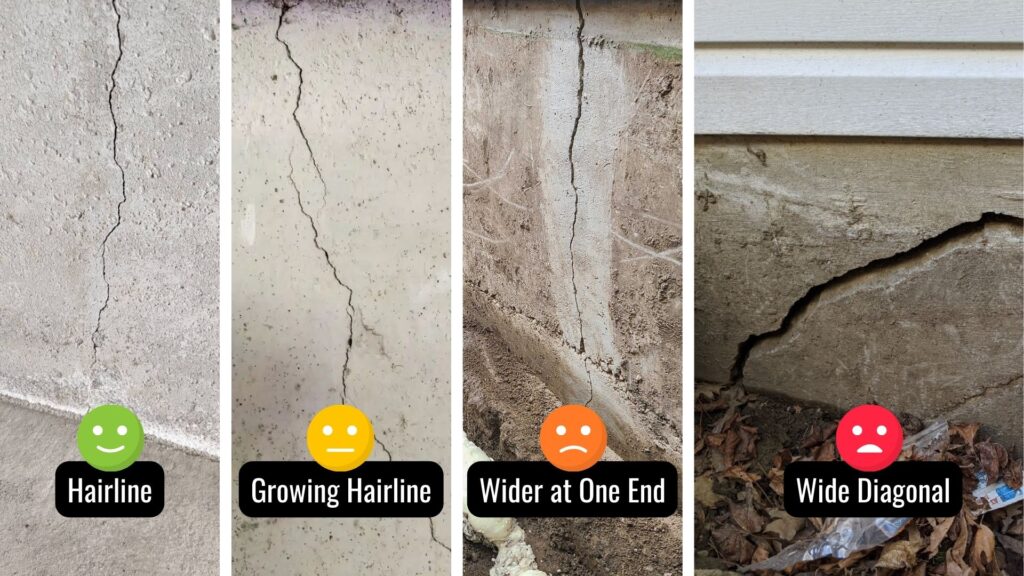
Certain symptoms are major red flags. Horizontal cracks, as discussed, are top of the list. Cracks that are wider at the top than the bottom indicate active settling. If you see cracks on both the interior and exterior walls in the same location, the issue is penetrating the full thickness of the foundation.
Any crack that is actively leaking water, especially under pressure, signifies a breach that needs professional sealing and likely exterior waterproofing.
Crack Width and Growth
Width is a key metric. As a general rule, any crack wider than 1/4 inch (about the thickness of a pencil) should be evaluated by a professional. More important than a single measurement is change over time.
This is where the “pencil test” comes in. Mark the ends of the crack on the wall with a pencil and date it. Revisit in a month or after a major weather event. If the crack has grown past your marks, it’s active and needs attention.
Accompanying Symptoms (Bowing Walls, Uneven Floors, Water Leaks)
The crack itself might just be the most visible symptom of a larger problem. Be on the lookout for other warning signs. Do your basement walls appear to be bowing or leaning inward? Do doors or windows stick for no apparent reason, indicating a shifted frame?
Walk across your main floor. Do you feel a slope or see gaps under baseboards? Water pooling in the basement after rain is an obvious companion symptom to any crack. These secondary signs often confirm that a crack is part of a structural issue.
Solutions and Repairs for Foundation Cracks
Once you’ve identified the type and cause of a crack, you can match it with the right repair. The goal is always to stop the cause of movement (if active) and restore the foundation’s strength and watertight integrity. Here’s a quick reference to common solutions.
| Term | What It Means | Why It Matters |
|---|---|---|
| Epoxy/ Polyurethane Injection | A liquid resin or foam is injected into the crack under pressure, bonding the concrete together from the inside. | This is the standard repair for non-moving, structural cracks. It restores strength and can be used for waterproofing with special flexible polymers. |
| Carbon Fiber Strapping | High-strength carbon fiber strips are bonded to a bowing or cracked wall to prevent further inward movement. | This is a minimally invasive, powerful solution for stabilizing walls with horizontal cracks or bowing, common in Calgary due to soil pressure. |
| Helical Piers / Push Piers | Steel piers are driven deep into stable soil or bedrock to lift and support a sinking foundation. | This addresses the root cause of settlement cracks by permanently stabilizing the foundation, stopping differential settling. |
| Exterior Waterproofing & Membrane | The soil is excavated around the foundation, cracks are sealed, and a waterproof membrane is applied to the exterior wall. | This is the gold standard for stopping water ingress. It addresses wet cracks at their source and protects the entire foundation wall. |
| Interior Drainage System | A perimeter drain and sump pump are installed inside the basement to collect and evacuate water that enters. | This is a critical companion to crack sealing for managing water. It doesn’t stop water from coming in but safely manages it once it does. |
The right repair depends entirely on your specific situation. A simple epoxy injection might cost a few hundred dollars, while a full excavation and waterproofing project in a Beltline condo building could run into the tens of thousands.
Always get a diagnosis from a qualified professional who can explain why a particular repair is recommended for your home’s unique conditions.
Match the repair to the root cause, or you’ll be fixing the same crack again next year.
FAQs: Your Calgary Foundation Crack Questions Answered
Let’s tackle some of the most common questions we hear from Calgary homeowners and builders about foundation cracks.
How much does it cost to repair a foundation crack in Calgary?
Costs vary wildly based on the repair method. A simple interior epoxy injection for a hairline crack might start around $300-$600. Stabilizing a wall with carbon fiber straps can range from $800 to $1,500 per strip. For major structural repairs involving excavation or underpinning with piers, you’re looking at $10,000 to $40,000 or more. The only way to get an accurate price is a site-specific assessment.
Can I seal a foundation crack myself?
You can temporarily seal very small, non-structural, dry cracks from the inside with hydraulic cement or a basic crack-sealing kit from the hardware store. However, this is purely a cosmetic or minor moisture barrier. It does not address the cause of the crack, restore structural strength, or stop water under pressure. For any crack that is active, wet, or wider than 1/8 inch, DIY sealing is a band-aid solution that often fails.
Do all new homes get foundation cracks?
It is very common for new homes to develop minor shrinkage cracks as the concrete fully cures and the house undergoes initial settlement in its first few years. Builders typically account for this. The key is monitoring. These early cracks should be hairline, stable, and not accompanied by other symptoms. Your builder’s warranty should cover any significant cracking that occurs during the warranty period.
Who should I call in Calgary for a foundation inspection?
You should call a licensed, experienced foundation repair specialist or a structural engineer. A general contractor may not have the specific expertise. Look for a local company with a proven track record, like Omega2000, that offers free inspections and detailed reports. They can tell you if a crack is serious and provide repair options with warranties.
When in doubt, get a professional opinion—it’s the cost of peace of mind.
Conclusion
Not every crack in your Calgary foundation means your house is falling down, but ignoring the wrong one can lead to costly structural damage and persistent water problems. The key is to be an informed observer: identify the type, understand the common local causes like our clay soil and freeze-thaw cycles, and know the serious warning signs like horizontal cracking or active growth.
Now that you know what to look for, you can move from worry to action. For any crack that gives you pause—especially if it’s wide, growing, or letting in water—a professional assessment is the smart next step. Trying to diagnose and repair major foundation issues yourself can lead to incomplete fixes that fail when the next big storm rolls in from the Rockies.
For a clear diagnosis and a lasting repair solution in Calgary, Omega2000 has the local expertise to help. Get in touch for a foundation inspection, and let’s ensure your home stands strong for years to come.