Calgary driveways face punishment that most Canadians never experience. With 65–70 freeze-thaw cycles every year — driven by Chinook winds that swing temperatures by 20°C in a single afternoon — your concrete takes a battering that compounds year over year (ACL Masonry, 2024). Add 133.1 cm of annual snowfall (Environment Canada) and the temptation to reach for rock salt, and you have a recipe for cracking, spalling, and premature failure. The good news: with the right steps taken before freeze-up, you can protect your driveway and make it last 30–40 years.
TL;DR: Calgary’s 65–70 annual freeze-thaw cycles — highest among major Canadian cities — make driveway prep non-negotiable. Seal before September 30, switch to CMA de-icers, use plastic-bladed tools, and repair cracks before freeze-up. Done right, concrete driveways last 30–40 years (Calgary Concrete, 2025).
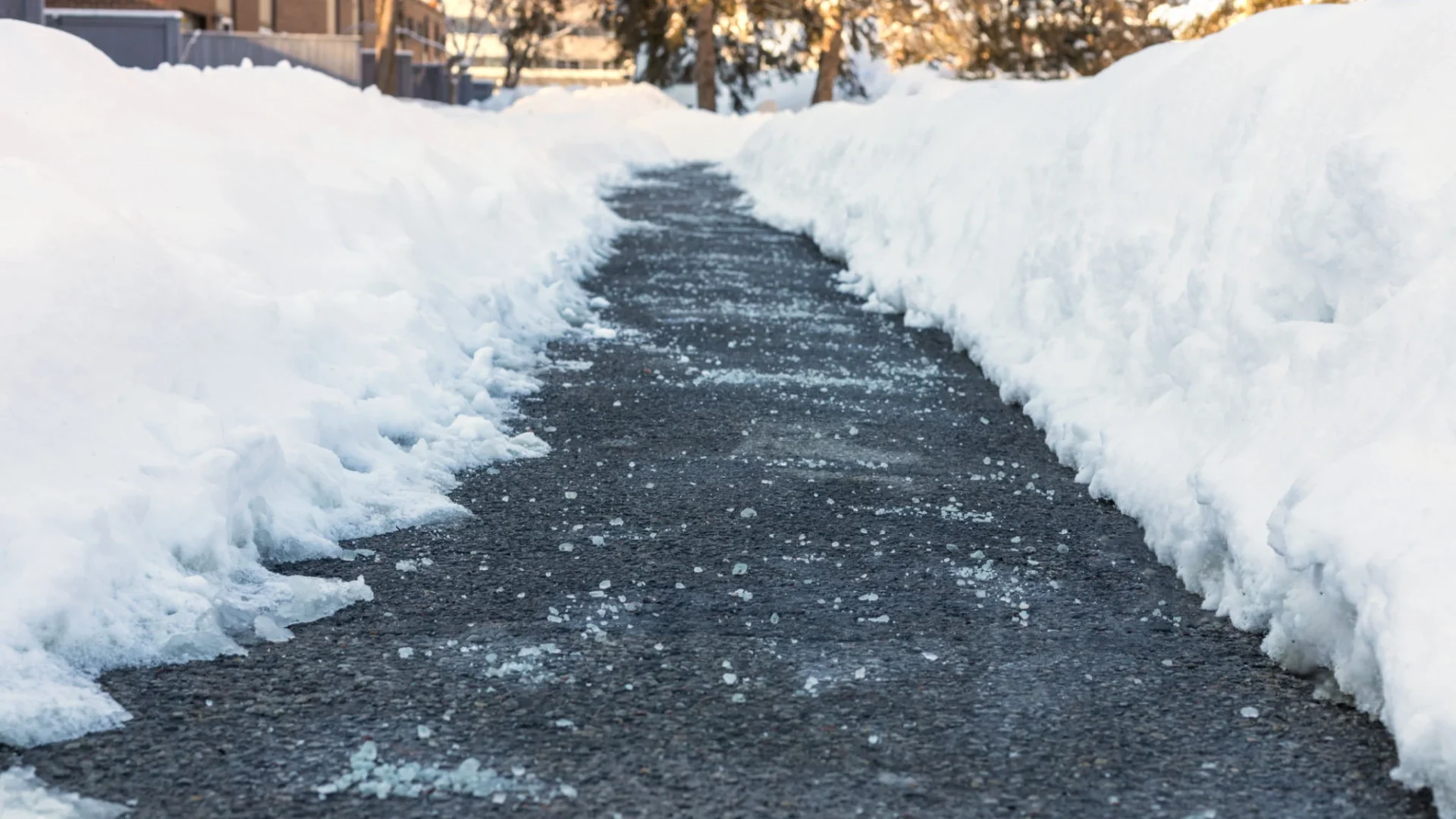
Protect your driveway from Calgary’s harsh winter conditions.
Why Do Calgary Winters Hit Driveways So Hard?
Calgary sees approximately 65–70 freeze-thaw cycles per year — more than any other major Canadian city — primarily because Chinook winds arrive from the Rockies and send temperatures surging by 20°C or more within hours (ACL Masonry, 2024). This repeated expansion and contraction of water inside concrete pores is the leading cause of surface scaling and cracking on Calgary driveways.
When water seeps into concrete and freezes, it expands by roughly 9%. That expansion creates internal pressure that gradually breaks down the cement matrix. A single cycle causes microscopic damage; 65 cycles a year compounds into visible cracks, spalling, and surface delamination within a few seasons if the concrete isn’t sealed and maintained properly.
Chinooks make the problem worse than a city with steady deep-cold winters. Edmonton, for example, experiences fewer annual freeze-thaw cycles because temperatures stay consistently cold through January and February. Calgary’s volatile weather means your driveway constantly cycles through freeze-thaw stress from October through April.
The monthly distribution matters, too. March is actually Calgary’s most damaging month for driveways — not January. Chinooks peak in late winter, and the combination of daytime thaw and overnight refreeze concentrates cycle counts right when road salt from city streets is tracking onto your surface. Pre-winter sealing in the fall protects against early damage, but a spring inspection after March is equally important.
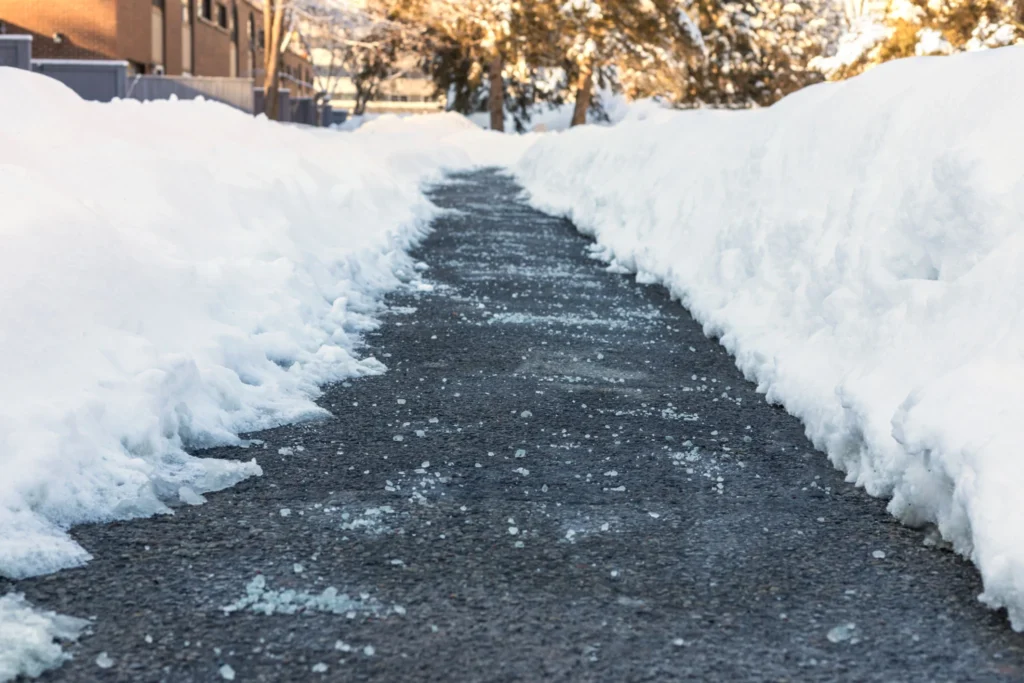
Simple maintenance steps to prepare your driveway for winter.
When Should You Start Preparing Your Calgary Driveway for Winter?
Concrete Alberta — the provincial industry association established in 1962 — recommends completing all outdoor concrete sealing and repair work before September 30 each year (Concrete Alberta, 2025). Below that threshold, average Calgary temperatures begin dropping under 10°C, which is the minimum required for sealant to cure and bond to the concrete surface correctly. Miss this window and you’re waiting until next May.
Start your winterization checklist in late August. That gives you four to six weeks to inspect the surface, clean it thoroughly, complete any crack repairs, and apply sealant — all while daytime temperatures reliably hit 15–20°C. Don’t wait for Thanksgiving weekend; by then you’re often racing the first hard frost.
Here’s a practical pre-winter timeline for Calgary homeowners:
Late August: Inspect the full driveway surface. Look for cracks wider than 3mm, spalling patches, and areas where the concrete surface is flaking or delaminating.
Early September: Power-wash the driveway and let it dry completely (48–72 hours). Fill cracks with polyurethane or epoxy crack filler while temperatures are still warm.
Mid-September: Apply penetrating concrete sealer. Allow 24–48 hours of cure time above 10°C before any foot or vehicle traffic.
Late September: Final surface inspection. Stock your de-icing supplies and replace metal-bladed shovels with plastic or rubber-edged tools before the first snow.
If your driveway was poured in the last 12 months, skip sealing this season and focus entirely on de-icer selection. New concrete needs one full freeze-thaw season before sealing is effective — the surface must be fully cured and carbonated before sealant can penetrate correctly.
How Do You Seal Your Concrete Driveway Before Winter?
Prevent cracks and damage before Calgary’s freezing temperatures arrive.
Sealing a concrete driveway every 2–3 years is the single highest-impact maintenance step you can take to protect it from Calgary’s climate. A quality penetrating silane-siloxane sealer fills the microscopic pores in concrete that allow water to enter, freeze, and expand — directly reducing the number of internal pressure events your slab experiences each winter (Calgary Concrete, 2025).
There are two main sealer types, and choosing the wrong one is a common Calgary homeowner mistake:
Penetrating sealers (silane/siloxane): Soak into the concrete matrix and repel water from inside. They leave no surface film, don’t make the driveway slippery, and last 3–5 years. This is the correct choice for Calgary driveways exposed to freeze-thaw stress and de-icers.
Film-forming sealers (acrylic/polyurethane): Create a coating on top of the concrete. They enhance colour and gloss but can peel under freeze-thaw pressure, especially if moisture gets trapped beneath the film. Not recommended as a primary winter sealer for exterior Calgary applications.
Our finding: In our experience with Calgary driveways, homeowners who switch from acrylic to penetrating sealers consistently see fewer re-application calls and less surface delamination after the first severe winter. The penetrating type costs more per litre but requires fewer applications over a ten-year period — the total cost is lower.
How to apply a penetrating sealer correctly:
Clean the driveway with a pressure washer (minimum 2,500 PSI). Pre-treat any oil stains with concrete degreaser.
Let the surface dry completely — 48–72 hours of no rain and temperatures consistently above 10°C.
Apply the sealer with a low-pressure pump sprayer or a short-nap roller in thin, even coats.
Work in sections from the back to the front of the driveway so you don’t seal yourself in.
Allow the first coat to penetrate for 5–10 minutes, then apply a second coat if the product label recommends it.
Keep foot traffic off for 24 hours; vehicle traffic off for 48–72 hours until fully cured.
One litre of penetrating sealer typically covers 4–6 square metres. A standard Calgary two-car driveway (approximately 50–60 m²) needs 10–15 litres.
What De-Icing Products Are Safe for Calgary Concrete?
Calcium magnesium acetate (CMA) is the safest de-icer for concrete driveways in Calgary — it’s chloride-free, causes negligible concrete and rebar corrosion, and is safe for pets and nearby vegetation (Concrete Alberta, 2025). Rock salt (sodium chloride), the most widely used de-icer in Canada, is the most damaging option and should be avoided entirely on concrete less than one year old, and used sparingly even on older surfaces.
The damage mechanism is twofold. Chloride ions from salt penetrate the concrete matrix and corrode embedded rebar over time. At the same time, salt solution lowers water’s freezing point and extends the freeze-thaw season — forcing additional cycles beyond what Calgary’s climate naturally generates. You already start with 65–70 cycles per year; de-icers that extend cycling compound that damage significantly.
Here’s a practical de-icing decision guide for Calgary homeowners:
Product
Concrete Safe?
Effective To
Pet Safe?
Cost
Rock Salt (NaCl)
No — avoid on concrete
−9°C
No
$ (lowest)
Calcium Chloride
Moderate risk
−29°C
Mild irritant
$$
Magnesium Chloride
Moderate risk
−15°C
Mild irritant
$$
Sand / Grit
Yes — no damage
Traction only
Yes
$ (low)
CMA
Yes — no damage
−5°C
Yes
$$$ (highest)
The practical Calgary approach: use sand and grit as your primary traction product, reserve CMA for freezing rain events when traction alone isn’t enough, and avoid sodium chloride entirely. If you do use calcium or magnesium chloride, rinse the driveway surface with water in early spring before sustained snowmelt to dilute the salt concentration before it penetrates deeper.
[INTERNAL-LINK: Calgary driveway repair after de-icer damage → guide on fixing concrete scaling and surface spalling]
How Should You Remove Snow Without Damaging Your Concrete?
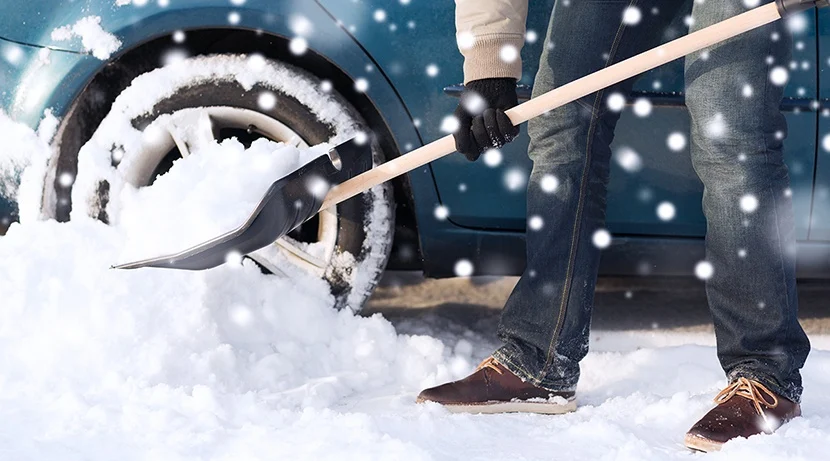
A practical guide to keeping Calgary driveways strong through winter.
Use a plastic-bladed snow pusher or rubber-edged shovel on concrete driveways — metal blades can chip and gouge concrete surfaces, especially when the material is cold and brittle in sub-zero temperatures (Calgary Concrete, 2025). A wide plastic pusher (60–75 cm) clears more area per pass and exerts less downward pressure per centimetre than a narrow shovel, reducing the risk of accidental surface damage during heavy-snow clearing.
Snow removal technique matters as much as tool selection:
Push, don’t scrape: Push snow toward the side or end of the driveway. Scraping motions with downward blade pressure are where concrete surface damage most often occurs.
Clear early and often: Remove snow before it compacts or bonds to the surface. Packed snow is harder to remove and more likely to require aggressive de-icers or scraping force.
Leave it when ice bonds: If ice has bonded to the surface, apply CMA or spread sand rather than chipping at the concrete with metal tools. Chipping ice off bonded concrete pulls surface material with it.
Snowblower caution: Single-stage snowblowers with metal-edged augers can damage concrete. Use a two-stage machine with a rubber auger plate, or adjust the clearing height to keep metal parts off the concrete surface.
After a Chinook — Calgary’s mid-winter warm spell that can push temperatures above 10°C — clear any remaining slush before the overnight refreeze. Slush left on concrete during refreeze bonds tightly and can pull up surface material when removed the following morning.
What Concrete Cracks Should You Repair Before Winter?
Fix any crack wider than 3mm — approximately the width of a standard pencil — before freeze-up. Water entering an unsealed crack and freezing will widen it by two to three times over a single Calgary winter (Concrete Alberta, 2025). Hairline cracks under 1mm can wait for spring unless they’re connecting to a larger damage network. Cracks wider than 10mm or with vertical displacement (one edge higher than the other) need a professional assessment before DIY repair.
Our finding: Based on driveway assessments across Calgary, cracks that go unaddressed for one winter season typically require 3–4 times more repair material by the following spring. Freeze-thaw doesn’t just widen cracks — it also delaminated material along the crack edges, creating a wider repair zone than the original crack width suggests.
DIY crack repair products and when to use each:
Polyurethane crack filler: Best for moving cracks caused by settling. Stays flexible after curing and won’t re-crack when the concrete shifts seasonally. Good choice for most Calgary driveway surface cracks.
Epoxy crack injection: Best for structural cracks in garage floors or foundation walls where rigidity and strength restoration matter. Not ideal for driveway surface cracks where freeze-thaw movement is ongoing.
Concrete caulk: Good for control joint maintenance — the pre-cut expansion joints in your driveway that are designed to control where cracking happens. Re-fill these every year or two before winter.
Hydraulic cement: Best for active water leaks or cracks in basement walls where water is present. Not appropriate for driveway surface repairs.
Always clean the crack thoroughly before filling. Remove all loose material with a wire brush or oscillating tool. Product adhesion to dusty or dirty concrete is poor, and the repair will fail by spring. Apply filler when temperatures are above 5°C, which gives you through mid-October in most Calgary years.
Frequently Asked Questions
Winter-proof your driveway with these essential care tips.
When should I seal my Calgary concrete driveway before winter?
Seal your driveway in late August or September, before temperatures drop below 10°C. Concrete Alberta recommends finishing all outdoor concrete work before September 30. Sealant needs 24–48 hours to cure at temperatures above 10°C to bond properly — rush the timing and the sealer won’t penetrate or protect effectively.
What is the safest de-icer for concrete driveways in Calgary?
Calcium magnesium acetate (CMA) is the safest de-icer for concrete — chloride-free and virtually non-corrosive to the surface and rebar. Avoid rock salt on concrete less than one year old, as it dramatically accelerates surface scaling. Sand and grit provide safe traction without any chemical damage, making them the best everyday winter option.
How many freeze-thaw cycles does Calgary get each year?
Calgary experiences approximately 65–70 freeze-thaw cycles per year — among the highest of any major Canadian city — driven by Chinook winds that cause temperature swings of 20°C or more in a single day (ACL Masonry, 2024). March typically sees the highest monthly concentration of freeze-thaw events as Chinook frequency peaks.
Should I use a metal or plastic shovel on my concrete driveway?
Use a plastic-bladed shovel or pusher on concrete driveways. Metal blades chip and gouge cold concrete, particularly during hard frosts when the surface is most brittle. Rubber-edged snow pushers are the gentlest option. If you use a snowblower, check that the auger plate is rubber, not metal, before running it over your driveway.
How long does a concrete driveway last in Calgary with proper maintenance?
A properly maintained concrete driveway in Calgary lasts 30–40 years (Calgary Concrete, 2025). Without sealing and with aggressive rock salt use, the lifespan can fall below 20 years. Annual inspections, crack repairs before freeze-up, and re-sealing every 2–3 years are the three steps that make the biggest difference in driveway longevity.
Start Your Calgary Driveway Prep Before September 30
Calgary winters don’t forgive neglect, but they’re manageable with the right preparation. Seal before September 30, switch from rock salt to CMA or sand, use plastic-bladed tools, and fix every crack wider than 3mm before freeze-up. Do those four things consistently and your driveway will reach the 30–40 year lifespan that well-maintained Calgary concrete regularly achieves.
Key takeaways from this guide:
Calgary’s 65–70 annual freeze-thaw cycles — highest among major Canadian cities — are driven by Chinooks, not just cold. March is the worst month, not January.
Seal with a penetrating silane-siloxane product every 2–3 years. Always seal before September 30 when daytime temperatures are still reliably above 10°C.
Switch from rock salt to CMA or sand. Chloride de-icers amplify natural freeze-thaw damage and accelerate rebar corrosion.
Use plastic or rubber-edged snow tools. Cold concrete chips; metal blades cause damage that only becomes visible after the spring thaw.
Repair cracks wider than 3mm every autumn. One winter without repair typically triples the repair scope by spring.
If your driveway already shows significant spalling, cracking, or surface delamination, pre-winter patching alone may not be enough to stop the damage cycle.
Protect Your Calgary Driveway Before Winter
Calgary winters are tough on concrete, but the right preparation can prevent costly repairs later. If your driveway already has cracks, scaling, or surface damage, a professional inspection can help you stop the problem before freeze-thaw cycles make it worse.