
Calgary does a strange thing to foundations.
One week the air feels mild, the next week the city freezes hard. The ground follows that rhythm. When you search for foundation frost heave calgary, you usually stare at fresh cracking or a crooked door and wonder what the soil is doing underneath.
I see it as a tug-of-war between freezing soils and the structure you paid good money for. Omega 2000 specialize in foundation systems built for this local environment. That includes cast-in-place footings, helical piles, concrete piles, and screw piles that reach solid ground instead of sitting in soft fill near the surface.
What frost heave really is in the Calgary area
Frost heave begins in the soil, not in the concrete.
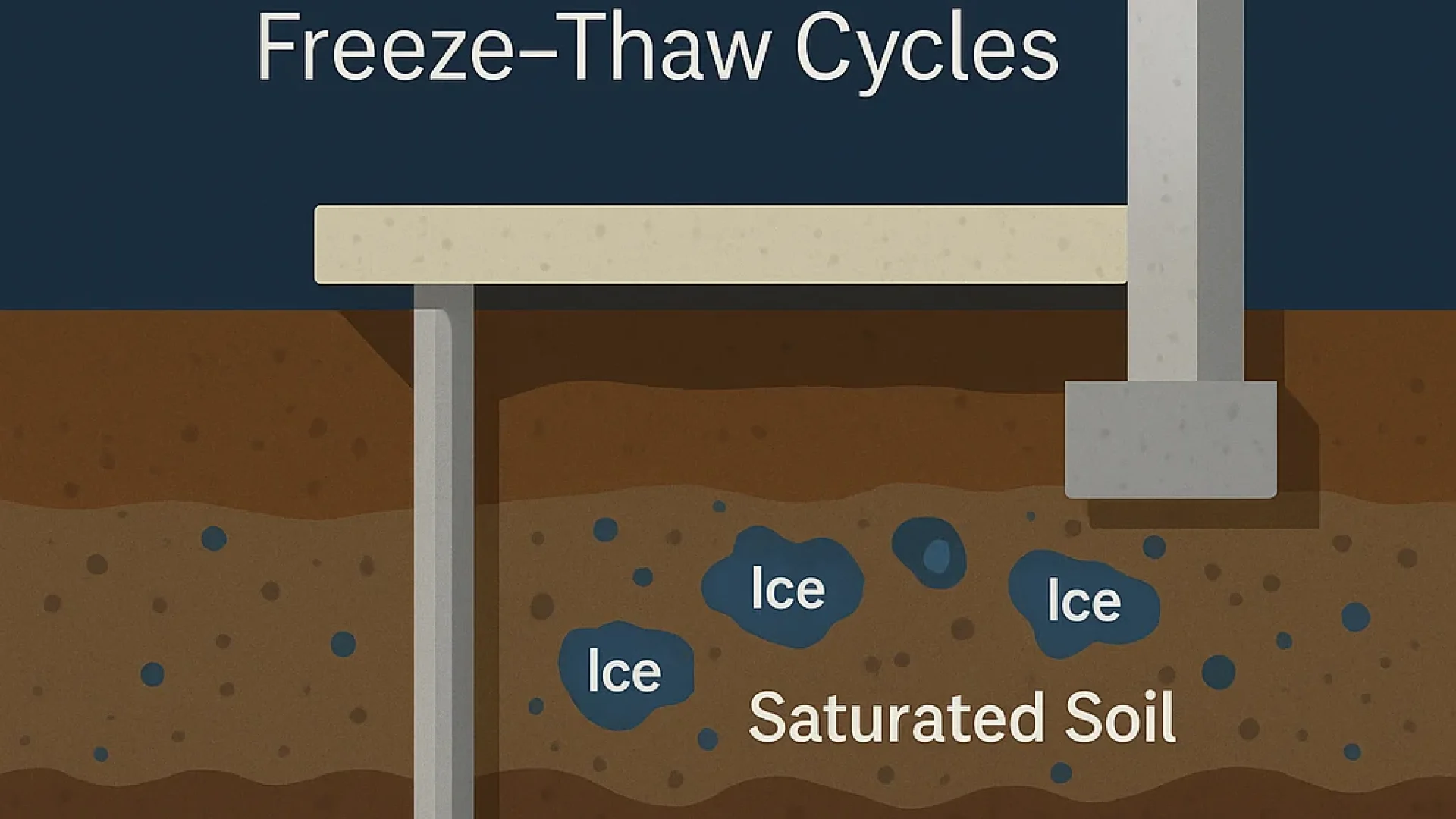
Engineers describe frost heave as three things working together. You need frost-susceptible soil, a supply of water, and below-zero temperatures in the ground. When those conditions occur at the same time, ice lenses form between soil particles and push the ground upward.
Water in tiny pores expands when freezing happens. Inside materials like concrete, that expansion raises pressure and slowly opens up micro-cracks. Inside soil, it creates bands of ice that lift anything they can reach.
In the calgary area, frequent freeze thaw cycles driven by chinooks keep that process active all winter. The ground freezes, thaws, and freezes again. Near the surface, that pattern can repeat many times. From a homeowner’s chair, it feels simpler. The ground moves. The foundation follows.
How freeze–thaw cycles damage concrete, soils, and walls
Here is why this matters.
Inside concrete, water sneaks into small pores and existing hairline cracks. When temperatures drop and freezing starts, that trapped water turns to ice and expands. Repeated cycles cause surface deterioration, scaling, and deeper cracking. Over years, that process can weaken slabs, steps, grade beams, and walls.
I like to picture the concrete breathing in water and then getting squeezed from the inside every time a cold snap rolls through.
The same pattern shows up in saturated soils around the foundation. When moisture gathers near footings and freezing begins, ice lenses form and lift parts of the structure. When thaw returns, those lenses melt, the soil collapses, and the footing can drop unevenly. That repeated movement can lead to structural damage, crooked decks, cracked stairs, and hidden water damage and erosion where meltwater pools.
In a cold prairie environment like calgary, the number of freeze thaw cycles in a season makes exposed concrete and shallow footings more susceptible to this kind of slow-motion failure.
Frost line, Alberta Building Code and why depth matters
Now we move from concept to rules.
The alberta building code and related building codes in this province require foundation elements to extend below the frost line or be engineered so they can perform safely even when frost movement occurs. That depth varies with soil conditions and loading, yet the idea stays the same. Get below the active frost zone and onto stable soil.
In the calgary market, local engineering practice often targets footing levels several feet below grade so that piles and strip footings bear in stable layers that rarely see freezing. When foundations reach that depth and sit in firm ground, they behave more like part of the hillside and less like a loose board on top of it.
From my point of view, respect for the frost line is non-negotiable. Everything above it moves more. Everything far below it stays closer to fixed.
Helical piles, screw piles and concrete piles in Calgary
Pile foundations take that depth idea and push it deep into the ground.
Helical piles use a steel shaft with one or more helix plates that screw into the soil. When crews install these piles below the frost line in undisturbed zones, loads transfer to stable layers and help prevent frost heave at grade. For many residential and light commercial projects, helical piles are a smart choice because they go in with compact equipment, reach solid ground, and give strong stability for the structure above.
Concrete piles are drilled shafts filled with reinforced concrete. They suit heavier structure loads and sites that need extra depth or higher resistance to uplift from freezing and swelling soil. When crews place them in sound layers and let them cure properly, these piles give long-term durability for larger builds.
Screw piles combine steel shafts, helices, and a screw action that allows quick install with direct feedback. Installers read torque values as each pile turns into the ground. Higher torque signals stronger bearing soil and better stability. With coatings and wraps to reduce corrosion, well-built screw piles can protect integrity and safety for many years.
From the field side, I like helical piles and screw piles for additions, garages, decks, canopies, and smaller projects where access is tight. They can save days compared to large drilled shafts while still reaching deep into soil that stays calm when the upper surface freezes.
Across a full site, combining helical piles, concrete piles, and screw piles lets a builder support each part of the structure in the way that fits its load, soil conditions, and environment.
How frost heave shows up around a home
Let’s look at what people actually see.
Early signs around a residential property often seem small:
- Fine cracking at slab corners or along control joints
- Hairline cracks in foundation walls (signs of foundation problems)
- Gaps under baseboards in winter
- Deck stairs that lift when the ground freezes
- Doors or windows that only stick when it is very cold
Engineers read those marks as clues. They think about which zones stay saturated, which parts of the structure carry lighter loads, and whether a slab rests on granular fill or heavy clay.
Left alone, frost heave can wreak havoc on alignment, invite water damage into low spots, and speed up deterioration through repeated freeze thaw damage. That pattern creates repair bills that homeowners usually meet years after the first hairline crack shows up.
Site prep, drainage and maintenance to reduce movement
Next steps often start above ground.
Good drawings mean little if the site collects moisture. Grading should pull surface water away from walls so backfill does not stay saturated all winter. Downspouts need extensions so meltwater runs to lower ground. Dense vegetation against the house should stay trimmed so it does not trap extra humidity against concrete.
Owners can perform simple seasonal checks:
- Walk the perimeter after rain or chinook melt
- Watch for ponding near the foundation
- Track new cracking with photos or notes
- Look at spots where piles support decks or canopies and see if steps tilt or joints open
Those habits will not remove frost, yet they reduce risk and make it easier to catch trouble before it harms integrity.
Why helical and screw piles are a smart choice in Calgary
From my perspective, helical piles and screw piles are often a smart choice for calgary foundations that face aggressive freezing patterns and shifting soil conditions.
They:
- Reach deep into soil layers that stay stable below the frost line
- Can be anchored in place with measured torque for predictable stability
- Use steel with coatings to slow corrosion in cold, wet conditions
- Help prevent frost heave where upper soils stay saturated and prone to movement
Bring that together with sound drainage and respect for local building codes, and you reduce the chance that frost heave will occur at all.
Omega 2000 specialize in matching foundation systems to soil conditions, climate, and projects across alberta. When our crews install piles, pour concrete, or set footings, the goal is simple. Protect the integrity of the foundation, keep people and property in safety, and keep frost heave from causing long-term havoc under your home or commercial build.
When you stand on a solid floor in the middle of a January chinook, that quiet feeling of a secure and stable structure is the payoff.