

A Calgary residential foundation typically takes 4 to 14 days from hole-ready to wall-stripped. Here’s the 7-step breakdown.
- 4 days = ideal warm-weather pour with clear inspections and no trade-bottlenecks
- 14 days = winter conditions or multiple inspection / supply / sub-trade delays
This piece walks through the seven Fieldwire status stages our crews actually use across 3,762 named project addresses (4,538 total Fieldwire-tracked tasks), the median day-count per stage, the ten things that most often slow a Calgary foundation, and the September 30 cold-weather trigger you’ll hear about — and what it really means.
What this piece does not cover: excavation upstream (a separate trade) and framing downstream (a separate trade). The window described here is the foundation contractor’s window: from hole-ready to wall-stripped.
Cold-weather concrete placement procedures in Alberta are governed by specific curing, protection, and monitoring requirements that directly affect foundation schedules after September 30.
The 7 steps
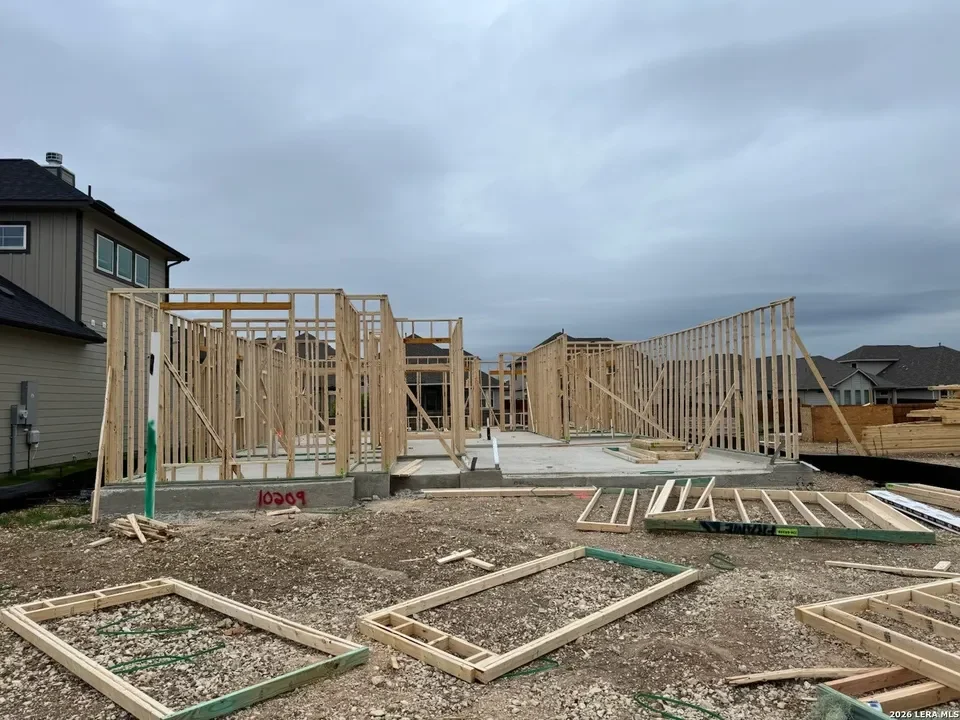
These are the seven status stages our crews use in Fieldwire — the same kanban every Omega crew lead manages from the field:
Step 1: Hole Ready for footing (Day 0–1)
The excavation crew has finished. Soil-bearing capacity is verified. The repin survey is complete and the footing perimeter is set out. We arrive on-site for the layout walk-through. Typical duration: same day or next day.
Step 2: Footing Ready (Day 1–2)
Forms set, rebar placed, embedded items confirmed (anchor bolts, rebar dowels into the wall pour, plumbing sleeves where applicable). City of Calgary inspection is booked. Typical duration: 1 day from forms set to inspection ready.
Step 3: Footing Poured (Day 2–3)
Concrete poured — typically 3–5 m³ for a single-family residential footing. HS (Type HS) sulphate-resistant cement per CSA A23.1:24, calibrated to Calgary’s S-2 sulphate exposure class. Mix specs, slump, and air content documented per pour. Typical duration: half-day pour + 24–48 hour cure before form work starts on walls.
Step 4: Standing Wall (Day 4–5)
Once the footing has cured for 24–48 hours, wall forms are set on top. Rebar placement, embedded items, electrical / plumbing chases all confirmed. Wall inspection is booked. Typical duration: 1–2 days for forms set to inspection ready.
Step 5: Wall Poured (Day 5–7)
Wall concrete poured — typically 18–25 m³ for a single-family foundation, depending on basement depth and wall length. Typical duration: half-day pour + 5–7 day cure before forms can strip.
Step 6: Wall Stripped (Day 7–9)
Forms removed. Walls inspected. Any cosmetic patching addressed. Typical duration: 1–2 days.
Step 7: Completed (Day 9–14)
Drainage tile, damp-proofing or weeping-tile system installed where spec’d. Final foundation inspection. Backfill proceeds (often after plumbing rough-in and inspection). Site cleaned for the next trade. Typical duration: 2–5 days, depending on inspection scheduling and weather.
Median day-count per stage (from 3,762+ builds)
What the data shows when you look across thousands of projects:
| Step | Median duration | Range |
| 1. Hole Ready → Footing Ready | 1 day | 0.5–3 days |
| 2. Footing Ready → Poured | 1 day | 0.5–2 days |
| 3. Footing Poured → Standing Wall | 2 days | 1–4 days (cure + form set) |
| 4. Standing Wall → Wall Poured | 1.5 days | 1–3 days |
| 5. Wall Poured → Wall Stripped | 5 days | 4–7 days (cure-dependent) |
| 6. Wall Stripped → Completed | 2 days | 1–5 days |
The surprise in the data: the longest step isn’t pouring concrete. It’s curing concrete, plus waiting for inspections.
The 10 things that slow a Calgary foundation
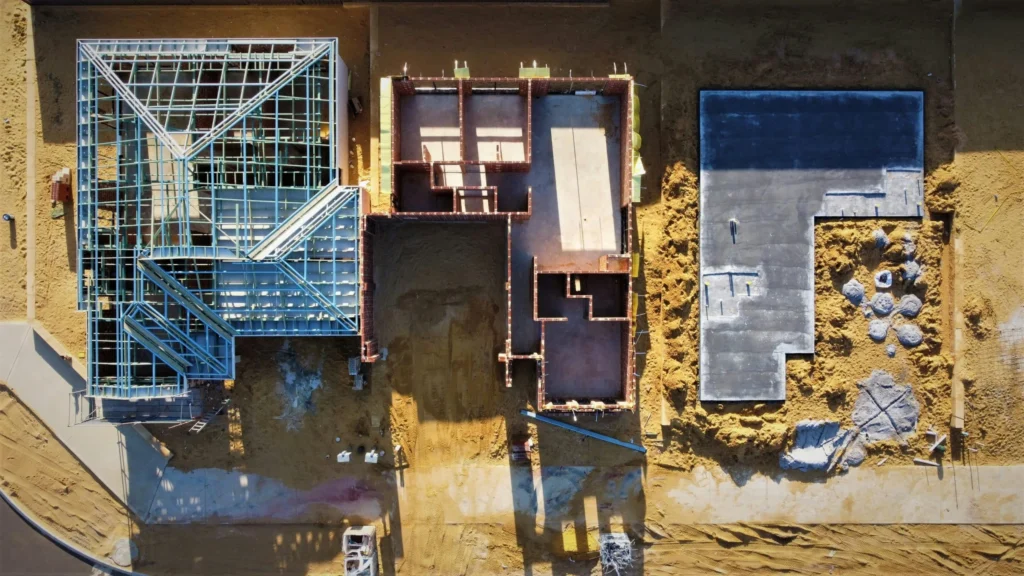
These are the real obstacle categories that exist as Fieldwire status flags in our kanban — meaning these are not theoretical risks, they’re the things that have actually delayed real Calgary jobs often enough that we needed status codes for them:
- Re-Excavate Due To Snow In The Hole (RE) — Calgary winter throws curveballs. A clean Friday excavation can have 20 cm of snow in the hole by Monday morning.
- Waiting For Plumbing Inspection (WF) — Bottleneck #1 across Calgary residential foundations. Plumbing rough-in must happen and be inspected before backfill.
- No Excavator (NE) — When the excavation sub-trade is delayed elsewhere and the hole isn’t ready when scheduled.
- Need Ladder Package (NL) / Waiting On Ladder Package (WO) — Reinforcement-supply chain delay.
- Needs A Repin — Survey crew has to re-shoot the perimeter (lot encroachment, neighbor-wall protection, or original survey discrepancy).
- On Hold — Builder-side pause (financing, permit revision, design change).
- Partial Pour — Mid-foundation plan change requiring a partial pour rather than completing the pour as originally scheduled.
- Sub Crew Slot Unavailable — Coordination issue where the next-trade crew (e.g., framers) hasn’t released the slot.
- Site Cleaned (when not done before pour) — Pre-pour site prep wasn’t completed; pour gets pushed.
- Trucking — Concrete supplier delivery slot issues. Volumetric (sister brand Omega Ready Mix) eliminates this for the projects we supply concrete for; barrel-truck supplier delays still apply on traditional concrete-supply jobs.
The point of the list isn’t to assign blame. It’s to show that “How long does a foundation take?” depends on the orchestration of multiple trades, multiple suppliers, and a city inspection schedule we don’t control. A 4-day timeline is achievable on a clean job in May. A 14-day timeline isn’t sloppy work — it’s the same crew dealing with one or more of these ten items.
Calgary winter — the September 30 trigger
You’ll hear “Calgary doesn’t pour foundations after September 30.” That’s not quite right.
Concrete Alberta’s actual guidance: placement after September 30 is not recommended *unless proper Cold Weather Concrete procedures are followed*. It’s a procedural trigger, not an absolute deadline.
What “cold-weather procedures” means in practice:
- Heated mix water (typically 50–70°C at the plant)
- Accelerator (calcium chloride or non-chloride options)
- Insulated forms + frost blankets
- Heated enclosures (hoarding) for sustained sub-zero work
- Continuous temperature monitoring (maturity-method)
- Target 32 MPa minimum strength before frost exposure (CSA A23.1:24 cold-weather provisions)
The cost stack adds 10–25% to a typical pour budget, plus crew overhead for the additional supervision. Most production builders schedule around the September 30 trigger rather than absorb the premium. Specialty work and Net-Zero builds often push through it because the alternative — losing 4–6 months of foundation season — is more expensive than the cold-weather procedure premium.
For builds that need foundations year-round without the cold-weather premium, precast walls bypass the trigger entirely — the wall-pour happens in the heated plant, and the on-site work is reduced to crane-and-set.
Why some builders go faster — the operational discipline
Some Calgary foundations clear the 7-step timeline in 4–6 days end-to-end. That requires:
- Inspections booked in parallel with form work. Not sequentially.
- Cribbing crew + concrete supply locked in advance. Same-day re-routing kills the schedule.
- Sub-trade calendars synchronized. Excavator → cribber → plumber → backfill → framer all need to know the dates a week ahead.
- Embedded-item readiness. Anchor bolts, rebar dowels, plumbing sleeves, electrical chases — all on-site before forms are set.
Our internal workflow uses a coded six-step sequence (PCSTPO.M, NTFCRB.M, NTFEXC.M, FTGFRM.M, CRBLB.P, PCSTPP.P) that operates in parallel with the Fieldwire stage statuses. The codes are how we coordinate across the full Omega 2000 cribbing crew on simultaneous projects. They aren’t unique magic — they’re 36 years of cribbing-floor reality compressed into a vocabulary the crew uses without thinking.
The combination of crew tenure + parallel-inspection booking + synchronized sub-trade scheduling is what lets some Calgary foundations clear in 4 days when the conditions cooperate. There’s no shortcut to the concrete cure. There’s only better orchestration of the steps around it.
FAQ
Q: How long does a Calgary foundation take?
4 to 14 days from hole-ready to wall-stripped. Median around 7–9 days. The variation is driven by weather, inspections, and sub-trade coordination — not by the pour itself.
Q: How long does concrete take to cure?
Footing concrete needs 24–48 hours minimum before wall forms are set. Wall concrete needs 5–7 days minimum before forms strip per CSA A23.1:24. Full design strength is reached at 28 days for general concrete, 56 days for HS sulphate-resistant cement (the Calgary mandatory standard).
Q: When can you backfill after a foundation pour?
Once walls are stripped and the foundation has cleared its final inspection — which usually requires plumbing rough-in inspection first. Typical timing: 7–10 days after the wall pour, weather and inspection scheduling permitting.
Q: Can you pour a foundation in Calgary winter?
Yes — with proper cold-weather concreting procedures (per CSA A23.1:24 cold-weather provisions and Concrete Alberta guidance). The September 30 trigger isn’t an absolute deadline; it’s the date after which heated-mix, accelerators, frost protection, and continuous monitoring become procedurally required. Costs increase 10–25%. Many builders avoid the premium by scheduling around it; precast walls offer year-round capability without the cold-weather cost.
Q: Why does the plumbing inspection slow things down?
Plumbing rough-in must be installed and inspected before backfill. The inspection is scheduled with the City of Calgary, not with the foundation contractor — meaning the constraint is City availability, not work readiness. Booking inspections in parallel with form-setting can compress this by 1–2 days; that’s the operational trick experienced cribbers use.
Q: How long until I can frame on a new foundation?
Walls must be stripped, foundation must have cleared final inspection, and backfill must be complete. Typical: 9–14 days from hole-ready to framing-ready. Faster on clean jobs in good weather. Longer when weather, inspections, or sub-trades create cascading delays.
Q: Why is my foundation pour delayed?
The most common reasons are (in order of frequency): waiting for plumbing inspection, weather (rain, snow, freezing temperatures), excavation timing, supply-chain delays on rebar / forms / embedded items, and survey or repin requirements. None of these are foundation-contractor performance issues; they’re orchestration constraints around the foundation work.
CTA
Need a Calgary Foundation Contractor?
From footing layout and concrete pours to inspections, wall stripping, and backfill coordination, Omega 2000 manages the full residential foundation process across Calgary and surrounding communities.
With 36 years of cribbing experience and more than 3,700 tracked project addresses, our crews coordinate the scheduling, inspections, and weather planning needed to keep projects moving.
📞 403-217-4888
📧 info@omega2000.ca
Last updated: May 2026 | Methodology: timeline data aggregated from 3,762+ named project addresses (4,538 total Fieldwire-tracked tasks). Per-stage durations are medians; range covers ~80% of observed cases.