
Recycled Materials in Concrete: What Actually Works
Planning a new stamped patio in McKenzie Towne or tackling a commercial build along Macleod Trail? You’ve likely heard about ‘green’ and recycled concrete options. Sorting the effective solutions from the marketing fluff can feel overwhelming, especially with Calgary’s demanding freeze-thaw cycles.
This guide cuts through the noise to show you recycled materials in concrete that actually work for our local conditions. We’ll rank the proven options based on performance, availability right here in Alberta, and real-world durability. From the driveways of Tuscany to the foundations of the Beltline, the right recycled material can build a stronger project and a clearer conscience.
Local experts like Omega2000 have seen the good, the bad, and the crumbly when it comes to recycled content. Let’s get into what delivers on its promises.
Ranking the Top Recycled Materials for Calgary Concrete
Our ranking isn’t just about being green—it’s about being smart and durable. We evaluated each material on four key criteria: structural integrity, resistance to Calgary’s climate extremes, local supply chain availability, and overall cost-effectiveness for typical projects. A recycled material that fails in a Bowness winter isn’t a solution; it’s a liability.
This list prioritizes what delivers real performance for homeowners and developers, not just theoretical benefits. The goal is to give you a clear path to a more sustainable project that still stands rock-solid for decades.
1. Recycled Concrete Aggregate (RCA)
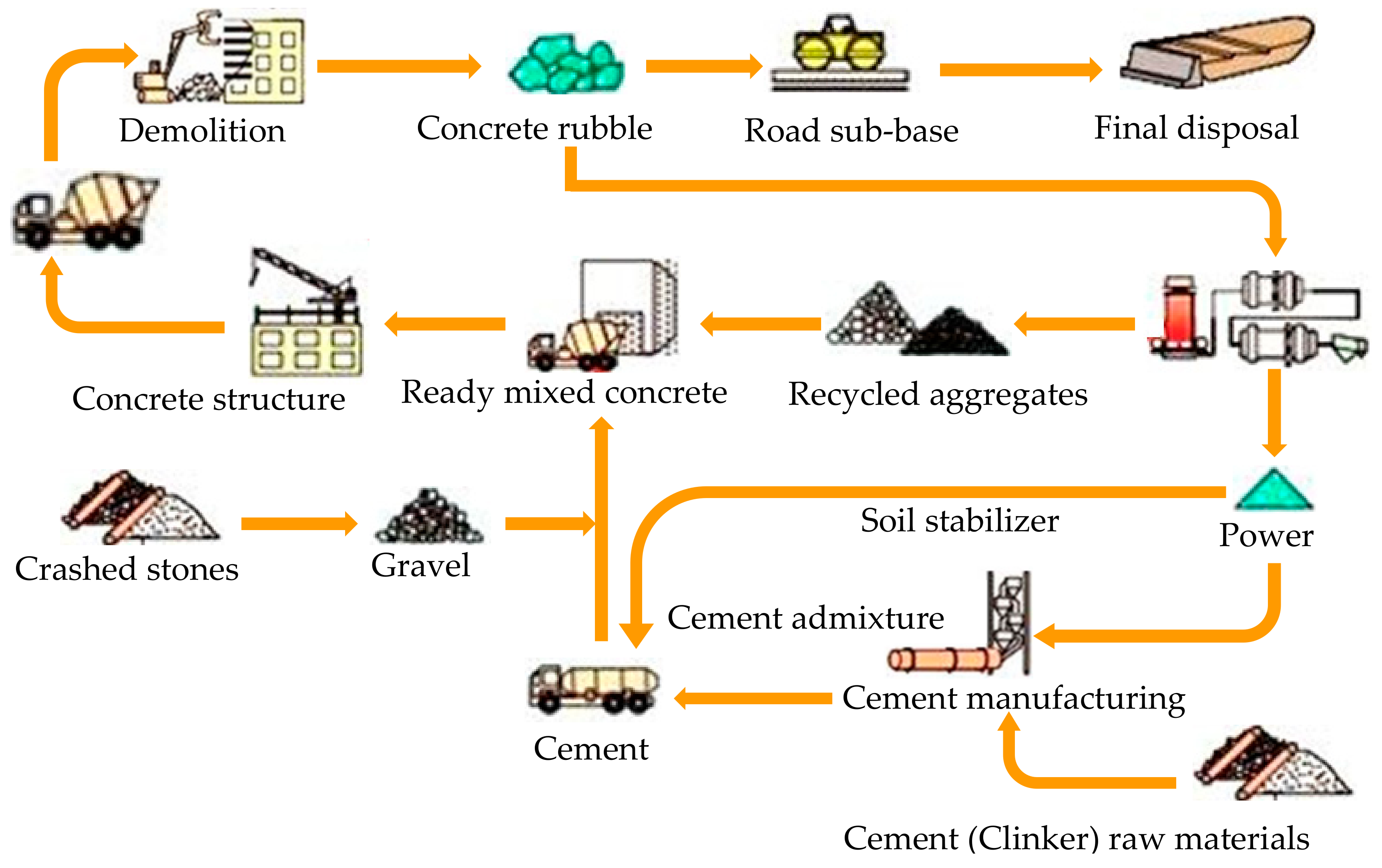
Recycled Concrete Aggregate is the undisputed leader, made by crushing old concrete from demolitions, sidewalks, and curbs. It ranks first because it’s a direct, high-performance replacement for virgin gravel and stone. The key benefit is its excellent load-bearing capacity, making it perfect for base layers under driveways, slabs, and road subgrades all across Alberta.
Its production diverts massive tonnage from Calgary landfills and reduces the need for gravel pit mining. For a commercial site in Quarry Park, using RCA for the base can significantly lower the project’s overall environmental footprint without sacrificing an ounce of strength.
The caveat: The quality of RCA is only as good as the concrete it came from. It must be processed to remove contaminants like rebar, asphalt, or gypsum board. Always source from a reputable supplier who tests their product.
2. Slag Cement (GGBFS)
Slag cement, or Ground Granulated Blast-Furnace Slag, is a byproduct of steel production. It earns the second spot for its superb technical benefits as a partial cement replacement. When used in a mix, it significantly improves the concrete’s long-term strength, durability, and resistance to sulphate attack—a major plus for our mineral-rich Alberta soils.
The key benefit is a much denser, less permeable concrete that stands up brilliantly to freeze-thaw cycles and road salts. This makes it a top choice for exposed elements like bridge decks, parking structures, and high-traffic commercial floors where longevity is critical.
The caveat: It can slow the initial set time, which requires careful planning in Calgary’s short construction season. It’s also less readily available than fly ash and typically comes at a premium cost.
3. Fly Ash (Class C & F)
Fly ash, a fine powder from coal-fired power plants, is a long-standing workhorse in recycled concrete. We rank it third for its proven track record and widespread use in ready-mix across Calgary. Its key benefit is twofold: it enhances workability and finishability for contractors while increasing the long-term compressive strength and chemical resistance of the cured concrete.
Using fly ash reduces the amount of Portland cement needed, which is the single largest source of CO2 in concrete production. For a large pour on a multi-family project in University District, specifying fly ash can make a substantial environmental impact.
The caveat: Not all fly ash is created equal. Class F ash can slow strength gain, which is a concern in cold weather. Performance depends heavily on the source and consistent quality from the supplier.

4. Recycled Asphalt Pavement (RAP)
Recycled Asphalt Pavement finds its niche as a reliable material for specific, non-structural applications. It ranks fourth because, while not for every job, it excels in its lane. The key benefit is its excellent performance as a stable, well-draining base material for roadways, parking lots, and walkways.
Using RAP reuses a material that is abundantly available from road resurfacing projects across the city. It’s a cost-effective and sustainable choice for creating a solid foundation before pouring concrete on top, common in many Calgary infill developments.
The caveat: RAP is generally not used as an aggregate *in* the concrete mix itself. Its bitumen content can interfere with the cement hydration process, potentially weakening the final product if not used correctly.
5. Post-Consumer Glass (Powdered)
Powdered post-consumer glass enters the rankings as an emerging option with promising but specific applications. Finely ground glass can act as a partial replacement for cement or fine sand. Its key benefit is its pozzolanic properties, meaning it can contribute to strength development while utilizing a difficult-to-recycle material.
This is a innovative solution for diverting glass from landfills. For a homeowner in Bridgeland wanting a unique, slightly translucent finish on a decorative concrete feature, it presents an interesting possibility.
The caveat: This technology is still maturing. The glass must be ground to a very specific fineness, and not all glass colours or types are suitable. Availability in Calgary is currently limited, and long-term performance data in our climate is less extensive.
Side-by-Side Comparison of Top Recycled Materials
Choosing the right material often comes down to your specific project goals. This table puts the top options head-to-head on the factors that matter most for a successful pour in Calgary. Consider your project’s primary need—is it ultimate strength, cost savings, environmental benefits, or a balance of all three?
Remember, the best choice is one that aligns with your structural requirements, budget, and the expertise of your concrete contractor. A great partner like Omega2000 can help you navigate this decision.
| Factor | Recycled Concrete Aggregate (RCA) | Fly Ash | Slag Cement (GGBFS) |
|---|---|---|---|
| Primary Use | Aggregate replacement for base/sub-base | Cement replacement in the mix (15-35%) | Cement replacement in the mix (up to 50%) |
| Key Strength | High load-bearing, excellent for foundations | Improved workability & long-term strength | Superior durability & sulphate resistance |
| Cost Impact (CAD) | Cost-neutral to slightly lower than virgin aggregate | Cost-neutral; can reduce overall mix cost | Moderate to high premium |
| Calgary Climate Suitability | Excellent, if properly processed and compacted | Very Good, but may slow set in cold weather | Excellent, creates dense, freeze-thaw resistant concrete |
| Local Availability | Very High (multiple local crushers) | High (common in ready-mix) | Moderate (special order from suppliers) |
What to Avoid: Recycled Materials That Often Fail
Not every recycled material makes the grade for structural concrete. Some introduce weaknesses, inconsistencies, or chemical reactions that can compromise your slab. Knowing what to avoid is just as important as knowing what to use.
Cutting corners with untested or inappropriate materials might save a few dollars upfront but can lead to catastrophic and expensive failures down the road. This is especially true with Calgary’s expansive clay soils and harsh winters.
Untreated Wood Ash or Organic Matter
While it might seem like a natural additive, wood ash or other organic materials are a recipe for trouble. They can contain sugars and other compounds that severely disrupt the cement hydration process. This prevents the concrete from achieving its design strength, leading to a soft, crumbly surface that won’t last a single winter.
If you’re pouring a driveway in Coventry Hills, the last thing you want is organic interference creating weak spots for water to penetrate and freeze.
Certain Types of Plastic Fibers
Not all plastic fibers are problematic, but unidentified or non-engineered plastic shreds are a major risk. Plastics that are not designed for concrete can have poor bonding with the cement paste. Over time, they can create tiny voids and pathways for water and chloride ingress, accelerating corrosion of any rebar inside the slab.
This is a classic case of a good intention leading to a poor outcome. Always insist on fibers specifically manufactured and tested for use in concrete.

How to Specify Recycled Materials with Your Contractor
Having the knowledge is one thing; ensuring it gets implemented correctly is another. Your conversation with your concrete contractor is crucial. Be clear, ask the right questions, and get specifications in writing to ensure your project meets both your performance and sustainability goals.
A reputable contractor will be transparent about what they use, why they use it, and be able to provide references or test data. Don’t be afraid to have this detailed discussion—it’s your project and your investment.
Ask for Mix Design Details
Request the proposed mix design, often called a “batch ticket” or “mix formula.” Look for specific percentages of replacements, like “25% fly ash by weight of cement” or “100% RCA for base course.” Vague promises like “we use green concrete” are not enough. The mix design is the recipe, and you have a right to see it.
This document should come from the ready-mix supplier and be approved by the contractor. It’s your first line of defense against vague claims.
Require Source Information and Testing
Ask where the recycled materials are sourced from and if they have been tested to relevant Canadian standards (like CSA A23.1 for concrete materials). For RCA, this means testing for absorption, chloride content, and soundness. For fly ash or slag, it means consistent chemical composition.
Using materials from a trusted, local Alberta supplier ensures consistency and reliability. A contractor who can’t or won’t provide this information may be cutting corners.
Get It in the Contract
Any agreement to use specific recycled materials at specified percentages must be included in your written contract. This protects you and holds the contractor accountable. The contract should state the type of material (e.g., CSA-approved Class CI fly ash), the replacement rate, and the applicable standard.
This formalizes your expectations and provides a clear benchmark for the work. It turns a verbal assurance into a contractual obligation.

Frequently Asked Questions About Recycled Concrete
You’ve got questions—we’ve got clear, Calgary-specific answers. Here are the most common things homeowners and builders ask when considering recycled materials for their concrete projects.
Is concrete with recycled materials as strong as regular concrete?
Yes, when done correctly, it can be just as strong and often more durable. Materials like slag cement and fly ash actually create a denser, less porous concrete over time, which improves long-term strength and resistance to Calgary’s freeze-thaw cycles. The key is using the right material in the right proportion within a properly engineered mix design.
For high-grade applications like a foundation in Aspen Woods, mixes with supplementary cementitious materials (SCMs) like slag are often specified specifically for their superior performance, not just their environmental benefit.
Will using recycled materials save me money on my project?
It can, but savings shouldn’t be the primary driver. Recycled Concrete Aggregate (RCA) for your base can be cost-competitive with virgin gravel. Fly ash is typically cost-neutral in a ready-mix. However, some high-performance options like slag cement may come at a premium.
The real “savings” are often long-term: a more durable concrete needs less maintenance and lasts longer. Discuss the cost impact transparently with your contractor during the quoting phase.
Are there any Calgary bylaws that encourage or require recycled concrete?
While not generally mandated for private homes, the City of Calgary’s own capital projects and many large-scale commercial developments in areas like the East Village have sustainability requirements that prioritize recycled content. Leadership in Energy and Environmental Design (LEED) certification, sought by many developers, awards points for using regional and recycled materials.
Using recycled materials can help your project align with these broader municipal sustainability goals and may be a requirement for certain grants or development approvals.
Can I use recycled materials for a decorative concrete finish?
Absolutely. For decorative applications like stamped or exposed aggregate patios, recycled materials are often used in the base or structural layer. Some innovative mixes incorporate finely ground glass or coloured recycled aggregates for unique visual effects in the surface layer.
If you’re dreaming of a custom patio in Mount Royal, talk to a specialist contractor about how recycled content can be integrated without compromising the stunning finish you desire.Always prioritize a proven, durable mix for Calgary winters—the aesthetics depend on it.
Conclusion
Choosing recycled materials for your concrete project isn’t just an environmental statement; it’s a smart building decision when you focus on what actually works. The winning combination for Calgary is clear: Recycled Concrete Aggregate for your base, and fly ash or slag cement within your mix for enhanced durability.
These materials have moved beyond theory into proven, daily use on driveways, foundations, and major commercial sites across our city. They deliver the performance you need to withstand Chinooks and deep freezes, while responsibly reducing waste and carbon footprint.
Ready to build with concrete that’s both stronger and smarter? The experienced team at Omega2000 can guide you through specifying the right recycled materials for your specific Calgary project, ensuring a result that stands the test of time and climate.