
If you’re planning a new driveway near the scenic pathways of Fish Creek Park or updating a commercial lot in the Beltline, you’re probably thinking about durability and curb appeal. But for more and more Calgarians, the environmental impact is just as important. Top sustainable concrete practices for driveways go beyond just a long-lasting surface.
They are about making smart, lower-impact choices that protect your investment and our local environment. At Omega2000, we see homeowners and developers across the city seeking out these smarter solutions.
Introduction to Sustainable Concrete Driveways
Sustainable concrete is about rethinking every step of the driveway process. It starts with the raw materials and extends to installation and long-term performance.
The goal is to minimise waste, reduce carbon emissions, and work more harmoniously with our unique Calgary environment. This isn’t just a trend; it’s the future of responsible construction.
Benefits of Eco-Friendly Concrete Solutions
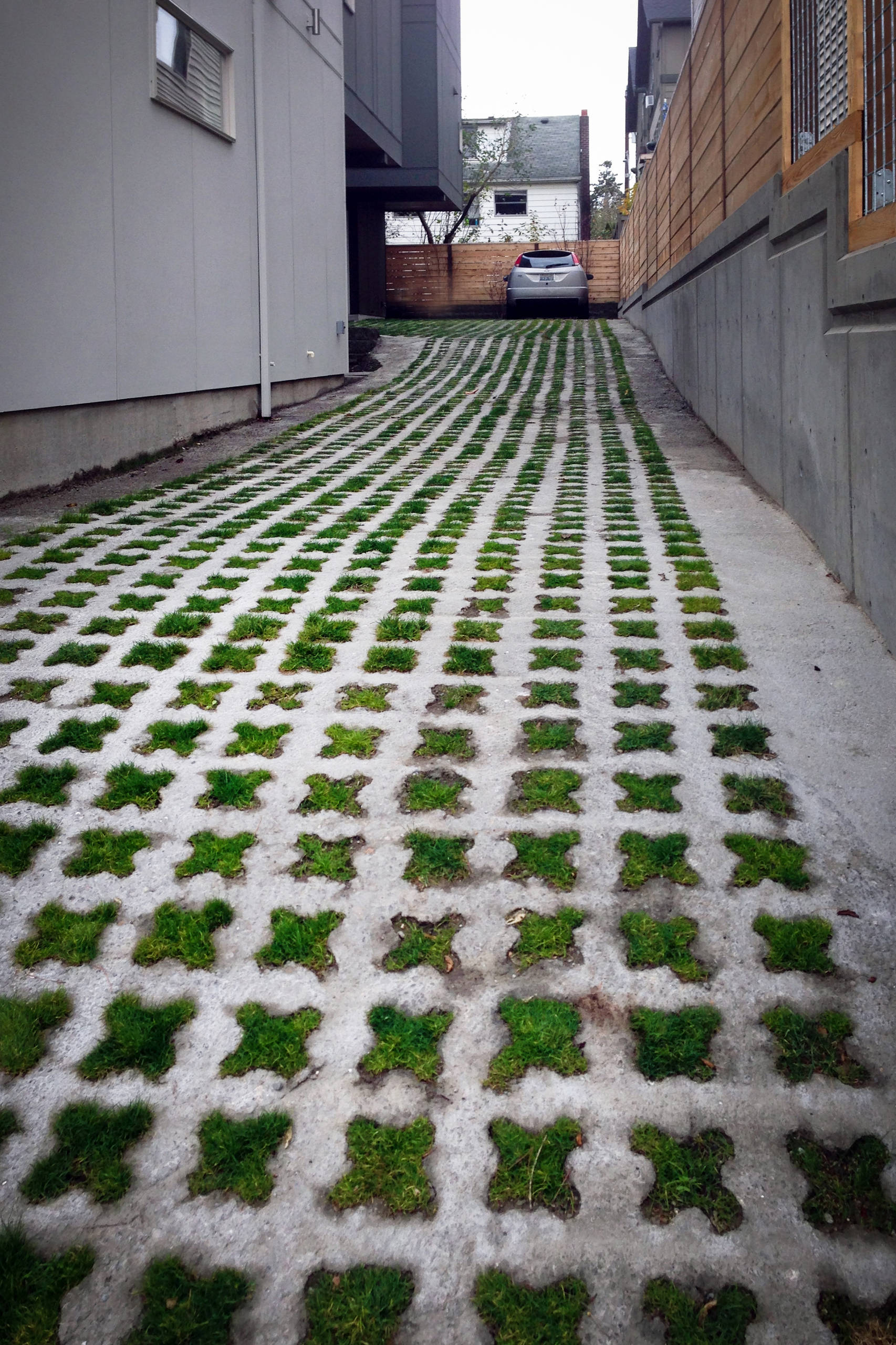
Choosing a green concrete option offers tangible benefits right here in our city. The most immediate is often reduced stormwater runoff, a key concern for properties in areas with older infrastructure like Inglewood or Mount Royal.
These practices can also lead to a stronger, more crack-resistant surface that stands up to our dramatic freeze-thaw cycles. Furthermore, many sustainable options use local or recycled materials, which can sometimes translate to cost savings or faster project timelines.
Reducing Carbon Footprint and Waste
Traditional concrete production is a major global source of CO2. Every sustainable alternative you choose directly chips away at that footprint.
This also means diverting industrial byproducts from landfills and reusing demolished concrete from local projects. It’s a full-circle approach that benefits your property and the wider community.
Bottom line: a sustainable driveway starts with the right mix and mindset, long before the pour.
Recycled Concrete Aggregate (RCA)
Ranking first on our list for its straightforward impact, Recycled Concrete Aggregate involves crushing old, demolished concrete to create a new aggregate. This material is then used as a base layer or even mixed into new concrete.
It’s one of the most effective ways to close the loop on construction waste right here in Calgary.
Advantages of Reusing Demolished Materials
The primary advantage is massive waste reduction. Instead of trucking old concrete to a distant landfill, it’s processed locally, slashing transportation emissions. For driveway projects, RCA creates an incredibly stable and compactable base.
This is especially valuable for homes in neighbourhoods with the city’s typical clay-based soil, providing excellent drainage and frost heave resistance. It’s a proven, no-nonsense solution.
Environmental Impact Reduction
Using RCA reduces the need to quarry and process virgin stone. This preserves natural landscapes and saves the energy and water typically used in aggregate mining.
It also lowers the project’s overall embodied carbon, making your driveway renewal a truly responsible choice.
By reusing what we already have, we build a more resilient foundation for the future.
Fly Ash Concrete
Our second-ranked practice is the use of fly ash, a fine powder recovered from coal-fired power plant emissions. When used as a partial replacement for Portland cement in the mix, it transforms a waste product into a performance enhancer.
This practice has been refined over decades and is a cornerstone of modern, eco-conscious concrete work.
Improving Strength and Workability
Fly ash doesn’t just reduce cement content; it actively improves the concrete. The fine particles fill microscopic voids, resulting in a denser, less permeable final product.
This means enhanced durability against water and de-icing salts, a critical factor for any driveway facing a Calgary winter. The mix is also easier to place and finish smoothly.
Waste Reduction from Coal Byproducts

This practice gives a valuable second life to material that would otherwise be stored in ponds or landfills. By incorporating fly ash, we significantly reduce the cement required.
Since cement production is the single largest source of concrete’s CO2 emissions, this substitution has a profound positive effect on the project’s carbon footprint. It’s a smart use of industrial synergy.
The caveat: not all fly ash is created equal, and mix designs must be precisely engineered for consistent results.
Permeable and Porous Concrete
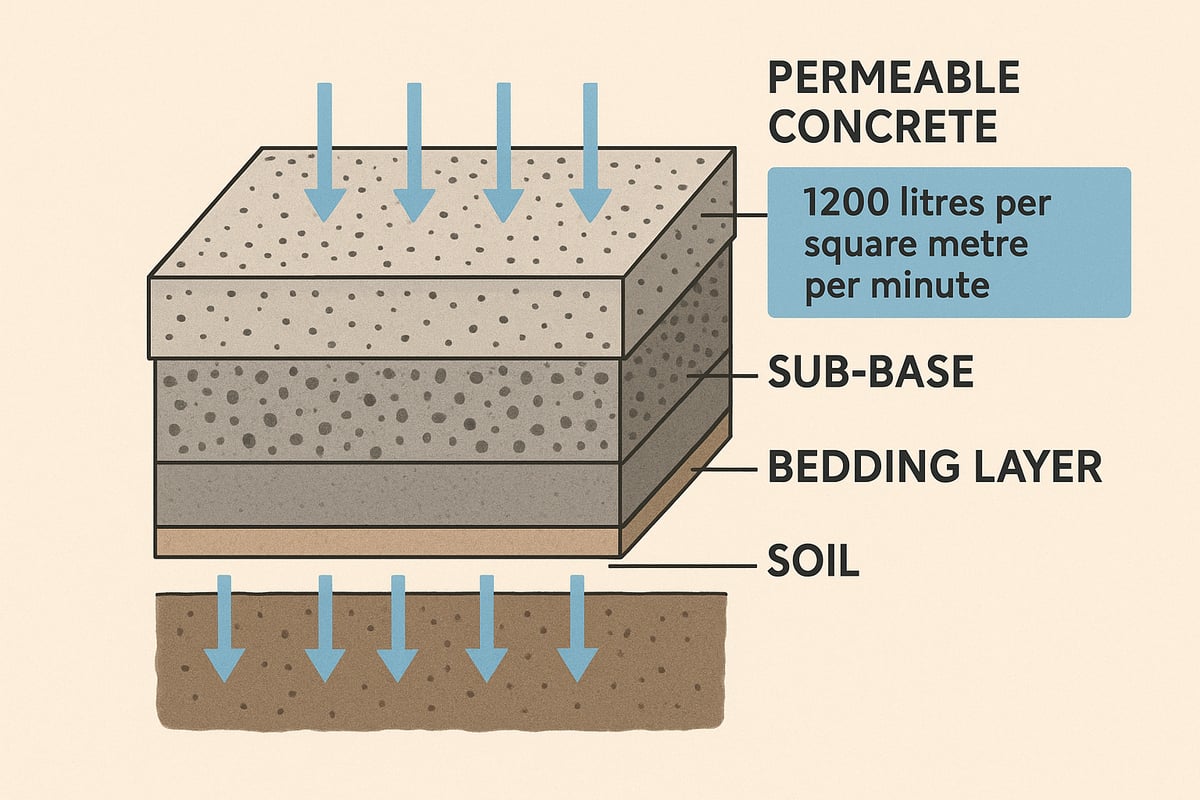
Coming in at number three, permeable concrete is a game-changer for water management. Unlike traditional concrete, it’s made with an open-cell structure that allows water to pass directly through into the ground below.
For driveways, this means managing runoff at the source, which is increasingly important.
Stormwater Management and Runoff Reduction
This is the standout benefit. During heavy rain or snowmelt, permeable driveways act like a giant sponge, preventing water from sheeting into the street and overloading storm drains.
It helps recharge groundwater naturally and reduces the risk of localised flooding. This direct infiltration also helps filter pollutants from the water before it re-enters the ecosystem.
Options for HOA Compliance
Many new communities and Homeowner Associations (HOAs), especially in newer developments, have strict rules about impermeable surfaces and runoff. A permeable driveway can often help you meet these environmental site guidelines more easily.
It demonstrates a commitment to sustainable land use that can simplify the approval process for your project.
If managing water on your property is a priority, permeable concrete is a powerful tool.
High-Performance and Fiber-Reinforced Concrete
Ranked fourth, this practice focuses on longevity and resource efficiency through smarter engineering. High-performance mixes are designed for extreme durability, while fiber reinforcement (like synthetic, glass, or steel fibers) is mixed in to control cracking.
The most sustainable driveway is one that never needs to be replaced prematurely.
Enhanced Durability and Crack Resistance
The micro-reinforcement provided by fibers holds hairline cracks together, preventing them from widening under stress from heavy vehicles or ground movement. This results in a far more resilient surface that requires less maintenance over its decades-long lifespan.
For a homeowner on a busy crescent or a developer needing reliable access, this durability is a key form of sustainability.
Suitability for Heavy Traffic
Whether it’s a constant stream of delivery vans or the weight of an RV, some driveways face more than passenger cars. Fiber-reinforced and high-performance concrete is specifically engineered to handle these heavier loads without compromising.
This makes it an ideal choice for commercial properties, multi-family drive aisles, or serious hobbyists in Calgary.
The caveat: proper installation is non-negotiable; the best mix can fail if not placed and cured correctly.
Geopolymer and Eco-Friendly Additives
Rounding out our top five are innovative materials like geopolymer concrete. These mixes use industrial byproducts (like slag) activated by alkaline solutions, virtually eliminating the need for traditional Portland cement.
While still emerging for residential driveways, they represent the cutting edge of low-carbon concrete technology.
Lower CO2 Emissions
The carbon reduction potential here is staggering. Geopolymer concrete can reduce CO2 emissions associated with the binder by up to 80% compared to ordinary concrete.
For projects where environmental benchmarking or corporate sustainability goals are a driver, this is a compelling option. It’s a profound shift in how we think about the chemistry of construction.
Sustainable Production Practices
Beyond just the mix, sustainable additives like water-reducers and superplasticizers allow for less water use in the concrete. This leads to higher strength with less cement, and it improves the quality of the finish.
It’s a detail-oriented practice that optimises every part of the formula for performance and planet.
Embracing these innovations today prepares your property for the standards of tomorrow.
Other Sustainable Concrete Alternatives
Beyond our top five ranked practices, several other noteworthy options deserve consideration. These alternatives can often be combined with the core practices above for an even greener outcome.
They address different aspects of the driveway’s lifecycle, from heat absorption to ongoing maintenance.
Warm Mix Asphalt and Solar Reflective Concrete

Warm Mix Asphalt, while not concrete, is a sustainable paving alternative that requires lower production temperatures, saving energy. For concrete driveways, using lighter-coloured or solar-reflective finishes can reduce the urban heat island effect.
A cooler driveway surface in the summer can also mean less thermal expansion and stress on the material itself.
Eco-Friendly Sealants and Local Sourcing
The sustainability story continues after the pour. Choosing low-VOC or plant-based sealants protects indoor and outdoor air quality during application. Furthermore, sourcing all aggregates and materials from local suppliers cuts down on transportation miles.
Supporting Alberta-based industries keeps the environmental and economic benefits right here in our province.
Assessing Your Driveway Needs
How do you decide which of these sustainable practices is right for your specific project? It starts with a clear assessment of your driveway’s demands and your personal priorities.
A one-size-fits-all approach doesn’t work for the diverse needs across communities from Tuscany to McKenzie Towne.
Traffic Load and Climate Considerations
First, be honest about the use. Is it a quiet residential cul-de-sac or an access lane for service vehicles? Our climate is the other non-negotiable factor.
The concrete must be formulated to withstand freeze-thaw cycles, de-icing salts, and the intense UV exposure we can get, even in winter. This assessment dictates the required strength and durability.
Aesthetic and Performance Preferences
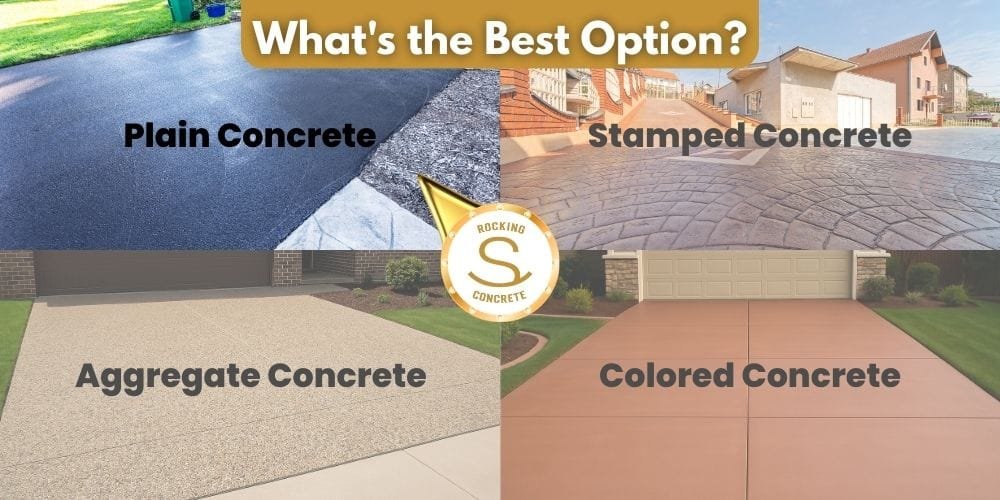
Do you prefer the classic grey look, an exposed aggregate finish, or a coloured stamped pattern? Your aesthetic choice can influence which sustainable practices are most compatible.
Likewise, decide on your performance non-negotiables. Is eliminating puddles your top goal, or is maximising lifespan your primary concern?
Aligning your practical needs with your environmental values is the key to a successful project.
Choosing the Right Materials
With your needs assessed, it’s time to match them to the materials. This is where the expertise of a knowledgeable partner becomes invaluable.
A qualified contractor can explain the pros, cons, and real-world performance of each sustainable option for your specific site conditions.
They will consider your soil type, drainage, and budget to recommend the best hybrid approach. Often, the most sustainable driveway combines several of these practices, like using an RCA base with a fly-ash mix and a permeable finish.
Don’t be afraid to ask your contractor detailed questions about the mix design and the origin of their materials.
Summary and Comparison
Let’s cut through the noise. To help you compare these top sustainable concrete practices at a glance, here’s a breakdown of their best uses and value proposition.
This table synthesizes the key decision-making factors for Calgary homeowners and developers.
| Option | Best For | Price Range (CAD) | Verdict |
|---|---|---|---|
| Recycled Concrete Aggregate (RCA) | Stable base layers, reducing construction waste, clay soil areas | $ – $$ | Best Value |
| Fly Ash Concrete | Enhanced durability, lower permeability, general driveway applications | $$ | Premium |
| Permeable Concrete | Stormwater management, HOA compliance, flood-prone lots | $$$ | Premium |
| Fiber-Reinforced Concrete | Heavy traffic areas, maximising crack resistance, commercial drives | $$ | Best Value |
| Geopolymer Concrete | Cutting-edge low-carbon projects, where emissions are a primary driver | $$$ | Premium |
Frequently Asked Questions
You’ve got questions, and Calgary contractors hear them every day. Here are clear answers to the most common queries about sustainable driveway concrete.
Our goal is to give you the confidence to move forward with an eco-friendly choice.
Is sustainable concrete as strong as regular concrete?
Yes, and often it’s stronger. Practices like using fly ash or fiber reinforcement are specifically employed to increase density, durability, and crack resistance. High-performance sustainable mixes are engineered to exceed the standards of typical driveway concrete, especially under the stress of our freeze-thaw cycles.
They are not a compromise on quality but an upgrade in performance with environmental benefits.
Does a permeable driveway work in Calgary’s winter with snow and ice?
It works excellently, but with proper installation and maintenance. Water should drain through quickly before freezing, reducing ice formation compared to a solid slab. It’s crucial to keep the surface clear of compacted snow and to avoid sand (which can clog pores).
Using a snowblower on a lifted setting or a plastic shovel is recommended. Many homeowners along Deerfoot Trail corridors find they have less standing water and ice with a properly installed permeable system.
Will using recycled materials or fly ash change the look of my driveway?
Not in the finished surface. Recycled Concrete Aggregate (RCA) is typically used as an unseen base layer. Fly ash is a powder that becomes part of the cementitious paste; it doesn’t change the colour or texture of the exposed finish.
Your choice of finish—broomed, stamped, exposed aggregate, or coloured—determines the final look, regardless of these sustainable mix components.
Is sustainable concrete more expensive for a driveway?
It depends on the practice, but it doesn’t have to be. Using Recycled Concrete Aggregate for your base can sometimes be cheaper than virgin gravel. While some advanced mixes or permeable installations have a higher upfront cost, they offer savings in the long run through reduced maintenance, potential drainage system requirements, and longer lifespan.
Think of it as an investment in durability and environmental stewardship, not just an expense.
Conclusion
Choosing a sustainable concrete practice for your Calgary driveway is a powerful way to build for the future. Whether you prioritise recycling with RCA, strengthening with fly ash, managing water with permeable surfaces, or innovating with new mixes, each choice makes a difference.
The clear winner for most Calgary homeowners seeking a balance of impact, durability, and value is a combination of a Recycled Concrete Aggregate base with a Fly Ash concrete mix.
This duo tackles waste reduction and carbon footprint while delivering a superior, long-lasting surface. Your project deserves the expertise that understands both our local ground conditions and the latest in green building.
Ready to explore the right sustainable option for your property? The team at Omega2000 is here to guide you through every step, from assessing your needs in communities like Bridgeland or Silverado to pouring a driveway you can be proud of for decades.