

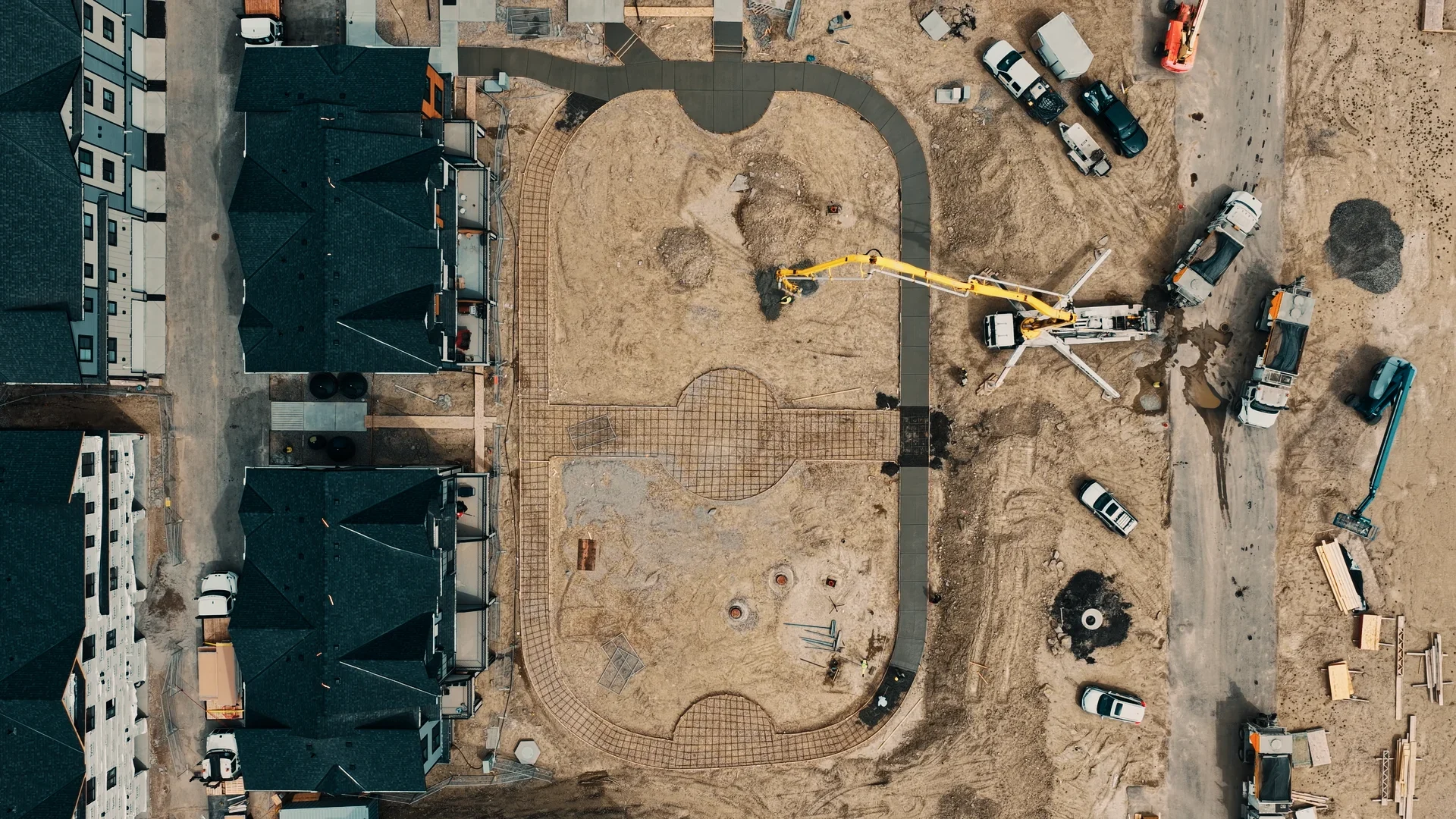
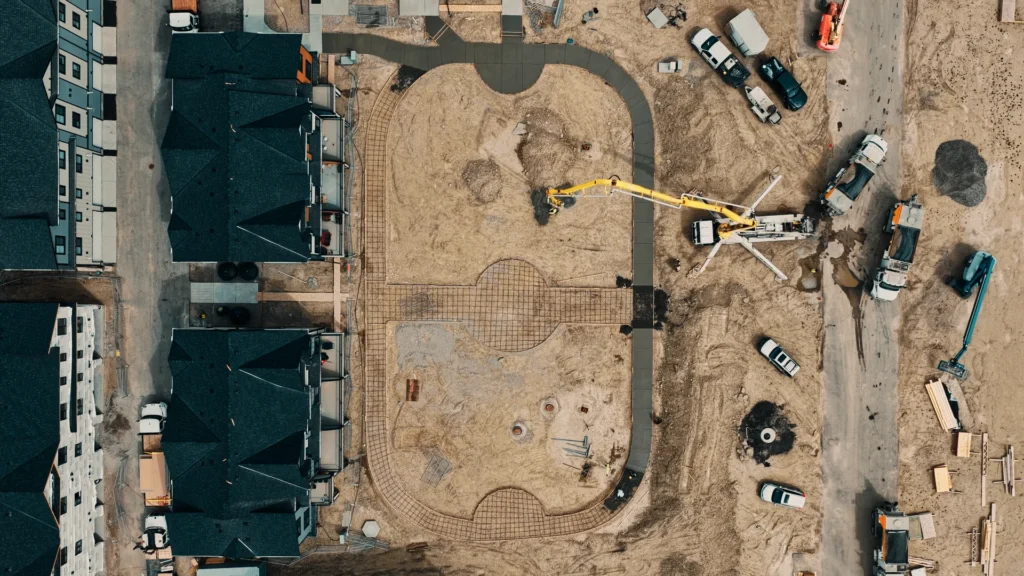
You bought the home in 2016. Your ANHWP coverage expires in 2026. The four crack notes you wrote on a sticky note in 2019 are about to become your bill — not the builder’s. After 38 years of fixing Calgary basements, our crews can predict the $50,000 number with one walkthrough.
The Alberta New Home Warranty Program runs on a 1-2-5-10 clock: 1 year on materials and labour, 2 years on delivery and distribution systems, 5 years on the building envelope, and 10 years on major structural defects. Year 10 is the last door. After that, the same crack you photographed in year 3 is no longer the builder’s problem — it is yours, and the price tag has been compounding the entire time.
This piece walks through the six foundation decisions Omega 2000 Cribbing crews see most often on year-7-to-year-10 retrofits across Calgary. Each one was free or cheap to do right on pour day. Each one becomes a four- or five-figure repair after year 5. And when all six compound on a single home, the cumulative bill lands between $50,000 and $80,000 — equivalent to a kitchen renovation, except invisible until the wall starts talking.
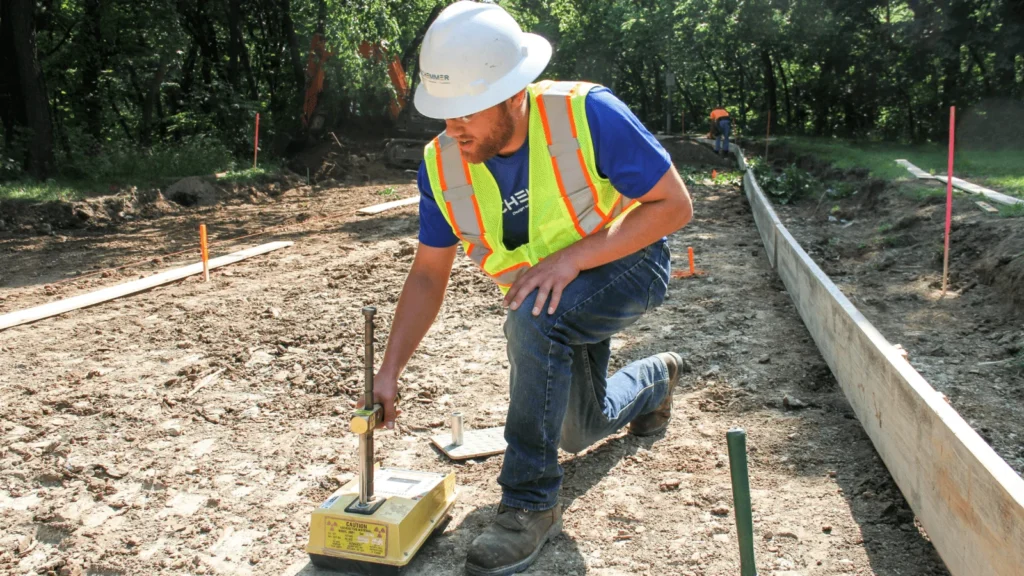
1. Skipping the geotech on a custom build (a $4,200 line item that prevents a $47,000 rebuild by year 10)
A Cochrane owner-builder in March 2016 sits down with a $4,200 geotechnical quote for a 3-borehole investigation on his 1-acre foothills lot. The build budget is already pushing $850,000. He cuts the geotech to keep the number under the line. April 2026: his east basement wall shows a 14-foot horizontal crack from a decade of differential clay swell. The engineer’s report comes back: replace the east wall, $42,000. Excavation, $8,500. Re-engineering and permit, $4,200. Re-finishing the lower level, $11,000. Total: $65,700 — to save a $4,200 line item.
A geotechnical investigation for a Calgary-area custom build typically runs $3,500 to $8,500, scaling with borehole count and depth. Calgary foothills lots commonly carry 6 to 9 metres of variable overburden over weathered Paskapoo bedrock, and soil composition can shift dramatically across a single 1-acre parcel. The Bearpaw Formation clay that dominates much of the east-of-foothills zone is smectite-rich and swells more than 10 percent of its dry volume when saturated, per Alberta Geological Survey Bulletin 053. That swell, repeating wet-season after wet-season for a decade, is what cracks east walls in year 8 and year 9.
The geotech does more than inform the foundation design. It documents the soil condition at the start of the build, which becomes the baseline if a structural claim is ever filed against the Alberta New Home Warranty Program. Without a baseline soil report, both the original wall design AND any future structural claim are weaker. ANHWP cannot assess a major-structural claim properly without an original geotechnical record — and the absence of one is sometimes cited as grounds for denial.
Foundation wall replacement in 2025 Alberta data runs roughly $900 to $1,000 per linear foot once excavation, engineering, and re-finishing are bundled in. A 30-foot east wall replacement does not stop at the concrete. The geotech is the cheapest insurance the build budget will ever buy.
The geotech is the pre-pour mistake. The next one happens on pour day — and the cost compounds even faster.
Not every foundation problem begins with construction quality—many start with the soil itself. Learn which Calgary soil conditions create the highest long-term foundation risk in our guide to 6 Calgary Soils That Will Crack Your Foundation in 5 Years.
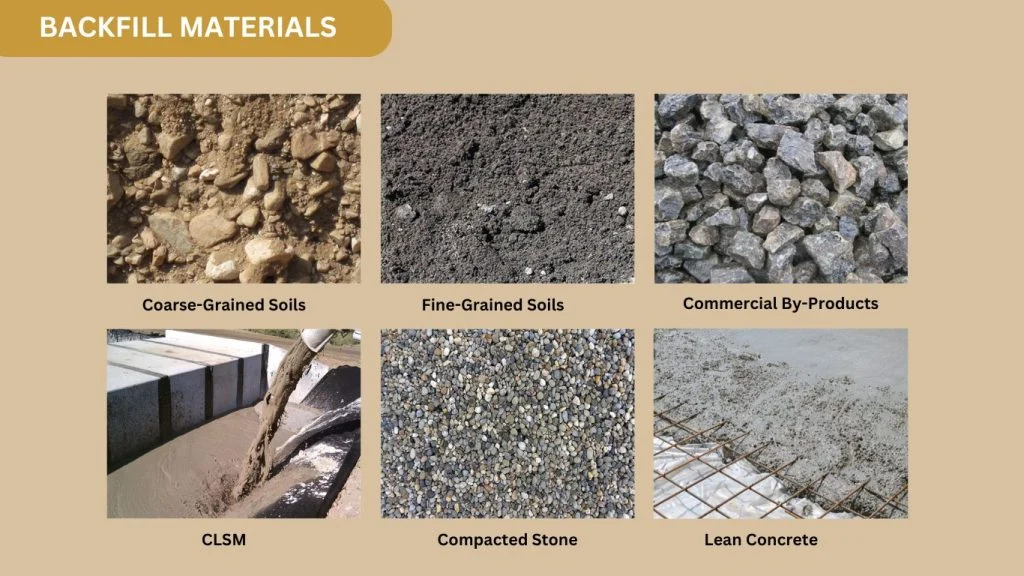
2. Backfilling with native clay instead of clean granular (a $3,000 saving that costs $28,000 by year 8)
A Springbank acreage owner watches his excavator backfill the foundation walls with the same clay that came out of the hole, June 2017. The builder says, “It’s what we always use.” Year 8, his weeping tile shows water tracking the wall-floor cold joint. Year 9, the parging on the east wall develops a 6-foot horizontal crack. By year 10, the wall is bowing inward 9 millimetres at mid-span.
NBC(AE) 2023 Part 9 calls for free-draining granular backfill against foundation walls to manage hydrostatic and lateral clay-swell pressures. The cost differential between dumping the native clay back in and trucking in 19-mm clean granular on a typical Calgary basement is roughly $2,500 to $4,500. The hidden cost of the cheaper choice: native clay packed against a foundation wall acts as a hydraulic trap. Every wet spring saturates the clay, the clay swells, and the wall absorbs the lateral load. Every winter the saturated clay freezes and applies frost-pressure loads on top of the swell loads. The wall sees thirty years of wet-then-frozen-then-wet cycling instead of thirty years of dry, free-draining gravel.
Smectite clay swell on a saturated 8-foot wall can generate lateral pressures in the range of 50 to 90 kPa, per Alberta Geological Survey Bulletin 053 — well above what residential walls are designed to absorb cyclically. Year-8 remediation typically requires excavating one wall, removing the failed backfill, replacing it with clean granular, and adding a drainage membrane. That bill in Calgary runs $18,000 to $28,000 for a single wall on a typical home.
Backfill is invisible. Nobody sees it after the topsoil goes back on. But it is the single most decisive factor in whether a wall sees three decades of dry soil or three decades of wet swelling clay. The mistake stays invisible until year 5 to year 8, when the wall finally tells you about it through a crack, a bow, or water on the basement floor.
Native-clay backfill is one of two backfill mistakes. The other is what goes against the wall to actually drain water — the dimple board and the damp-proofing membrane.
3. No dimple board or damp-proofing membrane (a $1,400 saving that costs $22,000 by year 7)
A pre-2010 infill home in Killarney was built without dimple-board drainage protection over the damp-proofing — common practice at the time, and not against the code that was in force. Year 7, the homeowner finds efflorescence along the entire interior of the north basement wall, a musty smell that gets worse in spring, and a hairline-cracked surface where the original parging was applied directly against the asphalt-emulsion damp-proofing.
NBC(AE) 2023 Part 9.13 distinguishes damp-proofing (required on all below-grade walls) from waterproofing (required where hydrostatic pressure is expected), and the current code recognizes dimple-membrane sheet as a drainage layer that doubles as protection for the damp-proofing membrane underneath. A 4-foot-by-6-foot dimple sheet costs roughly $40 to $60 retail. Installed across a typical Calgary basement perimeter on pour day, the labour-plus-material bill lands in the $1,200 to $1,800 range.
Calgary’s chinook melt cycle is what makes this so expensive in retrospect. A January chinook can swing the soil temperature against the wall by 25°C in 12 hours, dumping the snowpack as concentrated water against the foundation in a window measured in days. Without a dimple drainage gap, even properly damp-proofed walls track moisture inward through capillary action through the parging and the wall pores. Interior basement waterproofing remediation — sump pit, perimeter weeping tile retrofit, interior membrane and re-finishing — runs $15,000 to $25,000 for a typical Calgary perimeter retrofit.
Damp-proofing alone passed inspection in 2010. It still passes inspection on a renovation today. But “passes inspection” and “performs in Calgary chinook cycles for thirty years” are not the same sentence. Dimple board is the small difference between a wall that breathes outward and a wall that wicks inward.
Drainage layer is one of three water-management decisions. The next one happens at the downspout, six feet from the wall.
4. Downspout discharge within 6 feet of the foundation (a free decision that costs $14,000 by year 5)
An Auburn Bay homeowner notices, three years in, that the downspouts at the back of his house discharge onto splash blocks roughly 2 feet from the foundation. He thinks, “the grading slopes away — it’ll be fine.” Year 5, his east basement carpet shows a damp half-circle 14 feet long the morning after every heavy rain. The pattern repeats four times in one wet July.
The City of Calgary stormwater drainage guidance and NBC(AE) 2023 best-practice both call for downspout extensions to discharge a minimum of 1.8 metres (6 feet) from the foundation wall on positive-grade lots. A typical Calgary 4-bedroom home discharges roughly 1,800 to 3,000 litres of water from a single 25-mm rainfall through four downspouts. Concentrated within 6 feet of the wall, that volume saturates the same wall-base soil over and over, defeating any drainage system underneath.
Interior wall waterproofing combined with a sump pit retrofit on the affected wall runs $11,000 to $18,000 in 2025 Calgary pricing. The full perimeter sump and drain-tile retrofit, if the problem has spread, runs $9,000 to $15,000 on top of that. The downspout extensions to prevent the whole sequence: roughly $60 in materials, twenty minutes of work, no permit, no contractor.
This is the cheapest mistake on the list to prevent, and the easiest one to ignore. The symptom is delayed by years — sometimes a full half-decade — because the soil has to saturate, the drainage system has to overload, and the wall has to absorb enough cycles before water finds an opening. It is also the single most common cause of “my brand-new basement is leaking” calls Omega’s crews receive in the first wet spring after a homeowner takes possession.
Downspout discharge is upstream. The next mistake is downstream — the cold joint where the wall meets the slab.
5. No cold-joint waterstop at the wall-to-slab interface (a $400 saving that costs $9,000 by year 6)
A Mahogany homeowner finishes her basement at year 4. Year 6, she pulls baseboard off the south wall to investigate a musty smell and finds that water has been tracking the wall-floor cold joint behind the drywall for months. The framing studs at the bottom plate are stained. The vapour barrier is wicking moisture back into the room. The carpet looks fine. The wall behind it is not.
Wall-to-slab cold joints are the most common water-entry path in Calgary basements that ANHWP claim data has surfaced over the past decade. The joint forms because the footing and wall are typically poured before the slab — there is a horizontal seam where the slab meets the wall, and over time that seam opens to a 0.3-to-1.0 mm gap that wicks moisture from the slab edge.
A continuous waterstop — either a PVC waterstop set into the wall pour, or a hydrophilic strip glued to the footing before the slab pour — costs $300 to $600 in materials plus one to two hours of crew time to install on a typical Calgary basement. CSA A23.1:24 commentary on cold joints documents the waterstop as the standard treatment for water-retaining cold joints, and the same logic applies to below-grade residential construction. The waterstop eliminates the leak path while the concrete is still being placed — before any drywall, paint, or carpet exists.
Without the waterstop, the leak typically does not show up until the basement is finished, because finishings hide the symptom. Fixing the leak from outside requires excavation, exterior membrane work, and re-grading: $6,000 to $9,000. Fixing it from the inside requires demoing finishes, treating the joint, re-installing, and repainting: $3,000 to $8,000, on top of the joint-sealing itself.
A waterstop is a four-hundred-dollar decision on pour day. It is a nine-thousand-dollar problem after the basement is finished and lived in. Most Calgary builders do not include it as a line-item standard — if you are at the spec stage of a custom build or a major basement reno, ask for it explicitly and verify it is on the pour-day checklist.
Cold joints are an interior water issue. The final mistake on this list is an under-slab issue, and it is the one that catches up by year 10 with the most serious downstream cost — measured not just in dollars but in health.
6. Skipping radon rough-in on a pre-2015 home (a $0 decision at year 0 that costs $4,500 by year 10)
A Hidden Valley homeowner with a 2014 build orders a $48 long-term radon test kit from a local Health Canada-listed provider in October 2024. She runs the test for 91 days in the lowest occupied level. The result comes back: 312 Bq/m³. That is well over the Health Canada action level of 200 Bq/m³. She calls a CARST-listed mitigation specialist. The quote for a sub-slab depressurization retrofit on her home: $3,800 to $5,200.
The National Building Code (Alberta Edition) has required radon rough-in on all new residential construction since November 1, 2015 — a 4-inch perforated pipe under the slab, connected to a capped riser that runs to the attic, so a mitigation fan can be added later without breaking the slab. Pre-2015 Calgary homes typically lack this rough-in, and retrofit installation costs three to eight times the original rough-in cost depending on slab access and finishing.
Calgary sits on uranium-bearing Paskapoo bedrock, and the Health Canada national radon survey indicates that roughly 6.7 percent of Calgary homes exceed the 200 Bq/m³ action level — close to the national average of 6.9 percent, but enough that random testing in any neighbourhood will surface action-level homes regularly. Radon is the leading cause of lung cancer in non-smokers in Canada, per Health Canada — second only to smoking overall.
Radon mitigation is not covered by ANHWP. It is not a structural issue. It does not show up on a pre-purchase home inspection unless the buyer specifically commissions a long-term radon test. But it is the one foundation-era decision on this list with a measurable health risk attached, and the cost of getting it wrong compounds in dollars AND in cancer-risk-years.
If you own a Calgary home built before November 1, 2015, the first action is a $48 long-term test kit (CARST-listed providers). The rough-in retrofit cost only matters if the test result is above 200 Bq/m³ — and then it is the cheapest health insurance the house will ever buy.
That is the six. The combined year-10 cost when all six compound on a single Calgary home runs $50,000 to $80,000 — and the cost-curve is not linear. Most of the spend lands between year 5 and year 10, in the same window when the ANHWP structural coverage clock is winding down. The earlier you know which of the six is already underway on your home, the cheaper the intercept.
FAQ
Q1: What is the Alberta New Home Warranty Program (ANHWP) coverage period? ANHWP is a statutory 1-2-5-10 framework: 1 year on materials and labour, 2 years on delivery and distribution systems, 5 years on the building envelope, and 10 years on major structural defects. Foundation cracks that meet the major-structural-defect definition are covered for 10 years from the warranty start date. The clock starts on possession, not on first occupancy.
Q2: Does ANHWP cover foundation crack repair? Only if the crack meets the major-structural-defect definition, which generally requires a P.Eng. assessment confirming the defect compromises load-bearing capacity or threatens building integrity. Hairline shrinkage cracks under approximately 1.5 mm in width that do not propagate are explicitly excluded under ANHWP’s published claim guidance. Document any new crack the moment you see it, including a dated photo with a coin or ruler for scale.
Q3: Can I extend my ANHWP coverage past 10 years? No. The 10-year major-structural coverage is statutory and cannot be extended by the homeowner, the builder, or the warranty provider. After year 10, all foundation and structural issues become the homeowner’s responsibility. The practical implication: any structural concern noticed in years 8 or 9 should be assessed by a P.Eng. and filed before the expiry date, not after.
Q4: What’s the difference between damp-proofing and waterproofing in Calgary? NBC(AE) 2023 Part 9.13 mandates damp-proofing on all below-grade walls. Waterproofing — a continuous water-resistant membrane — is required only where hydrostatic pressure is expected (high water table, certain soil conditions, walk-out basements with retained backfill). In typical Calgary practice, dimple-board drainage installed over damp-proofing handles most lots and provides better long-term performance than damp-proofing alone.
Q5: How much does a Calgary basement waterproofing retrofit cost? Typical 2025 Calgary pricing: interior perimeter sump and drain-tile retrofit runs $9,000 to $15,000; exterior excavation with full waterproofing membrane installation runs $18,000 to $32,000 depending on access, depth, and the number of walls affected. Validate any quote against at least two current Calgary contractor estimates before signing, and ask whether the price includes re-grading and topsoil replacement.
Q6: Is the federal $80,000 secondary suite loan still available? No. The federal $80,000 secondary-suite loan program was cancelled in Budget 2025 and is no longer accepting applications. Calgary’s municipal Backyard Suite Incentive remains active and is component-based, not flat-rate: up to $15,000 toward construction costs, up to 40 percent or $20,000 for infrastructure connections, up to $7,500 for accessibility features, and up to $2,500 for compliance. Verify current program rules at calgary.ca before budgeting.
Sources
- Alberta New Home Warranty Program (ANHWP) — 1-2-5-10 coverage framework and claim guidance — https://anhwp.com
- NBC(AE) 2023 — Part 9 Foundations & Drainage (Alberta edition, in force since May 1, 2024) — https://www.alberta.ca
- CSA A23.1:24 — Concrete materials and methods of concrete construction — https://www.csagroup.org
- Alberta Geological Survey — Bulletin 053 (Bearpaw / Paskapoo formations and clay swell) — https://ags.aer.ca
- Concrete Alberta — cold-weather practices guide — https://www.concretealberta.com
- City of Calgary — stormwater drainage standards — https://www.calgary.ca
- Government of Alberta NBC(AE) STANDATA on radon rough-in (effective November 1, 2015) — https://www.alberta.ca
- CARST (Canadian Association of Radon Scientists and Technologists) — mitigation cost data and certified-professional directory — https://carst.ca
- Health Canada — Cross-Canada national radon survey — https://www.canada.ca
- Canada Mortgage and Housing Corporation — Budget 2025 program changes — https://www.cmhc-schl.gc.ca
About Omega 2000 Cribbing
Omega 2000 Cribbing has been pouring, repairing, and retrofitting Calgary residential and acreage foundations since 1988 — 38 years of cribbing, parging, weeping-tile retrofit, structural repair, and pre-pour consultation across Calgary, Cochrane, Airdrie, Okotoks, Bearspaw, and the surrounding foothills.