

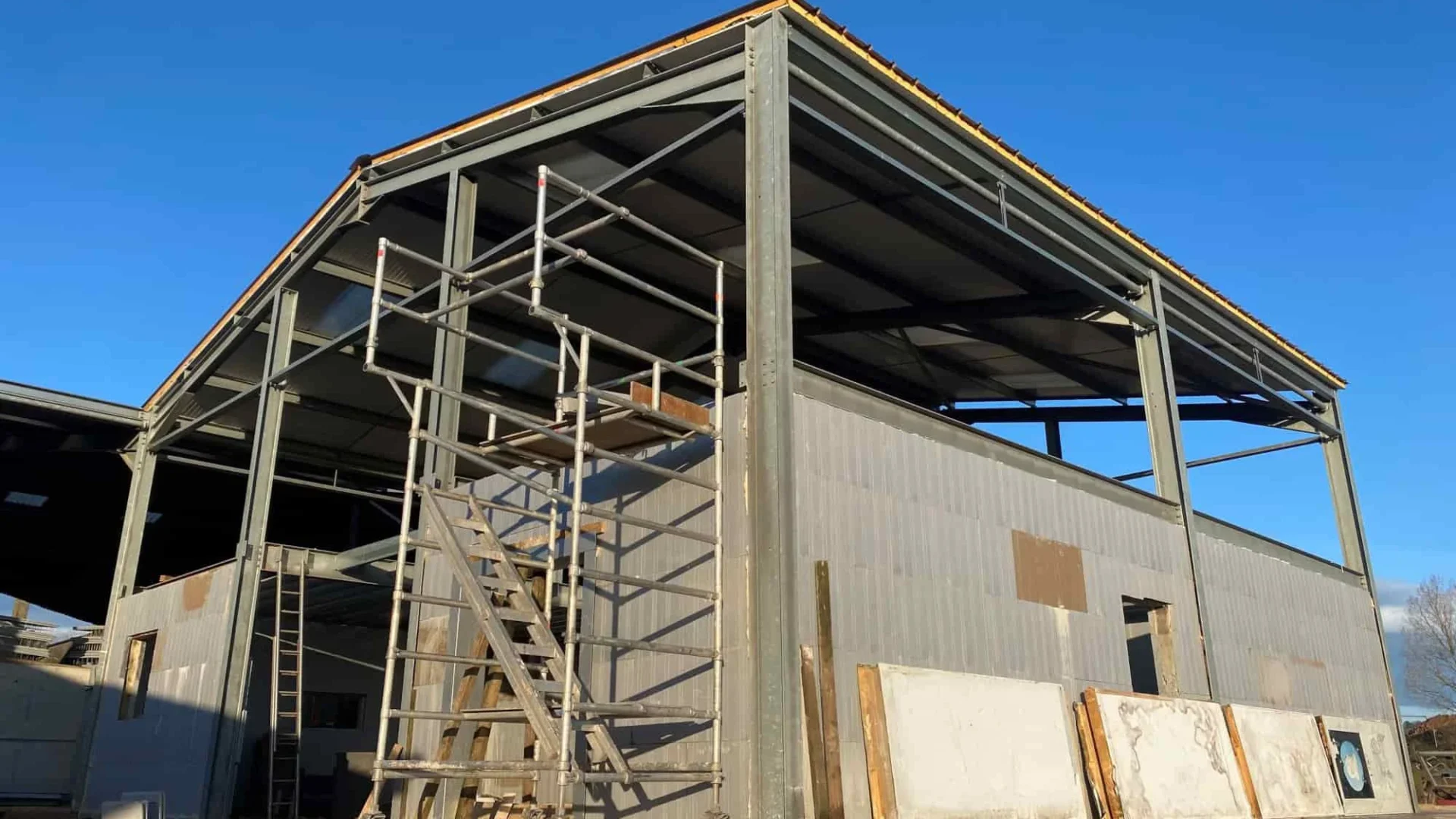
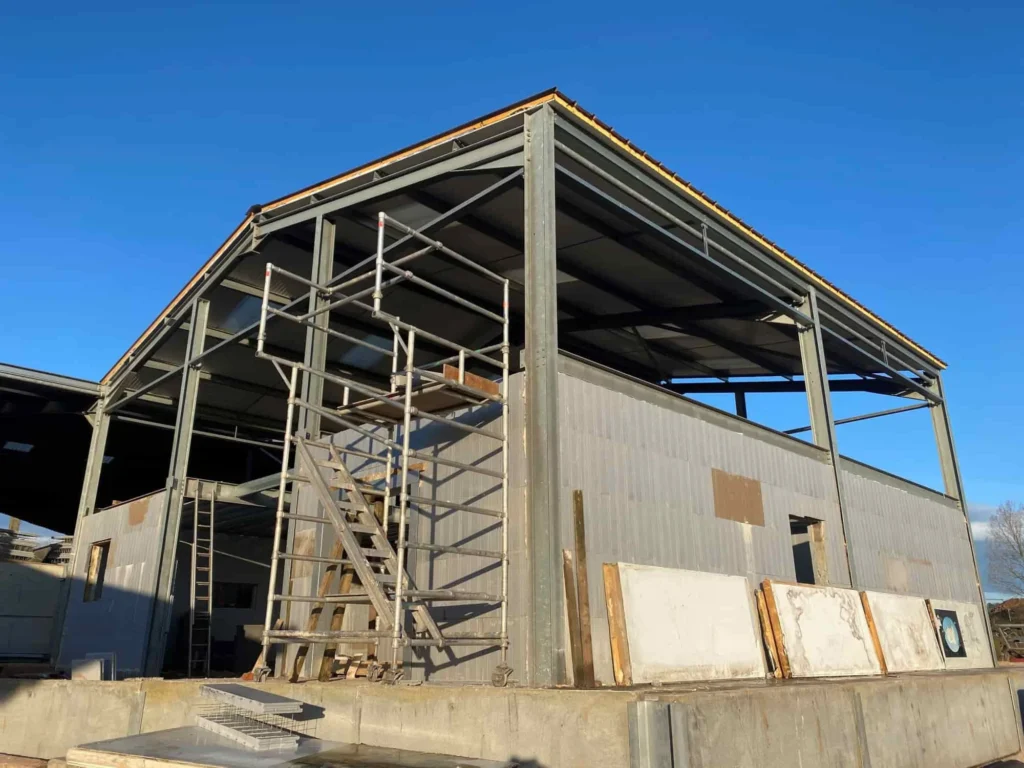
Barn fires are common and almost always a total loss: at least 740,000 farm animals died in Canadian barn fires over 2015 to 2019, and Canada averaged about 65 fatal barn fires a year, with agriculture authorities naming building design, construction, and maintenance deficiencies, plus corrosive livestock gases eroding electrical equipment, among the leading causes.
Concrete is non-combustible, which matters twice. It does not add fuel to a fire, and it changes how the building is insured. Insurers rate buildings by construction class, and a wood-framed (post-frame) building falls in the highest-risk “Frame” class, while masonry and concrete construction sit in the “Non-Combustible,” “Masonry Non-Combustible,” and “Fire-Resistive” classes that “often result in the lowest insurance premiums.” A concrete building does not make a fire impossible, but it removes the structure as fuel and can move you into a better-rated construction class. The honest move is to get your specific building’s construction class and premium quoted by your insurer before you build.
This article covers one lens on the building decision: risk. Fire, weather, and the insurance consequence of how you build are a distinct argument from cost or longevity, and they deserve their own page.
The barn-fire reality
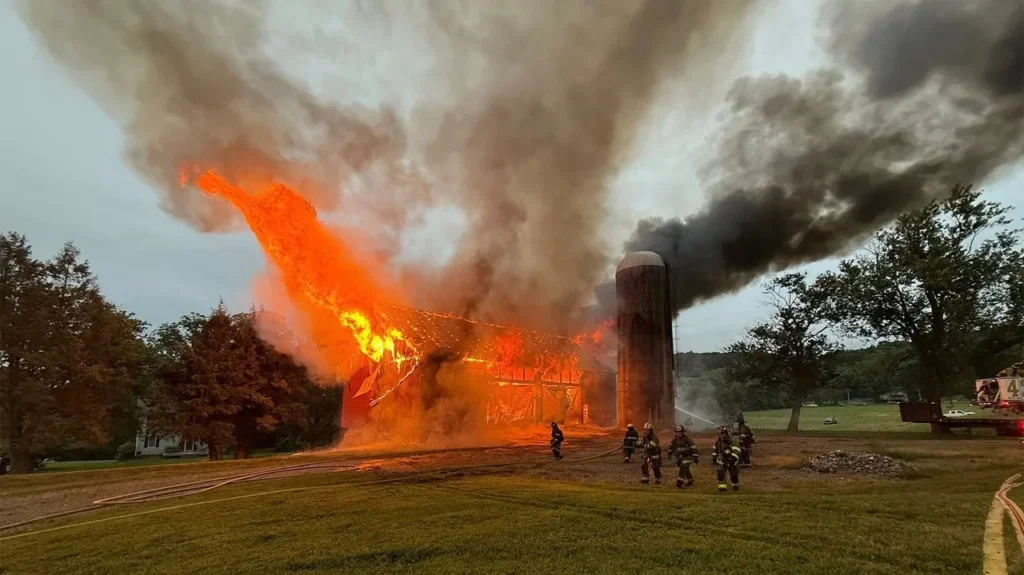
Start with the stakes, because they are sobering. The Humane Society International / Canada report on barn fires found that “at least 740,000 farm animals died in barn fires in Canada during the five-year period from 2015 to 2019,” and that Canada “averaged 65 fatal barn fires per year” over that span. In Ontario alone, the data show “an average of 71 barn fires a year resulting in about $18.5 million in losses.”
(Sources: Humane Society International / Canada, “Untold Suffering: The Tragic Impact of Barn Fires on Animals,” 2020, https://www.hsi.org/wp-content/uploads/assets/pdfs/reports/2020/200310-HSI-Canada-Barn-Fire-Report-Final.pdf ; Alberta Farmer Express, https://www.albertafarmexpress.ca/livestock/barn-fires-underreported-and-far-too-common-says-humane-society/ ; Western Producer, https://www.producer.com/news/sound-the-alarm-on-barn-fires/ .)
Two things about barn fires make them different from house fires. They are fast, and they are usually total. Barns hold feed, bedding, and dust, all highly combustible, and a wood structure adds its own fuel to that load. By the time a fire is noticed on a rural property, the building is often unrecoverable.
The figures are also under-reported nationally. Ontario and Quebec are the only provinces with official barn-fire recording, so the national total is a floor, not a ceiling. The HSI report still logged Alberta fires in the 2015 to 2019 window, so this is not someone else’s problem.
The building itself is part of the cause
This is the pivot that connects the fire statistics to the material you choose. Barn fires are not purely bad luck; the building is implicated.
The Ontario Ministry of Agriculture, Food and Rural Affairs attributes a leading cause of barn fires to “design, construction, and maintenance deficiencies.” Barns “are often filled with highly flammable materials that burn fast and hot,” and, tellingly, “corrosive gasses generated by livestock erode electrical equipment.”
(Source: Western Producer / OMAFRA, https://www.producer.com/news/sound-the-alarm-on-barn-fires/ ; Alberta Farmer Express, URL above.)
Notice the loop there. The same ammonia and hydrogen-sulphide gases that rot wood and corrode steel also corrode the electrical equipment that starts fires. The building’s structure, its contents, and its corroded wiring all feed the fire problem. That is why the structural material is part of the answer: a non-combustible structure removes one of the three from the equation.
Structural failures rarely begin with one catastrophic event. Small warning signs often become expensive structural problems. Our guide to 7 Foundation Cracks Calgary Homeowners Mistake for Cosmetic explains which cracks indicate genuine structural risk and which don’t.
Non-combustible: what it actually means
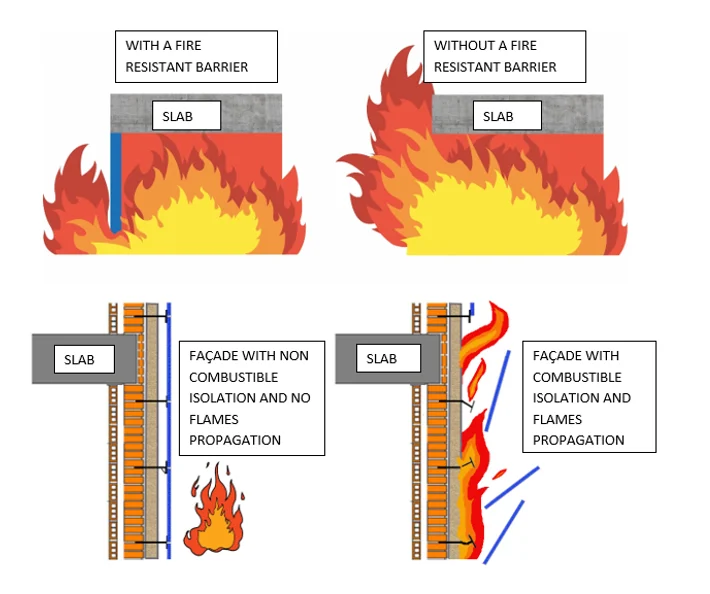
“Concrete is fire-resistant” is a phrase people say loosely. Underneath it is a measured, code-defined property worth being precise about.
In the National Building Code of Canada, a fire-resistance rating is “the time in minutes or hours that a material or assembly… will withstand the passage of flame and the transmission of heat,” tested to the CAN/ULC-S101 standard (comparable to ASTM E119).
(Sources: Canadian Wood Council, “Fire Resistance,” https://cwc.ca/articles/fire-resistance/ ; National Research Council, NBC Part 3, https://nrc-publications.canada.ca/eng/view/object/?id=922d235a-2852-4756-adf7-1af3b7b3f0a4 .) So a fire-resistance rating is not a vibe; it is hours on a tested clock.
Two related ideas to keep straight:
- Non-combustible means the material does not burn and does not add fuel. Concrete is non-combustible.
- Fire-resistive is a higher bar tied to a rating: the most fire-resistive construction class carries a fire-resistance rating greater than two hours.
A concrete building is non-combustible by nature and, depending on the assembly, can carry a meaningful fire-resistance rating. No building is “fireproof,” and an honest page will not use that word. The value is real but specific: concrete removes the structure as a source of fuel, and it can give the rest of the building, and any animals or equipment inside, more time.
The insurance mechanism
Here is where non-combustible construction turns into money. Insurers do not price every building from scratch; they sort buildings into construction classes, and the class drives the premium.
The Washington Survey & Rating Bureau lays out the standard six-class system insurers use:
| Class | Construction type | Insurer’s view |
|---|---|---|
| CC1 Frame | Wood / combustible | “Higher insurance premium due to increased fire risk” |
| CC2 Joisted Masonry | Masonry walls, combustible floor/roof | Better than frame |
| CC3 Non-Combustible | Metal and similar | Non-combustible structure |
| CC4 Masonry Non-Combustible | Masonry / concrete | “A balance of protection and cost-effectiveness” |
| CC5 Modified Fire-Resistive | Masonry / fire-resistive, 1 to 2 hr rating | Strong protection |
| CC6 Fire-Resistive | Fire-resistive, greater than 2 hr rating | “Often resulting in the lowest insurance premiums” |
(Source: Washington Survey & Rating Bureau, “Understanding Rule 85: Construction Classes,” https://www1.wsrb.com/blog/understanding-rule-85-construction-classes .)
The position of each building type is the whole argument. A wood pole barn sits at CC1, the highest-risk, highest-premium class. Solid concrete construction sits in the CC4 to CC6 band, the classes that draw the lowest premiums. A second source agrees on the direction: “only concrete or masonry constructed walls, floors, and roof will guarantee the owner the lowest-base fire insurance rates,” and non-combustible buildings are “more favorable in class ratings, potentially reducing insurance costs.”
(Sources: APS Masonry, citing ISO, https://www.apsmasonrycontracting.com/services/contractor/masonry/joisted/vs-non-combustible ; US Assure, https://usassure.com/resources/articles/classifying-6-construction-materials-for-builders-risk .)
And because a premium is an annual cost, the class difference compounds. Whatever the delta is on your building, you pay it every year for the life of the building, which is why it belongs in any 30-year cost view.
The honest caveat: ask your insurer
This is the line that separates a useful page from a sales pitch. The construction-class mechanism is sound and well documented. A specific dollar saving is not something anyone can promise you, because it depends on your building, your location, your fire protection, your insurer, and your coverage.
The premium gap between combustible and non-combustible construction can be large. One cited case had steel framing save “$66,000 a year in property insurance premiums for a hotel compared to wood framing.” (Source: BuildSteel, https://buildsteel.org/technical/fire/dont-get-burned-steel-fire-safety-insurance-savings/ .) Use that only as evidence that the gap is real and can be material, not as a number a farmer should expect; it is a steel-industry example for a hotel, a different building in a different rate class.
So the honest call to action is simple: before you commit to a building method, get your specific building’s construction class and premium quoted by your insurer, in writing, for both options you are weighing. The mechanism guarantees the direction of the effect. Only your insurer can tell you the size of it for your barn.
The weather half
Fire is the headline, but “weather” is in the title for a reason. On the prairies, wind and snow load are genuine structural concerns, and mass concrete answers them well. Precast concrete is “known for extraordinary strength, resistance to weathering, and long-term durability in a variety of environmental circumstances” — built to stand up against the harshest conditions, including Western Canadian weather.
(Source: PCI, “DURABLE,” https://www.pci.org/PCIMS/PCIMS/News_Events/forTomorrow/Durable.aspx .)
The mechanism is mass. A heavy, rigid concrete structure resists wind uplift and carries snow load with margins a lighter building has to engineer hard for. For a building meant to stand for decades through Alberta winters and Chinook wind events, that mass is a quiet, everyday advantage that sits alongside the fire and insurance case.
Where Omega fits
Omega Precast is a Calgary solid-concrete precast manufacturer that launched in late 2025 and is entering the agricultural category. Read this article as the risk case for the material and the method, not as a record of barns Omega has built. Our value is the capability to supply non-combustible solid precast elements; the fire statistics, the construction-class mechanism, and the weather durability are properties of concrete that any honest insurer or engineer will recognize. The right next step is not “trust us,” it is “get your building quoted, and compare the classes.”
FAQ
How common are barn fires in Canada? Common and devastating. At least 740,000 farm animals died in Canadian barn fires from 2015 to 2019, with about 65 fatal barn fires a year. Ontario alone averaged 71 barn fires a year and about $18.5 million in losses, and the national figure is under-reported.
Does a concrete building lower farm insurance? It can. Insurers rate buildings by construction class, and non-combustible concrete sits in the lowest-premium classes while a wood-frame building sits in the highest-risk “Frame” class. The size of any saving is building- and insurer-specific, so get your specific building quoted.
What is a fire-resistance rating? The time in minutes or hours a material or assembly withstands the passage of flame and the transmission of heat, tested to CAN/ULC-S101. The most fire-resistive construction class carries a rating greater than two hours.
Is concrete fireproof? No building is fireproof. Concrete is non-combustible, meaning it does not burn or add fuel to a fire, and it can carry a meaningful fire-resistance rating. The value is removing the structure as fuel and improving your insurance class.
What construction class is a concrete building versus a pole barn? A wood pole barn falls in the “Frame” class, the highest-risk class. Solid concrete falls in the “Non-Combustible,” “Masonry Non-Combustible,” and “Fire-Resistive” classes, which draw the lowest premiums.
Does concrete stand up to prairie wind and snow? Yes. The mass and rigidity of concrete resist wind uplift and carry snow load with margins a lighter structure has to engineer hard for, a real Western-Canadian advantage.
Does Alberta’s fire code require a concrete barn? No. Most low-occupancy Alberta farm buildings are exempt from the building, energy, and fire codes, which makes non-combustible construction a voluntary risk-management decision the owner and insurer make, not a code requirement.
Build Once. Price the Risk Before You Price the Building.
The cheapest barn isn’t always the least expensive building to own.
Fire risk, insurance premiums, weather exposure, maintenance, and structural lifespan all become recurring costs long after construction is finished.
Before choosing a building system, compare more than the initial quote.
If you’re planning a livestock facility, machinery building, agricultural shop, or commercial farm structure, we’ll walk through your project and explain where concrete changes the long-term risk—and where it doesn’t.
Book a consultation with us to discuss your project, compare building options, and make an informed decision based on lifetime ownership, not just construction cost.