
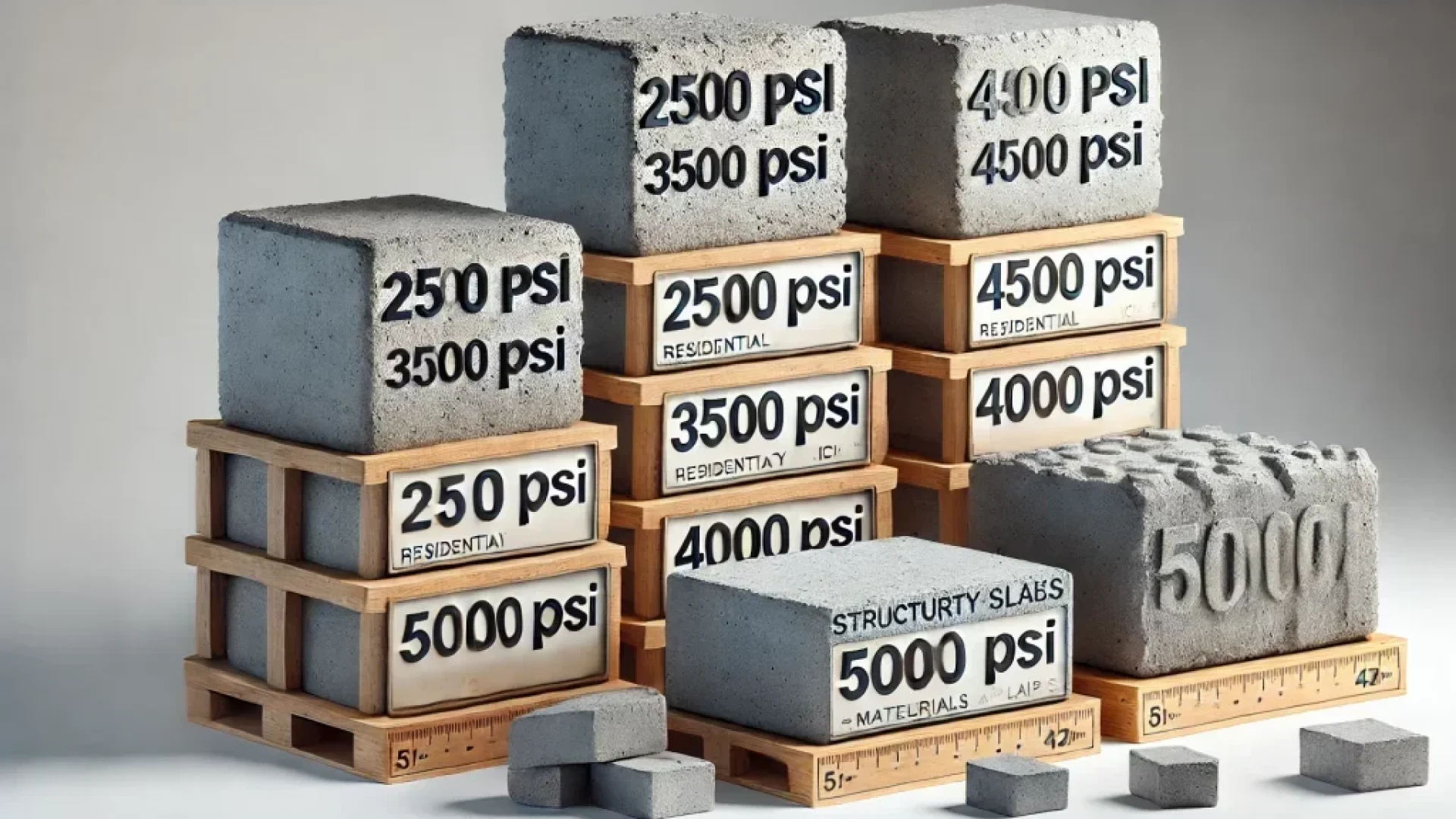
Concrete looks solid and permanent—but not all concrete is created equal. One of the most important factors that determines how long your concrete will last is its PSI. Unfortunately, PSI is also one of the most misunderstood terms homeowners hear when planning a driveway, foundation, patio, or walkway.
If you’ve ever compared concrete quotes and noticed different PSI numbers, you might have wondered: Does higher PSI always mean better concrete? Or what PSI do I actually need for my project? In a climate like Canada, where freeze-thaw cycles, de-icing salts, and heavy seasonal loads are common, choosing the wrong concrete strength can lead to cracking, scaling, and costly repairs far sooner than expected.
This guide breaks down concrete PSI. You’ll learn what PSI really means, how it affects durability, and how to choose the right strength for your specific application—without overpaying or cutting corners.
What Does PSI Mean in Concrete?
PSI Defined in Simple Terms
PSI stands for Pounds per Square Inch. In concrete terms, PSI measures how much compressive force hardened concrete can withstand before it fails. Imagine placing weight on top of a concrete slab—PSI tells you how much pressure that slab can handle before it starts to crush or crack.
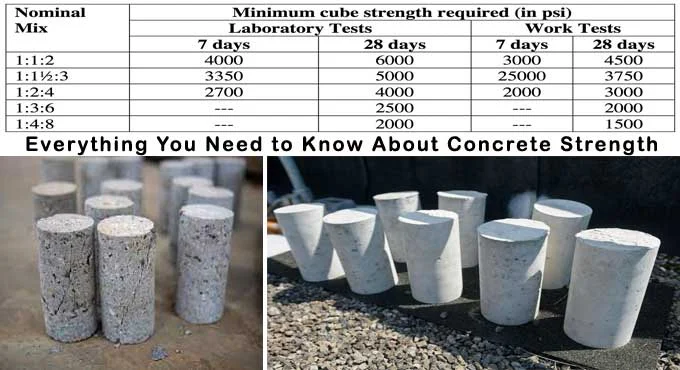
For example, a 4,000 PSI concrete mix means the concrete can withstand 4,000 pounds of pressure per square inch after it has fully cured (typically at 28 days). The higher the PSI, the stronger the concrete is in compression.
Why PSI Matters for Structural Performance
Concrete is exceptionally strong when compressed but relatively weak in tension. PSI specifically measures compressive strength, which is critical for:
- Supporting vehicle and structural loads
- Resisting surface wear from traffic
- Reducing long-term cracking and deterioration
- Withstanding environmental stress like freeze-thaw cycles
Choosing the right PSI helps ensure your concrete performs as intended for decades—not just the first few years.
PSI vs “Stronger Concrete” Myths
A common misconception is that higher PSI concrete is always better. In reality, concrete strength should match the application. Using unnecessarily high PSI can increase costs, make finishing more difficult, and even introduce cracking risks if the mix isn’t properly designed and placed.
The goal is not the highest PSI—it’s the right PSI.
Understanding PSI also helps homeowners compare quotes accurately instead of choosing based on price alone.
How Concrete PSI Is Measured and Achieved
How PSI Is Tested (Compressive Strength Testing)
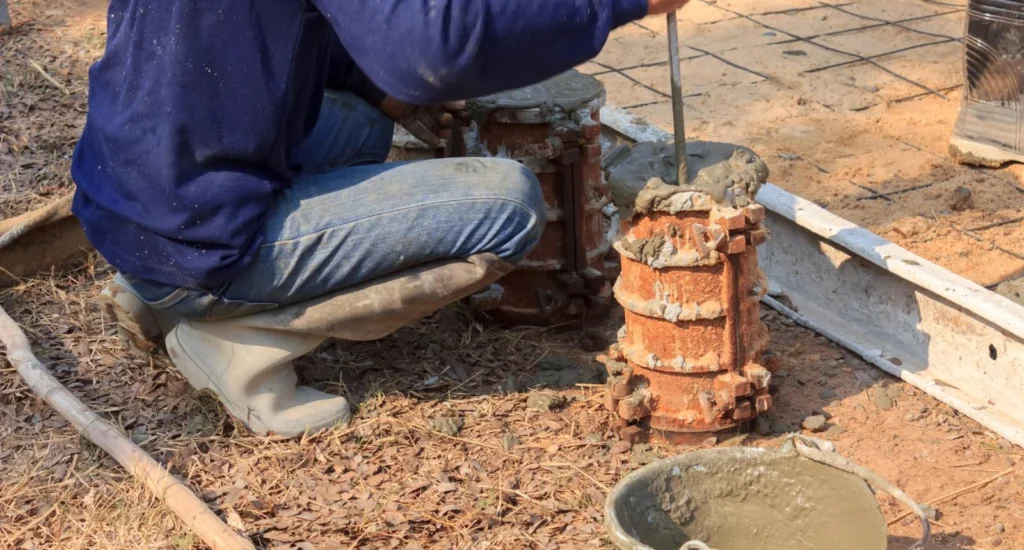
Concrete PSI is determined through standardized compressive strength testing. During a pour, fresh concrete is placed into cylindrical molds. These samples are cured and later crushed in a testing machine to measure how much force they can withstand.
Most PSI ratings are based on 28-day strength, which is the industry standard for concrete reaching its designed capacity. For reference:
- Concrete reaches roughly 65–70% of its strength at 7 days
- Full design strength is typically achieved at 28 days
- Strength can continue to increase slowly beyond 28 days
What Determines Concrete PSI?
Concrete strength isn’t accidental—it’s engineered. Several factors directly influence PSI:
Cement Content
More cement generally increases potential strength, but only when balanced correctly with other materials.
Water-to-Cement Ratio
One of the biggest factors in PSI. Too much water weakens concrete dramatically. Adding water on site may make concrete easier to place, but it reduces final strength.
Aggregate Type and Size
Quality, well-graded aggregates help concrete achieve higher and more consistent strength.
Admixtures and Air Entrainment
In cold climates, air-entrained concrete intentionally includes microscopic air bubbles. This slightly reduces PSI but dramatically improves durability during freeze-thaw cycles.
PSI vs Workability: Why Pouring Matters
Workability (often measured as slump) describes how easy concrete is to place and finish. Higher PSI mixes are often stiffer and require experienced crews to place correctly.
This is why proper placement, finishing, and curing are just as important as the PSI number itself. Poor workmanship can compromise even the strongest concrete mix.
In Calgary’s freeze–thaw climate, selecting air-entrained concrete is just as important as choosing the right PSI.”
CSA A23.1 outlines concrete durability requirements for Canadian freeze–thaw environments like Calgary.
Common Concrete PSI Ratings and What They’re Used For
2500 PSI Concrete
2,500 PSI concrete is considered low-strength by modern residential standards. It may be suitable for interior slabs or very light-duty applications, but it is rarely recommended for exterior concrete in cold climates.
In freeze-thaw environments, 2,500 PSI concrete is more vulnerable to surface scaling and early deterioration.
3000 PSI Concrete
3,000 PSI concrete is commonly used for basic residential flatwork such as:
- Sidewalks
- Patios
- Light-duty walkways
When properly air-entrained and installed, 3,000 PSI concrete can perform well for pedestrian areas. However, it is generally not ideal for driveways or load-bearing applications.
3500 PSI Concrete
3,500 PSI concrete offers a noticeable increase in strength and durability. It’s often used for:
- Upgraded residential exterior slabs
- Patios exposed to harsher weather
- Areas requiring improved resistance to wear
This PSI level provides a good balance between workability and long-term performance in climates like Calgary’s.
4000 PSI Concrete
4,000 PSI concrete is widely considered the gold standard for residential driveways, garage slabs, and exterior stairs. It provides:
- Higher load-bearing capacity
- Improved resistance to freeze-thaw damage
- Better durability under vehicle traffic
For most exterior residential applications exposed to vehicles and de-icing salts, 4,000 PSI concrete is often the minimum recommended strength.
Up next: we’ll break down exactly which PSI you need based on specific applications—driveways, foundations, patios, stairs—and how Calgary’s climate plays a critical role in that decision.
Thinking about a concrete project? Choosing the right PSI is one of the smartest ways to protect your investment. Contact Omega 2000 to get professional guidance based on your site conditions, usage, and long-term durability—not guesswork.
Which Concrete PSI Do You Need? (By Application)
Choosing the correct concrete PSI depends on how the concrete will be used, how much weight it will carry, and how exposed it will be to weather. Below is a practical, application-by-application breakdown to help you make an informed decision.
Concrete PSI for Driveways
Driveways experience some of the harshest conditions of any residential concrete surface. They must support vehicle weight, resist turning stress from tires, and endure freeze-thaw cycles combined with de-icing salts.
- Recommended PSI: 4,000 PSI
- Why: Increased compressive strength and improved durability
- Key risk of lower PSI: Cracking, scaling, and surface wear
In climates like Canada, 4,000 PSI air-entrained concrete is widely considered the minimum standard for long-lasting residential driveways.
Concrete PSI for Foundations
Foundations are structural elements that must safely transfer building loads to the ground. PSI requirements are often dictated by engineering specifications and building codes.
- Typical PSI range: 3,000–4,000 PSI
- Factors that influence PSI: Soil conditions, building weight, design loads
While higher PSI improves compressive strength, foundations also rely heavily on proper reinforcement, curing, and waterproofing for long-term performance.
Concrete PSI for Patios and Walkways
Patios and walkways usually carry foot traffic rather than vehicles, but they are still exposed to weather year-round.
- Recommended PSI: 3,000–3,500 PSI
- Decorative finishes: Stamped or exposed aggregate may benefit from higher PSI for durability
For homeowners investing in decorative concrete, upgrading PSI slightly can help preserve surface appearance over time.
Concrete PSI for Stairs and Steps
Concrete stairs are highly vulnerable because edges and corners are exposed to repeated freeze-thaw cycles and physical impact.
- Recommended PSI: 4,000 PSI
- Why: Improved edge durability and reduced chipping
Higher PSI, combined with proper finishing and curing, significantly improves safety and longevity.
Concrete PSI for Garage Slabs
Garage slabs must support vehicle loads while also resisting oil, moisture, and temperature fluctuations.
- Recommended PSI: 3,500–4,000 PSI
- Additional considerations: Thickness, reinforcement, and base preparation
Calgary Climate Considerations: PSI Isn’t the Whole Story
Freeze-Thaw Cycles Explained
In cold regions, concrete absorbs moisture. When temperatures drop, that moisture freezes and expands. Over hundreds of freeze-thaw cycles, this expansion can cause surface scaling and internal damage.
According to industry research, freeze-thaw damage is one of the leading causes of premature concrete failure in northern climates.
Air-Entrained Concrete and PSI
Air-entrained concrete intentionally contains microscopic air bubbles that allow frozen water to expand safely. While air entrainment slightly reduces PSI, it dramatically increases durability.
This is why experienced contractors balance PSI and air entrainment rather than chasing the highest strength number.
De-Icing Salts and Surface Strength
De-icing salts accelerate surface deterioration if the concrete is not designed correctly. Higher PSI helps, but proper curing and sealing are just as important.
PSI vs Other Concrete Specifications You Should Know
PSI vs MPa (Metric Conversion Explained)
Concrete strength is sometimes listed in megapascals (MPa). For reference:
- 3,000 PSI ≈ 20 MPa
- 4,000 PSI ≈ 28 MPa
PSI vs Slump
Slump measures workability, not strength. Increasing slump by adding water lowers PSI and weakens concrete.
PSI vs Thickness and Reinforcement
Concrete strength alone does not prevent cracking. Thickness, base preparation, and reinforcement all play critical roles in long-term performance.
Common Concrete PSI Mistakes Homeowners Make
- Choosing the lowest PSI to save money upfront
- Assuming higher PSI eliminates cracking
- Ignoring climate and exposure conditions
- Not asking about mix design or curing practices
Concrete failures are rarely caused by PSI alone—they’re usually the result of multiple small compromises.
How Professional Concrete Contractors Choose the Right PSI
Site-Specific Evaluation
Soil conditions, drainage, slope, and usage all influence the correct PSI choice.
Application-Specific Mix Design
Experienced contractors match PSI, air entrainment, and admixtures to the project—not a one-size-fits-all mix.
Quality Control During the Pour
Proper placement, finishing, and curing ensure the concrete reaches its intended strength.
“Concrete durability is achieved through correct mix design, proper placement, and adequate curing—not strength alone.” — American Concrete Institute (ACI)
Why Omega 2000 Uses the Right PSI — Not Just the Highest
With over 35 years of hands-on experience, Omega 2000 has seen firsthand what works—and what fails—in Alberta’s demanding conditions.
- PSI selected based on application and exposure
- Air-entrained mixes for freeze-thaw durability
- Proven finishing and curing practices
The goal is simple: concrete that performs for decades, not just long enough to pass inspection.
Frequently Asked Questions About Concrete PSI
Is 3,000 PSI concrete strong enough for a driveway?
In most cases, no. Driveways typically require 4,000 PSI to handle vehicle loads and freeze-thaw exposure.
Does higher PSI mean concrete won’t crack?
No. Cracking is influenced by shrinkage, base preparation, reinforcement, and curing—not PSI alone.
How long does concrete take to reach full PSI?
Concrete reaches most of its design strength at 28 days, though it continues to gain strength slowly over time.
Can PSI be increased after concrete is poured?
No. PSI is determined by the mix design and placement. Surface treatments cannot increase compressive strength.
Final Thoughts: Choosing the Right Concrete PSI Matters
Concrete PSI is about choosing the right strength for the job. Too low, and you risk premature failure. Too high, and you may pay more without added benefit.
When PSI is combined with proper design, installation, and curing, concrete becomes one of the most durable building materials available.
Planning a concrete project? Get expert guidance tailored to your site and application. Contact Omega 2000 today to build concrete that’s designed for Calgary conditions—and built to last.