

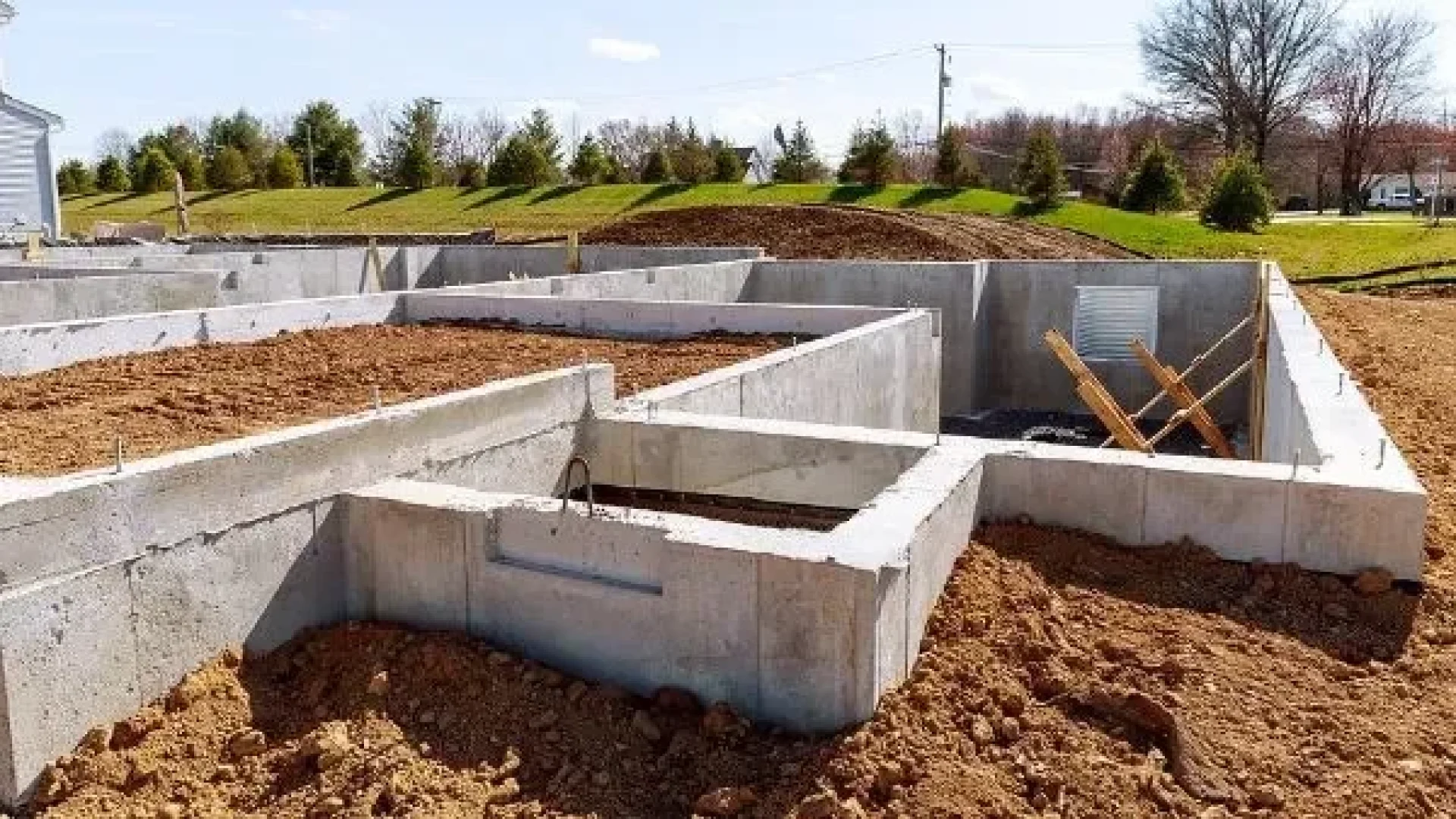
For a builder, the cheapest day to save on a foundation isn’t in the pour. It’s at the seams between vendors. A normal Calgary foundation runs through three separate companies (a cribbing crew, a ready-mix supplier, and, if used, a precast plant), and every handoff is a place the schedule slips, the spec gets substituted at the truck, and the finger-pointing starts when something cracks.
Collapsing those three contracts into one accountable owner removes the seams (one schedule, one spec, one number to call), which is why single-source delivery is consistently linked to fewer RFIs and tighter cadence.
This article is about the operational math of that decision: what a coordination seam actually costs you in days and RFIs, where the cribbing-to-concrete handoff goes wrong, and how single-source supply protects a thin pro-forma. (For the full story of how Omega Group’s three companies came together, see the umbrella guide linked below; this page assumes that and answers what you get on your schedule.)
What is a “coordination seam,” and why should a builder care?
A coordination seam is any point where one company hands a scope off to another. On a foundation, you normally have at least three:
- Layout/excavation → cribbing. The cribbing crew arrives to form footings and walls.
- Cribbing → ready-mix. A separate supplier trucks concrete to fill those forms, on a clock.
- Cribbing/concrete → precast (if used). A third company casts and craned-sets foundation walls or components.
Each seam is a contract, a calendar, and a quality standard owned by a different party, and each is a place the job can stall while two vendors point at each other. The construction industry already measures this friction, and the numbers aren’t small.
According to a May 2026 analysis by Constructable, the average RFI (request for information) takes about 9.7 days to resolve, and projects generate roughly 9.9 RFIs per $1 million of construction value. As the same source puts it, “one RFI didn’t just cost five days. It cost a ripple of rescheduling, remobilization, and hard conversations with an owner” (Constructable). A seam doesn’t fail quietly; it cascades.
The flip side is just as well documented: putting parties on the same team instead of in an “adversarial relationship” measurably cuts that friction. One BIM-integrated project issued just 140 RFIs, a roughly 93% reduction from industry norms (MarsBIM). (These are whole-project, commercial-BIM benchmarks; use them as directional proof that fewer seams mean fewer RFIs and days, not as a foundation-specific or Omega-measured figure.)
Why is a seam more dangerous on the foundation than later in the build?
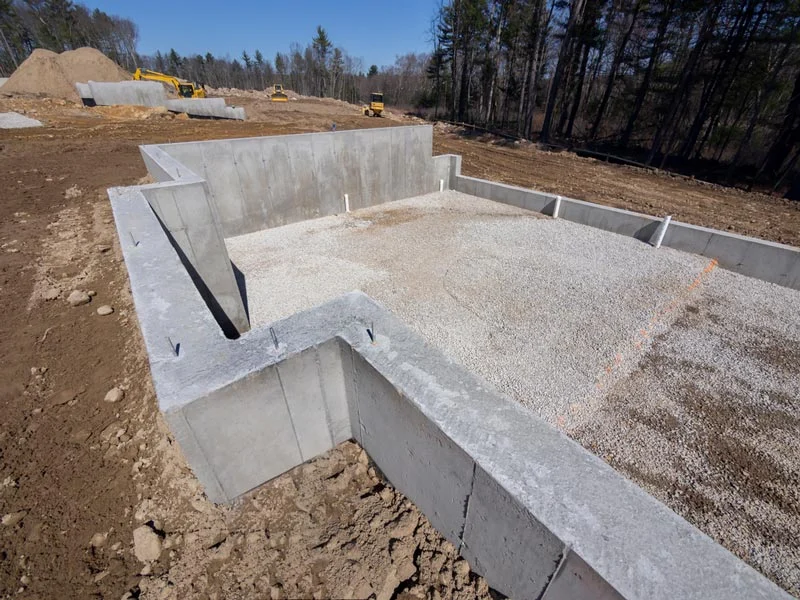
Because the foundation sits at the front of the critical path, and Calgary gates it before anything else can proceed.
The critical path is the longest chain of dependent activities; as Procore explains it, “a foundation goes in before walls, and walls go up before electrical wiring… if an activity on this path is delayed and not absorbed by float, the overall completion date may be extended” (Procore). The foundation isn’t just on the critical path; it’s the first domino, and Calgary’s Pre-Backfill inspection has to clear before backfill, framing, or anything downstream can begin.
So a seam that slips the foundation by a few days doesn’t get absorbed later; it pushes framing, drywall, mechanical, and ultimately the possession date, every trade behind it inheriting the slip. A vendor seam at the front of the schedule is the most expensive kind of seam there is.
The same coordination matters on detached residential projects. Garden suites require engineered foundations—not repurposed garage slabs—and early coordination between engineering, cribbing, and concrete supply prevents redesigns later. Read our guide on Garden Suite Foundations: Why a Garage Slab Won’t Cut It.
Where does the cribbing-to-concrete handoff actually go wrong?
This is the seam most builders have personally watched fail. Three failure modes recur:
- The mix is late or substituted. The forms are set and the crew is standing by, but the third-party truck is behind, or it shows up with a different mix design than the spec sheet called for. The crew didn’t order it and can’t fix it.
- The concrete is out of its window. Under CSA A23.1:24, concrete is generally meant to be discharged within about two hours of batching. On a long acreage drive (Bearspaw, Springbank, Priddis, De Winton), a drum-mix load can burn more than half of that two-hour clock before the gate even opens, and now the supplier and the cribbing crew each blame the other for a marginal pour.
- The crack with no owner. Months later something cracks. The cribber points at the mix; the mix supplier points at the placement; the precaster points at the footing. Nobody owns it, and the builder is left holding a warranty problem with three vendors and no single answer.
Every one of those is a seam failure, not a workmanship failure. They happen because the people pouring the foundation don’t control the concrete that’s pouring.
How does single-source supply remove those failure modes?
By putting the crew, the mix, and the walls under one owner and one calendar, so there’s no seam to argue across.
When the same company runs the cribbing crew and the concrete supply, the mix that arrives is the mix the crew specified; there’s no third party in the middle to substitute a cheaper design or show up “hot” after the drive. The construction term for this is single point of accountability: one party owns the result, so when a question comes up there’s one number to call instead of three contractors deflecting. It’s the same principle design-build delivery is built on, applied to the foundation scope specifically.
There’s a Calgary-specific reason this matters on the mix side. Calgary lots commonly test in the S-2 severe sulphate band — confirm the class with the soluble-sulphate result in your geotechnical report — which under CSA A23.1:24 mandates sulphate-resistant Type HS / HSe cement, a strength of 32 MPa at 56 days (the CSA minimum; 35 MPa is the common Calgary premium), w/cm ≤0.45, and 5–7% entrained air for freeze-thaw (Concrete Alberta TB#6).
That spec has to hold from the engineer’s sheet to the placed concrete. When one owner controls the cribbing and the mix, the odds of the wrong cement or a quietly-swapped design slipping in at the truck drop to near zero: what the spec author calls “no spec substitution at the truck.”
That level of coordination starts well before the truck arrives. Every engineered suite foundation should clearly identify footing geometry, concrete exposure class, reinforcement, soil assumptions, and structural details. See 8 Engineer-Required Items on a Calgary Garage Suite Foundation Plan.
The seam-by-seam picture
| The seam | What goes wrong with three vendors | What single-source removes |
|---|---|---|
| Cribbing ↔ ready-mix | Late truck, substituted mix, out-of-window concrete after a long drive; crew and supplier blame each other | Same owner runs the crew and the mix; the concrete poured is the concrete the crew specified |
| Ready-mix ↔ acreage drive | Drum-mix burns >50% of the 2-hr CSA discharge clock before arrival | On-site volumetric batches on arrival, so no transit clock eats the cure window |
| Cribbing/concrete ↔ precast | Panels arrive to a footing that’s off; a third QC standard and calendar to coordinate | Walls cast in-house, on the same group calendar as the crew that sets them |
| Warranty (after the fact) | A crack with three vendors pointing at each other and no one accountable | One owner answerable across the whole foundation scope |
Does combining cribbing and concrete actually speed up the foundation?
Directionally, yes, and the mechanism is the removed handoff, not a faster pour.
Single-source delivery is associated across construction generally with measurably faster, leaner projects than fragmented delivery (the design-build literature reports double-digit schedule and mid-single-digit cost advantages as an industry benchmark, not an Omega-measured result).
On a foundation specifically, the time you save isn’t in how fast the concrete goes in; it’s in the days you don’t lose to a late truck, a substituted mix, an RFI ripple, or a precast panel arriving to a footing nobody coordinated. You’re not buying a faster pour. You’re buying the elimination of the gaps between the steps, which is exactly where a foundation schedule actually leaks.
It also collapses your vendor count in a market where vendor count is risk. With roughly 5,300 skilled-trades vacancies in Calgary as of Q3 2025 (about one in four of all regional vacancies), every independent sub-schedule is one more thing that can fail to show (Calgary Construction Association). Fewer vendors on the foundation scope means fewer independent calendars that each carry that staffing risk. (See “How Calgary’s labour crunch is rewriting trade scheduling,” linked below, for how builders are locking capacity around this.)
How does single-source supply protect a thin multi-family pro-forma?
For a missing-middle GC, a foundation seam isn’t an annoyance. It’s a margin event.
Calgary missing-middle pro-formas already carry roughly $146,098 per unit in regulatory cost before a shovel hits the ground (CICBA), on margins the multi-family sector describes as historically thin. On a budget that “barely works,” the two weeks you lose to a vendor seam can flip a project from marginal to money-losing. Compressing the foundation to fewer seams (one cribbing-and-mix owner instead of two independently-scheduled vendors, plus in-house precast walls) protects cadence on a row of units where every framing crew behind you is waiting on the pour to clear.
There’s also a regulatory clock to plan around. As of the August 4, 2026 R-CG repeal (Calgary Council voted 12-3 on April 8, 2026), permitted density drops from 75 to 60 units/ha, lot coverage from 60% to 55%, and unit counts from 4 to 3 (corner lots only), among other changes; re-verify the current Land Use Bylaw on calgary.ca at planning time. On a project re-penciled under tighter density, a fewer-seam foundation schedule is one of the few levers a builder still controls.
Does one company really do cribbing, ready-mix, AND precast in Calgary?
Yes, and for residential foundations it’s a structural market fact, not a marketing line. Omega 2000 Cribbing (the founding company, operating since 1988) runs the foundation crew; Omega Ready Mix (2023) supplies the concrete, including on-site volumetric for small-pour, multi-spec, and long-drive acreage work; and Omega Precast (late 2025) casts residential solid-concrete foundation walls.
Every other Calgary cribbing operator is single-purpose, the other volumetric operator is single-product, and the other precasters are single-segment. For the full account of how the three companies fit together, see the integrated-stack guide below; this page is about what that means for your schedule.
FAQ
What does “integrated foundation supplier” mean for a builder’s schedule? It means the cribbing crew, the concrete supply, and (if used) the precast walls are owned by one company on one calendar. For your schedule that removes the vendor seams (the handoffs between separate companies) where most foundation delays and finger-pointing start. One schedule, one spec, one number to call.
How do coordination seams between subtrades cause construction delays? Each seam is a separate contract, calendar, and quality standard. When a question arises at a seam it becomes an RFI (averaging about 9.7 days to resolve, at roughly 9.9 RFIs per $1M of value), and the delay ripples into rescheduling and remobilization. The foundation sits at the front of the critical path, so a seam there pushes every trade behind it.
What goes wrong at the handoff between the cribbing crew and the concrete supplier? Three common failures: the third-party truck is late or shows up with a substituted mix; the concrete runs past its ~2-hour CSA discharge window on a long drive; or a later crack leaves the cribber, the supplier, and the placer blaming each other with no one accountable. All three happen because the crew pouring doesn’t control the mix.
Does one company actually do cribbing, ready-mix, and precast in Calgary? Yes. Omega 2000 Cribbing (since 1988) pours foundations, Omega Ready Mix (2023) supplies the concrete including on-site volumetric, and Omega Precast (late 2025) casts residential walls: three companies under one owner. For residential foundations, no other Calgary provider runs all three.
How does single-source foundation supply protect a thin multi-family pro-forma? Missing-middle pro-formas already carry about $146,098/unit in regulatory cost on thin margins. A foundation seam that costs two weeks can flip a marginal project to a loss. Fewer vendors on the foundation scope means fewer independent calendars to fail and tighter cadence on a row where framing crews are waiting on the pour.
What is “spec substitution at the truck,” and how does an integrated stack prevent it? It’s when the concrete that arrives differs from the spec the engineer drew: a different mix design substituted by a third-party supplier. Calgary’s S-2 soil mandates Type HS/HSe cement at 32 MPa/56 days minimum. When one owner controls both the cribbing crew and the mix, there’s no third party in the middle to swap the design.
Does combining cribbing and concrete supply speed up the foundation? Directionally yes, but the time saved is in the removed handoff, not a faster pour. Single-source delivery is broadly linked to faster, leaner projects. On a foundation, you save the days you’d otherwise lose to a late truck, a substituted mix, or an RFI ripple between separate vendors.
How does the integrated stack help on long acreage drives? Drum-mix concrete has a roughly 2-hour CSA discharge window; a 45–60-minute acreage haul can burn more than half of it before arrival. On-site volumetric concrete batches at the gate instead, so there’s no transit clock eating the cure window, and when the same owner runs the crew and the truck, the mix is placed in-spec with no substitution.