

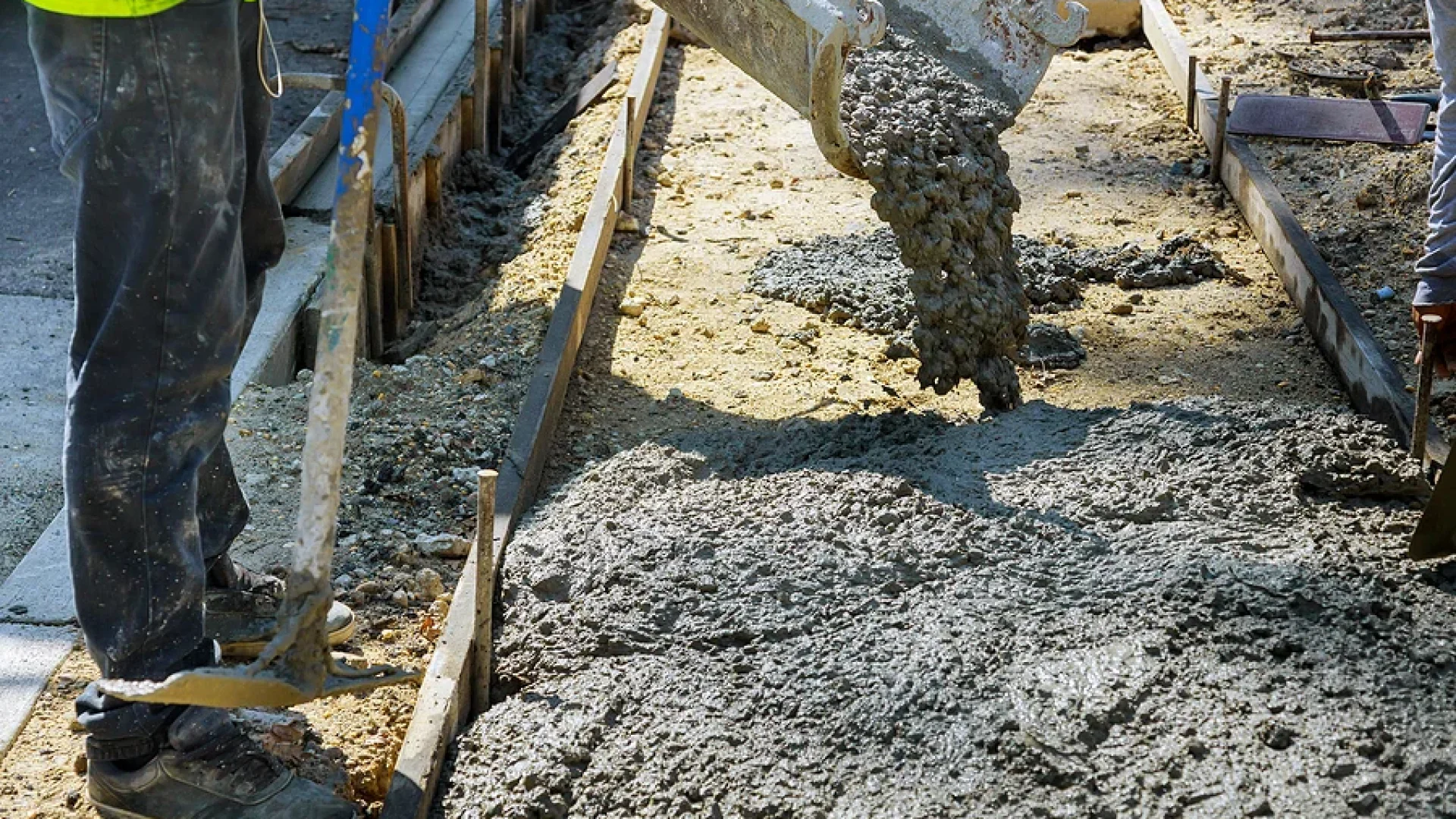
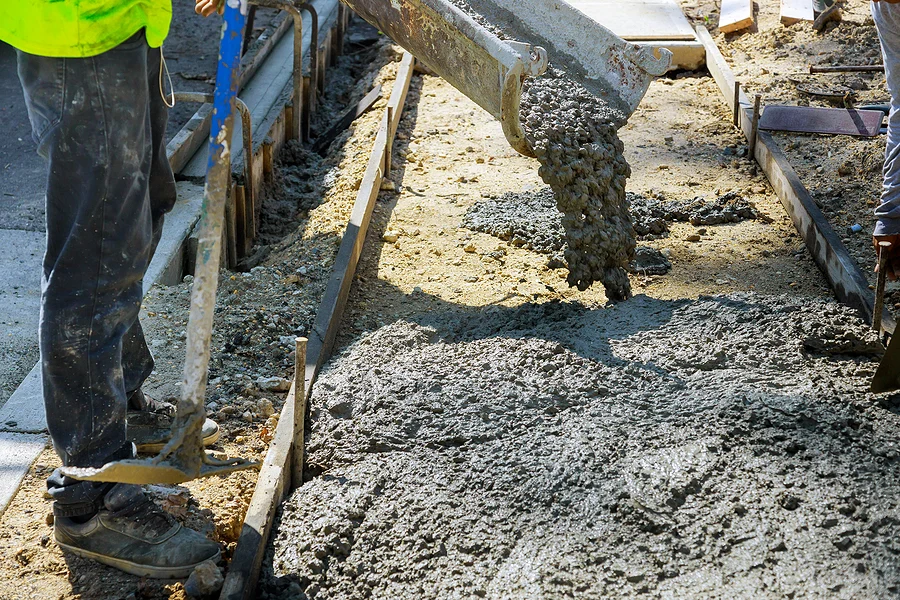
Fall protection on concrete work is required at 3 metres — and at less than 3 metres in three separate situations that catch crews out. That second half of the rule is where most of the orders get written. After 38 years pouring concrete in this city, we have watched more fall protection findings come off a 1.4 m wall form or an unguarded sleeve opening than off anything a crew would describe as working at height.
The trouble is that concrete work does not look like working at height. Nobody on a footing or a slab-on-grade thinks of themselves as a roofer. But the Alberta Occupational Health and Safety Code does not ask what the work is called. It asks how far a worker can fall, what they would land on or in, and whether there is a hole. This is what the thresholds actually say, and where they land on a pour.
The four triggers in section 139
Section 139 of the OHS Code is one sentence with four limbs, and all four matter on a concrete site. An employer and a supervisor must ensure that a worker is protected from falling if a worker may fall:
- at a temporary or permanent work area, a vertical distance of 3 metres or more
- at a temporary or permanent work area, a vertical distance of less than 3 metres if there is an unusual possibility of injury
- at a temporary or permanent work area, into or onto a hazardous substance or object, or through an opening in a work surface
- at a permanent work area, a vertical distance of more than 1.2 metres and less than 3 metres
Read limb three again, because it has no height in it at all. An opening in a work surface triggers fall protection regardless of the drop. So does landing onto a hazardous object. Rebar cage with vertical bars and no caps is a hazardous object. A sleeve or a stair opening in a formed deck is an opening in a work surface. Neither of those cares whether you are 900 mm up or 9 m up.
Limb four is the one that gets argued. The 1.2 m figure applies to a permanent work area — a finished mezzanine, a loading dock edge, a permanent platform. A wall form you will strip next week is a temporary work area, so between 1.2 m and 3 m on that form, the trigger is not the height on its own; it is whether there is an unusual possibility of injury. That is a narrower test than crews assume, and it is not a free pass.
What “unusual possibility of injury” actually means
Alberta’s explanation guide for Part 9 defines it as the potential for a worker to sustain injuries more serious than those likely to result from landing on a solid, flat surface. The examples given are work above moving water, work above operating machinery, and work near extremely hot surfaces.
On a concrete site, the equivalents are not exotic:
- Uncapped vertical rebar below a form deck or a wall walkway
- Form hardware, strongbacks and waler ends projecting up out of a pour
- An open excavation immediately below where a worker is standing on a footing form
- Running equipment — a pump line, a vibrator crew, a bobcat — directly underneath elevated work
- Fresh concrete in a deep section that a worker could go into rather than onto
If the landing zone is one of those, the sub-3 m drop is in scope. If the landing zone is a clean, flat, compacted subgrade, the honest answer is usually that it is not — and a supervisor who says so should be able to point at the subgrade and say why.
Guardrails come before harnesses, and that is deliberate
The Code’s hierarchy puts engineering controls first. The explanation guide is blunt about why: a guardrail becomes a permanent part of the installation, eliminating the need to equip workers with personal fall protection equipment. No anchor calculations, no clearance math, no rescue plan, no inspection log for every lanyard.
On concrete work that usually means:
| Situation | First choice | Why |
|---|---|---|
| Formed deck edge | Guardrail off the form system | No anchor needed, protects every trade behind you |
| Slab edge on an elevated pour | Guardrail or a perimeter cable system | Framers and mechanical follow you onto the same edge |
| Sleeve, stair or shaft opening | Secured cover, marked | A cover removes the trigger entirely |
| Footing form adjacent to an open cut | Move the hazard — shore and bench the excavation | See excavation shoring requirements in Calgary |
| Wall form walkway above 3 m | Guardrail if the system takes it; otherwise travel restraint | Restraint beats arrest because nobody falls |
Covers over openings are worth singling out. Part 22 of the Code deals with safeguards, and it has separate sections on covering openings and on guardrails. A cover that is not secured and not marked is not a cover — it is a trip hazard that someone will slide off the hole. Plywood over a sleeve with a scrap of rebar on top of it has failed two tests at once.
The written plan: when you need one, and what has to be in it
Section 140 requires a written fall protection plan when both conditions are true: a worker may fall 3 metres or more, and the worker is not protected by guardrails. That is the whole trigger. If you guardrail the edge, the plan obligation does not arise. If you put a crew on harnesses at 3 m, it does.
Alberta’s own bulletin on fall protection plans lists what the plan has to address:
- The fall hazards at the work site
- The fall protection system to be used at the work site
- The anchors to be used during the work
- The clearance distances below the work area
- The procedures used to assemble, maintain, inspect, use and disassemble the fall protection system
- The rescue procedures to be used in the event of a fall
Item four and item six are the ones that get skipped on concrete jobs, and they are the ones that get cited. Clearance is arithmetic — free fall, deceleration, harness stretch, the worker’s height below the D-ring, and a safety margin — and on a 3.5 m formed deck there is often not enough of it for a standard shock-absorbing lanyard to work as designed. That is an engineering answer, not a paperwork answer, and it usually pushes you back to travel restraint or a guardrail.
Rescue is the item nobody wants to write. A worker suspended in a harness is on a clock. “Call 911” is not a rescue procedure; it is a notification step. The plan needs to say who gets them down, with what, and from where.
Who owns the duty on a multi-trade pour
Section 139 names the employer and the supervisor. On a site with a concrete sub, a pump operator, a rebar crew and a general, that means several employers hold the duty at once for their own workers — and the prime contractor designation sits on top of it for site-wide coordination. If you have not settled who holds that designation before the first form goes up, the fall protection question gets answered twice and badly. We have written about prime contractor requirements in Alberta separately, because it decides more than this one issue.
The practical version: the crew that creates the opening owns the cover until it is handed over in writing. The crew that strips the form owns the edge it just exposed. Stripping is the moment a protected edge becomes an unprotected one, which is why when you can strip concrete formwork in Calgary is a fall protection question as much as a strength question — the strength number tells you when you may strip, and the plan tells you what has to be standing before you do.
Five findings we see on Calgary concrete sites
- Sleeve openings left uncovered between the deck pour and the mechanical rough-in. Nobody owns the hole because nobody is working at it. Limb three of section 139 does not require anyone to be working at it.
- Rebar caps treated as optional below 3 m. Caps are what turn a hazardous object back into a flat surface, and they are the cheapest control on the site.
- Anchors chosen on pour day. Anchor strength requirements differ for permanent and temporary anchors, and a form tie is not an anchor because it held last time.
- A plan written for the building, not the pour. A generic corporate plan that does not name this deck, these anchors and this clearance is not the plan section 140 asks for.
- Guardrail removed for the pump line and not replaced. The hose gets fed through a dropped section at 10 a.m. and the section is still down at 4 p.m.
None of these are expensive to fix on the morning of. All of them are expensive to fix after an inspection, because the stop-work lands on the pour, not on the paperwork — and a stopped deck pour in Calgary in October is a cold-weather protection problem by the afternoon.
Where this sits next to the rest of your site controls
Fall protection is one of four site duties that turn up on the same concrete scope and get managed as if they were unrelated: falls, excavation edges, silica from cutting and grinding, and first aid coverage. They share a cause — the work changes the site faster than the controls get updated. The crew that cuts an opening tomorrow creates a fall hazard, a silica exposure and a cover obligation in the same hour, which is why we treat silica dust control for concrete cutting and this article as one conversation on a pre-pour walk, not two.
Settle the edges before the forms go up
The cheapest fall protection decision on a concrete job is made at the form design stage, not on pour day: a form system that carries its own guardrail removes the plan, the anchors, the clearance math and the rescue procedure in one move. The most expensive one is made at 7 a.m. with the truck booked.
Talk to us before the form package is finalised. Our commercial concrete contractors in Calgary will walk the deck and wall sequence with your super and mark where guardrails, covers and restraint have to be standing at each stage — so the edges are already answered when the first load arrives.
FAQ
At what height is fall protection required in Alberta? At 3 metres or more at any temporary or permanent work area. It is also required at less than 3 metres where there is an unusual possibility of injury, where a worker could fall into or onto a hazardous substance or object, where they could fall through an opening in a work surface, and at a permanent work area above 1.2 metres.
Does a 1.2 m wall form need fall protection? A wall form is normally a temporary work area, so the 1.2 m permanent-work-area trigger does not apply on its own. It still needs protection if the landing zone creates an unusual possibility of injury — uncapped rebar, form hardware, an open cut or running equipment below.
Do we need a written fall protection plan on every concrete job? Only where a worker may fall 3 metres or more and is not protected by guardrails. Guardrail the edge and the written plan obligation does not arise.
Is a plywood sheet an acceptable cover over a slab opening? Only if it is secured against movement and marked. An unsecured, unmarked sheet is not a cover and leaves the opening trigger live.
Who is responsible when several employers work on the same deck? Each employer and supervisor is responsible for their own workers, and the prime contractor coordinates site-wide. Covers and edges should be handed over between crews explicitly rather than assumed.